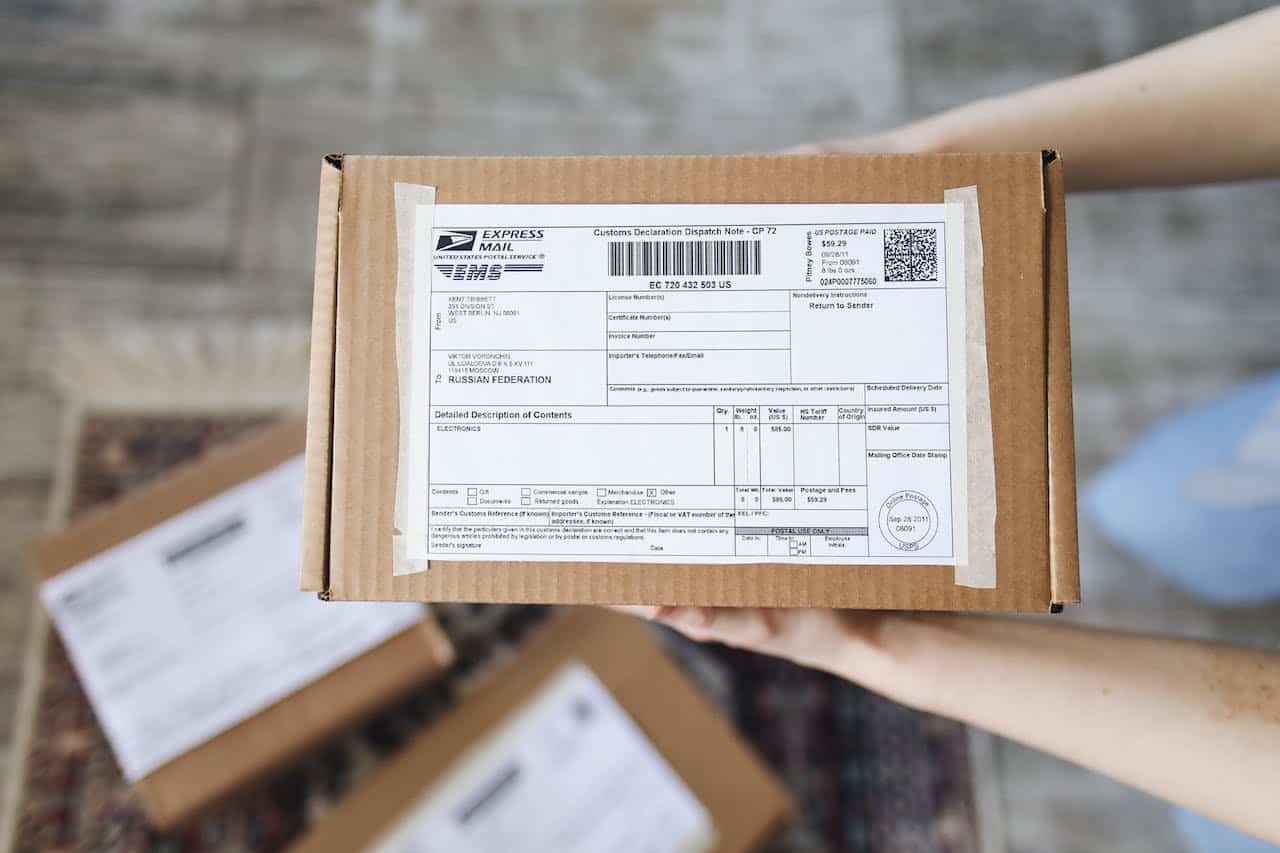
If you are a woman entrepreneur looking to grow your business using international shipping, the UK export market offers more support than ever. The Department for Business and Trade set a target in 2024 for total UK exports to reach £1 trillion by 2030, yet DBT estimates from 2024 suggest only around 10% of UK SMEs currently export. For women-led businesses, the opportunity is significant: the 2023 Alison Rose Review of Female Entrepreneurship found that women-led SMEs contribute £105 billion to the UK economy. If you run a product-based business, adding international shipping could be the step that turns a domestic sideline into a scalable venture and helps you run a global business.
Five ways to grow your business using international shipping
1. Check your export readiness first
Before you book your first international shipment, make sure your business is legally set up to export from the UK. Since Brexit, goods leaving Great Britain need a GB EORI (Economic Operators Registration and Identification) number, and most exports require a customs declaration. You can apply for an EORI number through HMRC. If you are VAT-registered, you must also record exports correctly in your VAT return, and some goods need an export licence.
Women-led businesses are less likely than male-led businesses to export, so taking time to get these foundations right can help close that gap. You do not need to handle customs paperwork yourself. Many freight forwarders and customs agents can do this for you, but you remain responsible for the accuracy of the information. The gov.uk step-by-step export guide lets you look up the specific rules for your product and destination country.
2. Choose the right shipping method
The shipping method you choose affects your costs, delivery time, and risk. For most small UK businesses, the choice is between sea freight, air freight, and international courier services. The Port of Felixstowe is the UK’s largest container port and the main hub for sea freight, while Heathrow is the UK’s largest airport for air freight by value.
- Sea freight is usually the cheapest option for large or heavy shipments, but transit times can be several weeks. It suits non-urgent, bulky goods.
- Air freight is faster but more expensive. It works well for high-value, lightweight, or time-sensitive products.
- International couriers such as DHL, FedEx, UPS, and Royal Mail International offer door-to-door tracking and customs support. They are often the simplest choice for small parcels and low-volume exporters.
For women founders operating on tight margins, comparing total landed costs is particularly important, as unexpected fees can wipe out profit. Get quotes from at least three providers and compare not just the headline price but also insurance, fuel surcharges, customs handling fees, and final-mile delivery costs. A provider with strong UK export experience and tracking in your target market will usually save you money and stress over the cheapest quote.
3. Understand regulations and use Incoterms
Every country has its own import rules, duties, and restricted goods lists. If your shipment breaches these rules, it can be seized, returned, or destroyed at your expense. Check the destination country’s rules before you ship, particularly for food, cosmetics, electronics, textiles, and products with intellectual property restrictions.
Clear Incoterms also help women founders avoid disputes with larger overseas buyers who may try to shift costs onto you. Use Incoterms 2020 to define who pays for shipping, insurance, customs clearance, and duties. Common terms for small UK exporters include:
- EXW (Ex Works): The buyer collects the goods from your premises and arranges almost everything.
- DDP (Delivered Duty Paid): You deliver to the buyer’s door and pay all duties and taxes. This gives customers certainty but requires you to manage foreign customs.
- DAP (Delivered at Place): You deliver to the buyer’s country, but the buyer pays import duties and taxes.
Being clear about Incoterms in your sales terms protects your margins and prevents disputes.
4. Use UK export support schemes
Several UK organisations offer free or low-cost support to help small businesses start exporting. The Department for Business and Trade runs the UK Export Academy, which DBT figures from 2024 show has trained more than 50,000 businesses through free online courses on finding customers, customs, and getting paid. UK Export Finance can help you insure against buyer non-payment or access working capital. The British Business Bank also signposts finance options for growing businesses, including women-led firms.
Despite the size of the export market, women founders remain underrepresented in export and investment. Women in Business: Key UK Facts shows that progress is being made, but British Business Bank data from 2024 shows that all-female founder teams still receive less than 2% of UK equity investment. Exporting can be a way to grow without relying on external funding, but if you do need finance, check the British Business Bank’s funding rules for women founders and our guide to business grants for women in the UK.
5. Protect your products and track every shipment
Poor packaging is one of the most common causes of damage in international transit. Use double-walled boxes for fragile items, fill voids with protective material, and waterproof outer packaging where possible. If you ship regularly, invest in drop-testing your packaging or ask your carrier for guidance.
Reliable delivery and professional packaging help women-led brands build trust in new markets where reputation matters. Always use tracked shipping and share the tracking number with your customer. Most carriers offer real-time tracking, and some will alert you to customs holds or failed delivery attempts. Keep copies of your commercial invoice, packing list, and customs paperwork for at least six years, as HMRC may ask to see them.
Action steps to start shipping internationally
- Apply for a GB EORI number through HMRC if you do not already have one.
- Check whether your product needs an export licence or faces restrictions in your target market.
- Get quotes from at least three carriers and compare total landed costs, not just shipping rates.
- Choose Incoterms 2020 that match your risk appetite and customer expectations.
- Sign up for the free UK Export Academy to build your export knowledge.
- Review your packaging and insurance before your first shipment.
International shipping is not just a logistics decision; it is a growth strategy. By getting the legal basics right, choosing reliable carriers, and using the support available to UK businesses, you can grow your business using international shipping and reach customers well beyond your domestic market.