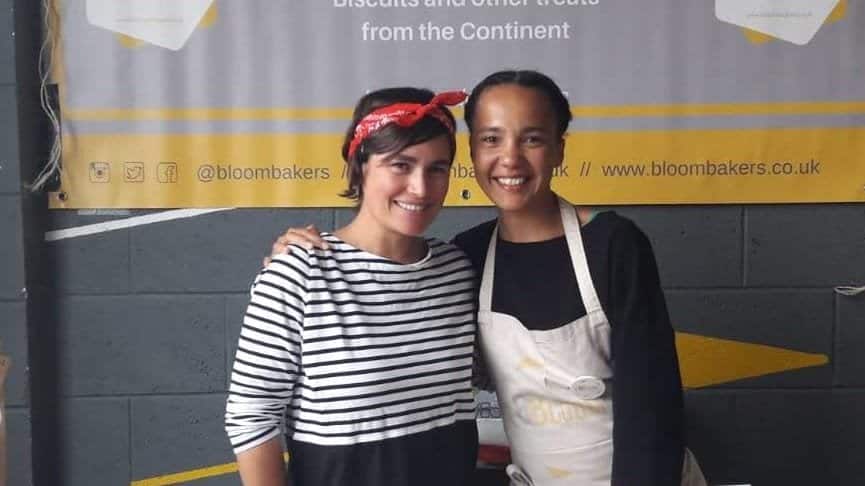
To raise cash for your business, consider how in 2016 Saskia Roskam and Lisa Shepherd started The Biskery from a kitchen in Leeds with a £500 cash injection and a three-month deadline to just do it; both had very young children and no desire to choose between family and work, and within a few years their home bakery had supplied branded and personalised biscuits to names including Fendi, Amazon, Harvey Nichols and NatWest.
Their story is unusually useful for women thinking about starting a food business from home UK, especially as ONS data from 2024 shows around 1.85 million women were self-employed in the UK, and food remains one of the hardest sectors to scale from a domestic kitchen because regulation, seasonality and thin margins collide, but The Biskery’s experience shows what is possible when digital skills such as video conferencing for business, realistic family boundaries and reinvested profits are combined.
We spoke to Saskia and Lisa about how they built the business, what they learned, and what their journey means for women founders today.
Why a home bakery made sense
Saskia is from Germany and Lisa is from the Netherlands. They missed the taste of home, loved baking, and wanted work that flexed around their children. As new mothers, they also wanted to reignite the sense of possibility they had felt before children.
Starting from home kept overheads low and allowed them to test demand before committing to premises. In 2026, that route remains a common way women enter business in the UK. If you sell, cook, store, handle, prepare or distribute food from home, you must register with your local authority at least 28 days before trading. Registration is free and cannot be refused, but environmental health officers can inspect your kitchen and award a food hygiene rating from 0 to 5. You can find the official registration route through gov.uk/food-business-registration.
How digital marketing replaced the market stall
The Biskery began at farmers’ markets across Leeds, but the founders’ background in digital marketing meant they could move online quickly. They built their own website, handled their own hosting and used social media to spread the word. That decision transformed them from a weekend stall into a UK-wide brand.
Their experience still holds in 2026. The vast majority of The Biskery’s enquiries came through their website, driven by search engine optimisation, clear product pages and fast checkout. For women starting a food business from home UK today, owning your own website rather than relying solely on Instagram or Etsy remains one of the most defensible decisions you can make. You control the customer data, the margin and the brand experience. Our guide on how to grow your business with social media explains how to use social channels to drive traffic back to a site you own.
What they did before, and why it mattered
Lisa worked in sales and digital marketing; Saskia worked in journalism and digital marketing. Those skills shaped everything from product photography to customer enquiries. In a sector where many founders are brilliant bakers but inexperienced marketers, The Biskery’s advantage was commercial as much as culinary.
This is a pattern the Alison Rose Review of Female Entrepreneurship has repeatedly highlighted: women founders often start businesses in sectors where they have existing expertise, but growth frequently depends on acquiring finance, digital and leadership skills they did not need in employment. The Review’s 2024 update found that progress on access to funding and support had stalled in several areas, making self-taught digital capability even more valuable.
How family and business coexist
Both founders are married with two children each. Working from home allowed them to avoid after-school clubs and spend time with their families. Much of the baking happened in the evenings once the children were asleep, and partners stepped in when markets or corporate events fell at weekends.
The arrangement was not perfect. They sometimes felt they were not doing either role justice, and the guilt was exhausting. Over time they learned to be realistic, delegate where possible, and celebrate small wins. For women in similar positions in 2026, the right to request flexible working has been a day-one entitlement for all employees since April 2024, but self-employed mothers still have to build flexibility into their own business model. That usually means designing processes that do not depend on you being present at set hours.
Values, packaging and sustainability
The Biskery’s brand values, kindness, thoughtfulness, simplicity and cleanliness, shaped everything from packaging to customer service. They used recycled packaging and compostable bags and tried to keep their environmental footprint small.
For food businesses today, packaging rules have tightened. The Plastic Packaging Tax, introduced in April 2022, applies to plastic packaging manufactured in or imported into the UK that does not contain at least 30% recycled plastic. Keeping on top of these rules is not optional; it is a cost of staying in the market.
The high points and the hard orders
The biggest reward, the founders said, was seeing the foundation they had laid pay off. Building something from a £500 investment and reinvested profits was hugely satisfying, and baking for well-known brands never lost its excitement.
The toughest challenges were large corporate orders. The first time they produced more than 1,000 biscuits, they went in blind. Then an internationally renowned spice brand asked for 8,000. They swallowed hard and said yes, found a way to deliver, and used the experience to build systems for scale. The lesson: do not turn down the order that forces you to professionalise, but do have a plan for capacity, food safety labelling and delivery before you say yes.
Money: £500, no salary and reinvested profits
The Biskery’s initial £500 covered the first market pitch, biscuit bags, cake boxes, ingredients, tools, domain registration and charity-shop props. For the first two years, the founders did not take a salary and continued working four days a week in employed roles.
In 2026, the same discipline applies. The HMRC trading allowance lets you earn up to £1,000 per tax year from self-employment before you need to register for Self Assessment. Above that, you must register and keep records. If you need capital, the Start Up Loans female founders programme offers government-backed loans of up to £25,000, alongside free mentoring. The British Business Bank also runs schemes specifically designed to improve access to finance for women-led businesses.
Marketing and sales channels in 2026
The Biskery’s website was its main sales channel, supported by Instagram for engagement and direct enquiries. Facebook and Twitter generated far fewer sales.
The channel mix has shifted since then. TikTok is now a significant discovery platform for food businesses, and email marketing has become more important as social algorithms reduce organic reach. The principle has not changed: use social media to build awareness, but drive transactions to a platform you control.
Technology on a biscuit production line
The Biskery used edible-ink printers to print logos and messages directly onto biscuits, and a 3D printer to produce custom stamps and embossers. Investing in the right equipment allowed them to take on complex designs without losing the handmade quality customers expected.
For home food businesses in 2026, technology also means accounting software that satisfies HMRC’s Making Tax Digital requirements. From April 2026, self-employed individuals and landlords with qualifying income over £50,000 need to keep digital records and submit quarterly updates through compatible software. Our Making Tax Digital sole trader checklist sets out what you need to prepare.
Lessons for starting a food business from home UK
1. Partnership multiplies your impact. Having someone to bounce ideas off, share the load and understand the reality of running a business is priceless. If you do not have a co-founder, build a small advisory circle instead.
2. Building the business is not enough. You have to keep showing up with fresh ideas, energy and enthusiasm. Nothing happens unless you make it happen, especially in the first three years.
3. Start from your strengths. Do what you love and you will be good at it. Build from the skill sets you already have, learn the basics of everything else, and outsource once you can afford it.
Next steps for your home food business
- Register your food business with your local authority at least 28 days before trading.
- Check whether you need a food hygiene certificate and a food safety management system based on Hazard Analysis and Critical Control Points principles.
- Open a separate business bank account and choose accounting software that is compatible with HMRC’s Making Tax Digital requirements.
- Build your own website before you rely on social media marketplaces.
- Track your home-working expenses, including a proportion of utilities, ingredients and equipment, so you claim the right amount against tax.
- Reinvest profits for at least the first year rather than taking a salary if you can afford to.
The Biskery’s story is not a promise that every £500 home bakery will supply national brands. It is a reminder that starting a food business from home UK is still viable when you combine a clear product, digital capability, tight cost control and the patience to reinvest. The market is crowded, but the fundamentals have not changed: bake well, market clearly, and build systems that let you sleep occasionally.