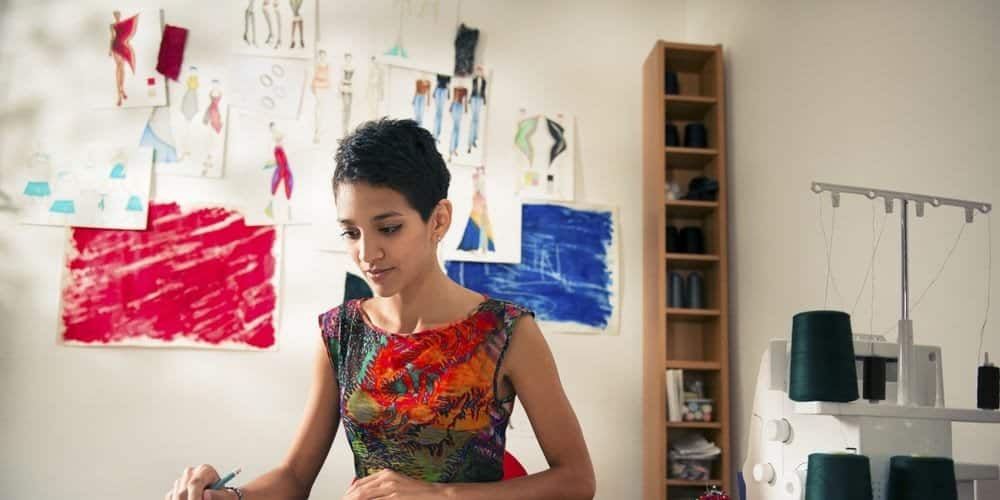
Whether you are trained, experienced or self-taught, there are plenty of inspiring stories of women who have built a successful independent label from scratch. The UK fashion industry contributes £62 billion to the economy and supports roughly 1.3 million jobs, according to the British Fashion Council’s 2024 industry report. Yet the market is crowded, margins are tight and the rules around marketing, tax and sustainability keep shifting. If you are thinking of becoming an independent fashion designer in the UK, here are six practical challenges to prepare for.
1. Building an authentic brand
Your brand is what makes your designs cut through the noise. Many women founders start a label because they want to offer something they cannot find elsewhere, and whether they finance it through crowdfunding for start-ups or their own savings, having a clear vision and values is especially important. Apply those values consistently across your range, your marketing and every customer touchpoint. If you are known for streetwear, for example, do not confuse your audience by suddenly launching a formal-wear line. Strong brands reduce choice and make decisions simple for customers, so resist the urge to complicate your offer.
Your values as a creative social enterprise also need to run through every part of the business. If sustainability matters to your customers, it should show in your fabrics, packaging, transport and waste policy. Be honest about your claims: the Competition and Markets Authority has been cracking down on misleading green claims, and its green claims code makes clear that vague terms such as “eco-friendly” or “sustainable” must be backed by evidence. Only promote environmental credentials you can prove. Once your brand ethos is clear, your design skills can bring it to life visually. Even on a tight budget, free or low-cost design tools and templates can help you create a professional website and social media materials without expensive agency fees.
2. Getting your label known
Cutting through in a crowded marketplace is often the hardest part. UK households spend around £65 billion a year on clothing and footwear, according to ONS consumer spending data from 2024, so there is plenty of demand but also fierce competition. You can have a fabulous range, but it will not sell if nobody knows it exists. Social media and influencer marketing have rewritten the PR rulebook: a single mention from the right person can sell out a small collection overnight. The effect is usually short-lived, however, so you need a solid product and reliable delivery, packaging and customer service behind the hype.
Process design matters just as much as product design. Map the customer journey from discovery to unboxing and make sure every step reflects your brand. Email marketing, search engine optimisation and regular, genuine social content will usually deliver more sustainable growth than one viral moment.
3. Knowing your numbers
There is beautiful mathematics in garment construction, but many fashion designers go blank when it comes to the financial numbers in their business. That is a risk you cannot afford. Net profit margins in UK clothing retail are typically slim, and cash flow problems are one of the main reasons small fashion businesses fail within the first few years.
You may eventually need an accountant, but do not delegate responsibility for understanding your key figures. Cloud accounting software and HMRC’s Making Tax Digital requirements mean there is little excuse for not staying on top of your books. From April 2026, Making Tax Digital for Income Tax Self Assessment applies to sole traders and landlords with turnover above £30,000. Our Making Tax Digital sole trader checklist sets out the deadlines and software options. Your overall Profit & Loss and cashflow forecasts are crucial, but so is monitoring performance inside the business, such as individual product sales, return rates and stock control. Spotting trends early gives you time to adjust.
4. Finding the right funding
Some businesses can be started with very little capital. Independent fashion design is rarely one of them. You need equipment, materials, samples, photography and often manufacturing space. That usually means finding funding, and women founders still face a well-documented funding gap, so it pays to prepare thoroughly.
Do as much market research as you can before you invest heavily. Test designs on Instagram or TikTok, but remember that likes are not sales. The only real proof of demand is paid orders. A pop-up stall or market can be a low-cost way to validate your range and meet customers face to face.
Once you have evidence of demand, look at your funding options. The British Business Bank’s Start Up Loans scheme lends between £500 and £25,000 at a fixed 6 per cent interest rate, with free mentoring for businesses that have been trading for up to three years. Read more in our Start Up Loans guide for women founders. You could also explore business grants for women in the UK, crowdfunding, angel investment or industry support from organisations such as the UK Fashion & Textile Association.
5. Wearing different hats
One of the biggest differences between working for a label and running your own is the number of professional hats you have to wear. You are not only a designer; you may also be the accountant, web developer, IT support, marketer, project manager, promoter and salesperson. Many women founders are used to balancing multiple responsibilities, but running a business can still stretch your time and energy.
Outsource support tasks as soon as you can afford to, so you can focus on what makes your company unique: your designs. Freelance marketplaces can connect you with specialists quickly, but always check portfolios and agree clear terms before you commit. Developing a business mindset alongside your creative one is essential. Designers are natural big-picture thinkers, and that is a real asset in leadership.
As an independent, you will also need to be a good negotiator and clear communicator, whether you are agreeing fabric minimums, briefing a manufacturer or meeting a buyer. Do not ignore these skills, however foreign they may feel at first.
6. Going it alone
If you have worked as a designer before, you will be used to being part of a close team. When you start your own label you are more likely to work remotely or in a co-working space, collaborating with a dispersed network of freelancers and suppliers.
The autonomy can be exhilarating. You set your own priorities and manage your own time. While you may work longer hours than ever, they are usually more focused and more meaningful. The risk is isolation. Make a deliberate effort to stay connected: join industry networks, attend trade shows, seek out women founder groups and make time for friends and family. Turning your fashion dream into reality is far more rewarding when you have people to share it with.
Practical action steps for women founders
- Audit your brand values and check that every customer touchpoint, from fabric choice to packaging, reflects them.
- Review your green claims against CMA green claims guidance and remove any wording you cannot substantiate.
- Set up cloud accounting before you make your first sale and diarise Making Tax Digital deadlines.
- Validate demand with paid orders or a pop-up before applying for funding through Start Up Loans or other finance routes.
- Build a support network of other independent designers, manufacturers and mentors.
What every independent fashion designer needs to remember
Running an independent fashion label in the UK is demanding, but understanding these six challenges of being an independent fashion designer gives you a clearer route through them. Start with proof of demand, keep your numbers visible and let your values do the marketing heavy lifting.