Unnecessary energy use in the office drains cash and adds carbon. For women running a UK business, whether from a leased workspace or a home office, cutting that waste is one of the fastest ways to protect margins and meet customer expectations around sustainability. The good news is that most energy-saving changes cost little and start paying back within months. Here are six practical steps to minimising energy use at the office in 2026.
Audit Your Usage and Switch Tariff
Before you buy new kit, find out where your money is going. Start with a year of bills and split spending between electricity, gas, water and standing charges. Ofgem, the energy regulator for Great Britain, sets the rules that business suppliers must follow, but commercial tariffs are not capped in the same way as domestic tariffs, so rates vary widely.
Use an Ofgem-accredited price comparison site to compare business electricity and gas contracts. Look past the headline unit rate; standing charges, contract length, exit fees and green-energy credentials all affect the total cost. If your current contract is ending, start shopping 60 to 90 days before the renewal date, because rollover tariffs are rarely the cheapest.
If your office is at home, remember that some costs can be claimed. Our guide to Home Working Expenses Self Employed Can Claim Through HMRC explains what is allowable.
Install a Smart Meter
You cannot manage what you cannot measure. A smart meter gives you near real-time data on how much energy the business is using and what it is costing. Smart Energy GB, the national campaign for the smart meter rollout, states that smart meters help businesses identify waste, such as equipment left on overnight or heating running when the building is empty.
Most small businesses with fewer than ten employees can request a smart meter through their energy supplier at no extra cost, as of 2024. Once installed, nominate someone to check the in-home display or online portal weekly and challenge unusual spikes. For more ways to trim overheads, see Cutting Costs: 10 Practical Tips for UK Small Businesses.
Upgrade Lighting and Equipment
Lighting can account for a large share of office electricity use. The Energy Saving Trust estimates that, as of 2024, switching to LED bulbs can cut lighting energy use by up to 90% compared with traditional incandescent bulbs, and LEDs last far longer, which reduces maintenance time.
The same principle applies to computers, printers, photocopiers and kitchen appliances. When equipment needs replacing, choose models with high energy-efficiency ratings. Energy-efficient assets may also qualify for capital allowances, letting your business deduct part or all of the cost from taxable profits. HMRC publishes the current list of qualifying technologies and allowance rates on gov.uk.
Do not forget the basics: motion sensors in toilets and storerooms, daylight sensors near windows, and a policy that strips out old equipment rather than leaving it plugged in.
Control Heating, Cooling and Ventilation
Heating and cooling are usually the biggest energy costs after lighting and IT. Set the thermostat to 19°C to 21°C for office work and avoid heating empty rooms. If you rent, check that the building meets the Minimum Energy Efficiency Standards (MEES); since April 2023, commercial landlords in England and Wales must not let properties with an Energy Performance Certificate rating below E, unless they have a valid exemption.
In summer, open windows and use blinds before switching on air conditioning. If you do need cooling, service units annually and keep filters clean. A well-maintained system uses less energy and creates a healthier workplace. For home-based offices, our Home Office Ergonomics UK guide covers how temperature and airflow affect productivity.
Cut the Carbon Cost of Commuting
Travel to and from the office is part of your business energy footprint. Flexible working remains a practical way to reduce commuting miles, and many women-led businesses now use hybrid models as a recruitment and retention tool. Our Flexible Working Rights UK 2026 article sets out the current rules.
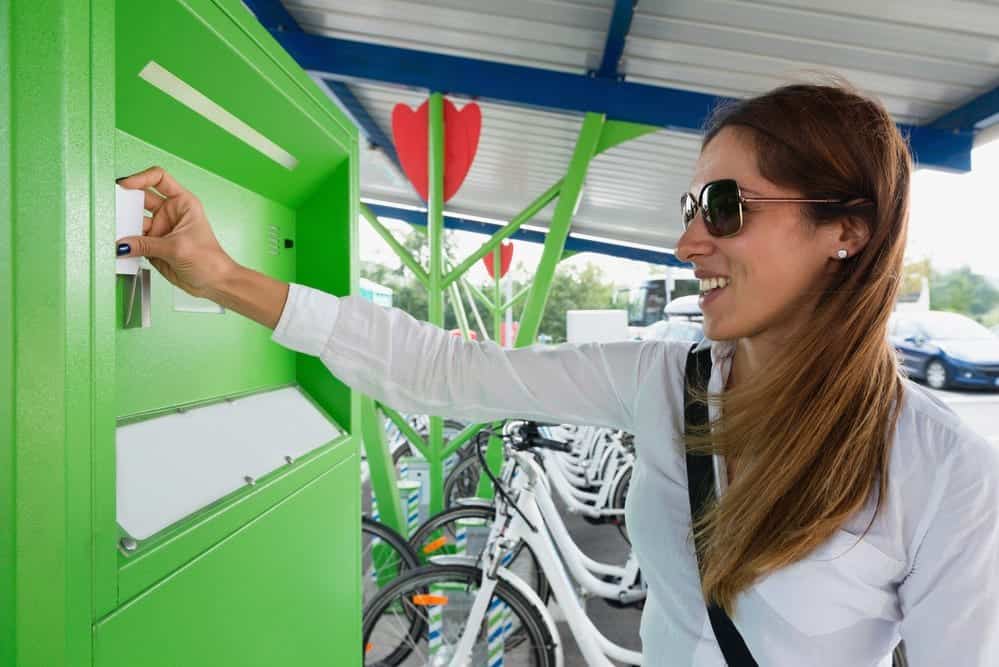
For staff who do travel, promote the Cycle to Work scheme. HMRC allows employees to save tax and National Insurance on a bicycle and safety equipment through salary sacrifice, with the exact saving depending on their tax bracket. You can also set up a car-share board, subsidise season tickets through a commuter loan, or stagger start times to avoid peak traffic.
Make Energy Saving a Team Habit
Technology only delivers savings if people use it properly. Appoint an energy champion, publish a short energy policy, and add a five-minute reminder to the end-of-day checklist: lights off, monitors off, printers off, windows closed, heating set back.
Share the savings with the team. When people see that their actions cut the bill, behaviour changes. If sustainability is part of your brand, document the progress and communicate it to customers. Build Sustainability into Your Brand: Online and In-Person shows how to do this without greenwashing.
Next Steps for Minimising Energy Use at the Office
- Pull 12 months of energy bills and compare your tariff before the renewal window closes.
- Contact your supplier to request a smart meter and assign someone to monitor usage.
- Replace remaining incandescent or halogen bulbs with LEDs and fit motion sensors in low-traffic areas.
- Check the office thermostat schedule and EPC rating; set heating to 19°C to 21°C during working hours.
- Promote the Cycle to Work scheme and review flexible-working arrangements.
- Write a short energy policy and add a shutdown routine to the end of each day.
Minimising energy use at the office is not about dramatic sacrifices. It is about small, consistent decisions that lower costs, reduce tax exposure and show customers that your business operates responsibly.