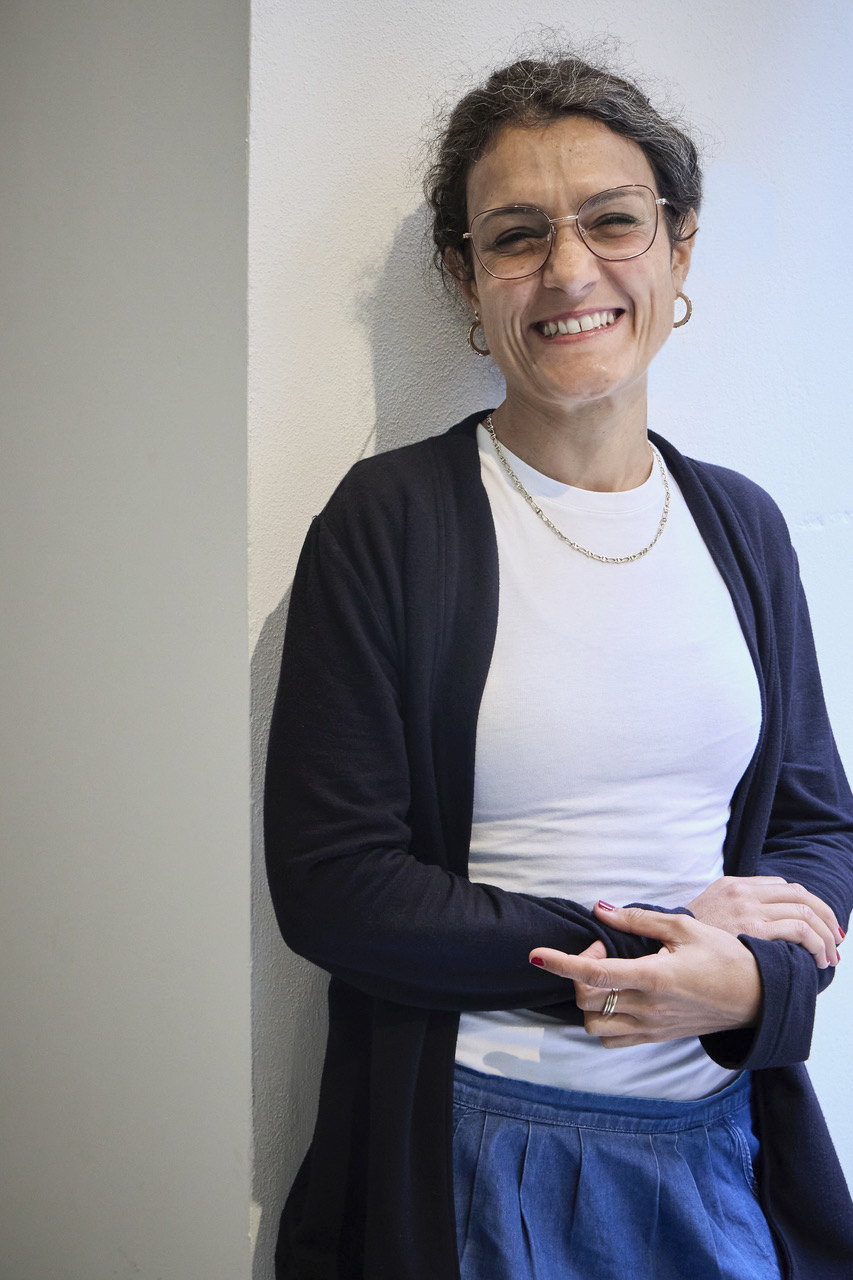
Natalia Pazzaglia is co-founder and CEO of Legacy Compass, a UK platform for the practical and emotional conversations families need around loss. She previously founded Lasae, Italy’s first platform dedicated to navigating grief, and was selected for the Zinc startup programme in 2023.
Legacy Compass began with a family loss and became a funded UK startup. Natalia Pazzaglia lost her mother after a long illness, spent months asking whether her struggle was hers alone, and built the answer into a business: a platform for the conversations families avoid until they cannot. She tested demand with a crowdfunding campaign that raised about £26,000 from around 200 backers at the end of 2024, went through the Zinc startup programme in 2023 and raised £60,000 from Bethnal Green Ventures in 2025. She is now building an AI-based conversational tool rooted in 229 interviews with people who have lived through loss.
We spoke to her about grief as a market, protecting yourself when your own loss is the business, why migrant women founders fundraise against the network gap, and where AI belongs in conversations people do not want to start.
When did you realise your experience pointed to a bigger problem?
Legacy Compass grew out of losing my mother after a long illness and my wider experience of loss.
The moment in which I realised that what I’d been through was not just personal, but pointed to a much larger problem, was when I started having interviews with other people.
I remember thinking, especially in the first semester after my mum’s death: is it only me struggling so much, or is it other people too?
I started talking to people around me who I knew had been through something similar and asking them if they were struggling or not. I think what I wanted was to understand whether I was the only one struggling, or whether I could somehow feel a little less lonely and less of an alien because I was not the only one.
After something like 25 chats, in almost all of them I was referred to other people. People would say, “By the way, I know this other person who is also struggling. Why don’t you talk with her too?”
This showed me clearly that it was not just my problem, but a much larger problem. In the end, I had almost 50 interviews, and this was when I realised: I think now it is time for me to create something that can actually help. Even if we help all those 50 and nobody else, it will be worth it.
That’s how I started my first platform, which was Lasae, based in Italy.
How did you test that it could be a business, not only a meaningful project?
This was something I really had in mind. I spent time trying to understand whether this could work as a business or not. I decided to do a crowdfunding campaign because I thought that could be the fastest way for me to understand whether this was something people would actually pay for.
We did the crowdfunding campaign at the end of 2024 and raised about £26k from around 200 backers. So this definitely demonstrated that there was a market out there and that there were people interested in paying to solve the problem. It wasn’t only a meaningful project.
Why stay in such a difficult space?
It’s a good question.
The reality is that through Lasae I had the chance to build a business in the UK because I was selected for a VC startup programme (Zinc) in 2023, where I worked on financial shocks related to loss.
So it was more like a chance that I was given than something that I had planned myself. But I was very happy to have the opportunity to turn something that had started from my own experience into something with a much bigger reach, related to an even larger problem: the financial shocks associated with loss.
How do you protect yourself from reliving your own grief?
The reality is that this is just how I am. I’m a very transparent person. Many people who have worked with me, including my advisor, have told me that I “wear my heart on my sleeve.” That’s who I am, so I wouldn’t be able to change this.
The way in which I operate is with authenticity. I tried in the past, especially when I was younger in my professional career, to somehow deny this way of being, but that’s not something that I can do.
However, protecting myself when talking about grief and loss is necessary. But, because of all the work I’ve done on vulnerability, I’m aware that it’s really important to create boundaries. This is what I try to do with our users and when I lead workshops.
I also have my own toolkit for self-care and self-support, built around therapy, journaling, mindfulness, time in nature, walking and being active. Since working in startups, I’ve also become increasingly aware of the importance of protecting my personal time.
How do you sell conversations people do not want to start?
People experience loss much more than we imagine. But after almost four years in this field, I’ve found that even people who avoid talking about it will often open up, even briefly, if they’re in a comfortable and safe space.
There are also many different types of grief. It’s not just about losing a person. It can be the loss of a job, a relationship or a pet. Almost everybody knows someone close who has been through something like that, if they haven’t experienced it themselves. The reality is that people often don’t feel they can work through it or open up safely.
In terms of market distribution, we’re therefore looking at triggering points that create greater awareness and urgency around tackling these problems. That’s why we’re now working with caregivers supporting people with major illnesses, such as cancer or dementia. In those situations, the problem is real and present in everyday life.
What did the funding allow, and what could it not do?
BGV investment helped us develop the product and conduct the user research, which has always been one of the most important parts of how we work. Our product is behaviour-led and created through a collection of lived experience and through 229 interviews conducted over the last three years.
It allowed us to develop the product, our relationships with users, the research, and to test different types of products, up until the conversational tool we’re developing now, which is AI-based but rooted in lived experience and user experience.
What it didn’t allow us to do was scale. The type of technology necessary to respect the user-centred, trauma-based and behaviour-led aspects of the product can’t be built with £60k.
That’s something that’s definitely in our plans for the future.
Has proving commercial viability been harder as a woman and migrant founder?
At the beginning, especially in Italy, I was challenged on whether this could be a commercially viable business.
The reality in the UK is that this is understood to be a real commercial problem. I’ve had fewer challenges explaining why this is a business because there are now competitors and large players investing millions in this field.
Concerning being a woman founder, yes, this has played a big role. I’ve had more problems raising funds, especially at the stage we’re at now. I guess that not only being a woman founder but also being a migrant woman founder has proven to be a real challenge because I don’t have the same network and connections that other founders who are British and male may have.
I wouldn’t say I’ve been discriminated against, although I’ve had a couple of moments where it was harder for me as a woman to work because of personal circumstances related to being a woman.
Where does AI make these conversations easier?
The moment in which AI really makes things easier is connected to the fact that we’re human. As humans, we forget things, we don’t always think about things properly and we’re not always clear-minded. There’s a huge opportunity for AI to track, record and feed back what we say and what we know but sometimes forget to act on.
For example, one of our users told me this morning that she was impressed by how the AI conversational tool picked up something she’d said at the beginning of a 20-minute conversation, which she’d completely forgotten she’d mentioned, and brought it back at the end as part of a proposed next step.
She was also impressed by how the AI challenged some of her assumptions. For example, she said, “I don’t think my mum has any support network she can draw on.” But the AI reflected back that she’d mentioned her mum was very sociable and belonged to community associations. It challenged her to consider whether those people could potentially form part of a support network.
There’s therefore a very interesting opportunity for AI to help us think differently and challenge our assumptions.
There’s also something we’re exploring around emotional and practical behaviour that AI may be able to assess more objectively than we can ourselves, because sometimes we don’t think clearly.
What would you tell a woman who wonders whether a business could come from what she has been through?
The way in which Lasae and Legacy Compass were born was partly my own way of coping with trauma and difficulties. I’ve always felt that if a difficulty can be shared and can become a way of helping other people, it somehow makes my own difficulty smaller.
So when I started, I wasn’t thinking, “This will become a company.” It was more: “I want to do something to help others.”
From there, because I also have a background in business development and social impact, I could see indicators and clear market potential for turning it into a company.
But I think these are two separate things. One is how a personal project can help us cope with our own difficulties. The second is whether it can become a profitable business. I believe those two questions need to be considered separately, with a very clear mind and an honest assessment, which isn’t always easy when the problem has been your own.
Her funding route ran from crowdfunding to impact investors. If you are weighing up the crowd for your own business, our guide to running a crowdfunding campaign in the UK runs the real numbers. Her point about protecting yourself while you build is one we hear from founders recovering from burnout too. And for the wider case she is part of, see why women make great entrepreneurs.