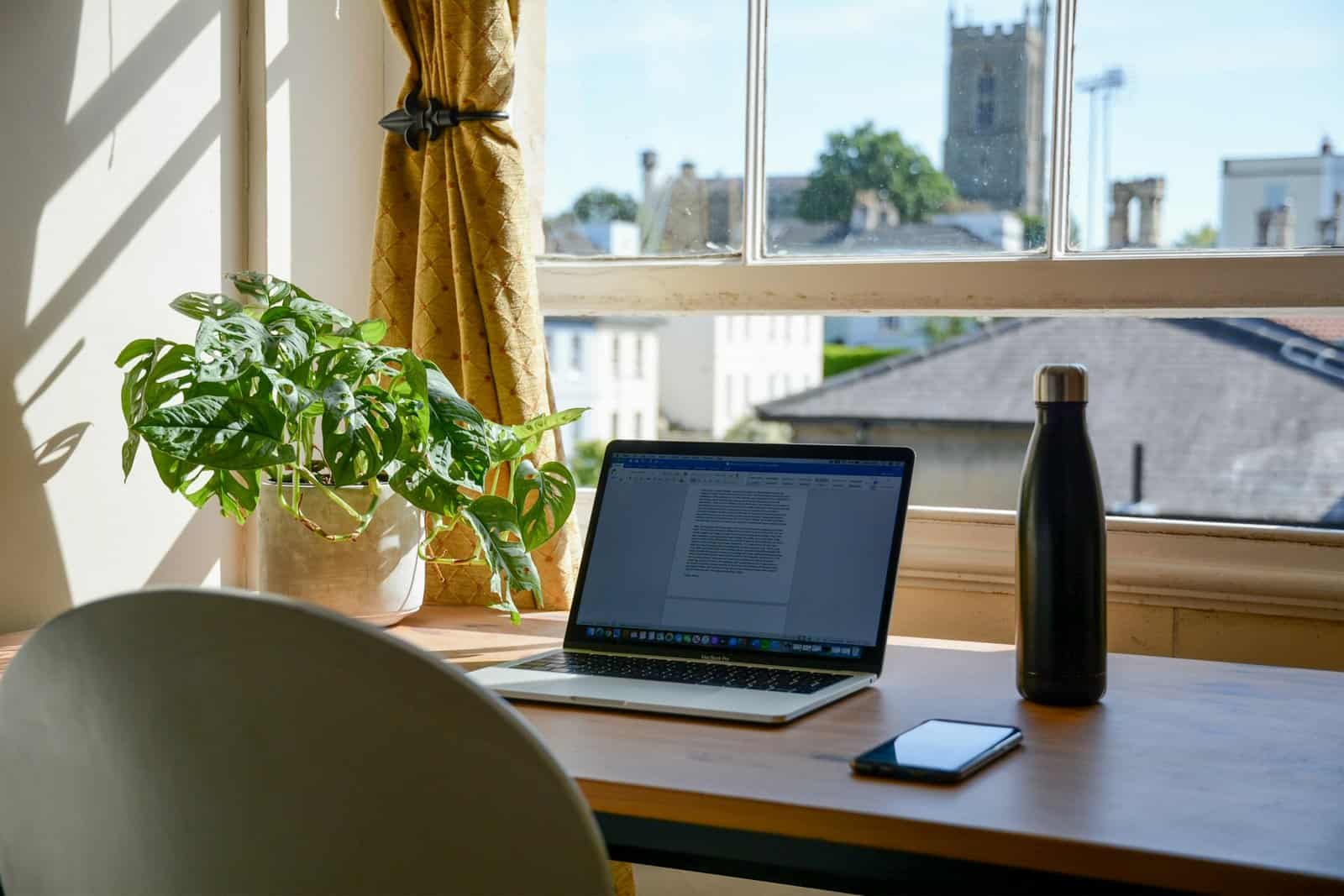
When you run a business from home, your workspace is not always a perk. Most home-based founders will happily upgrade the chair, add a second monitor, and pay for faster broadband while ignoring the part of the office that affects their output more than any of them, which is the air they breathe all day.
This is the blind spot nobody puts on a home-office setup list, and it matters more for you than for almost anyone. When you are the whole team, there is no colleague to cover a foggy afternoon and no sick pay to soften a week off. Your energy is the business, so anything that quietly drains your focus ends up showing in the work and the revenue rather than just how you feel.
Why the room you work in can work against you
Home offices tend to land in the leftover corners of a house. A spare room that never gets aired, a converted garage, a basement nook, a box room with one small window. Those are the spaces where damp settles and airflow is weakest, which happens to be exactly what mould needs to take hold.
Mould is more than a stain on a wall. As it grows it releases spores and compounds into the air, and breathing them in day after day has been linked to fatigue, headaches, congestion, and the sort of low-grade brain fog that stretches an hour of real work into three. Spend forty-plus hours a week at a desk in a room with a hidden moisture problem and you are taking a heavier dose than anyone else in the house. Good discipline cannot outwork bad air.
The giveaway is a pattern. If your concentration drops at your desk and sharpens the moment you work from a cafe or a client’s office, or a stuffy head clears on holiday and comes back the day you return to your workspace, the room deserves suspicion rather than another coffee.
What mould actually is, in plain terms
Mould is a fungus, and its microscopic spores float in the air of every building all the time, indoors and out. On their own they are harmless. They only become a problem when they settle somewhere damp that offers something to feed on, and a home office supplies plenty of food in the form of dust, timber, plasterboard, and paper.
Once a spore lands on a wet surface it grows fine root-like threads into the material and starts reproducing, releasing thousands more spores into the air you are sitting in. The musty smell that comes with it is not the mould itself but the gases it gives off as it feeds, which is why a damp, earthy odour is a reliable sign that something is actively growing nearby, even when you cannot see it. Moisture is the one ingredient you control, so it is the one to remove.
A quick audit worth doing this week
You do not need to overhaul anything, just look. Check the walls behind and around your desk, the window frames, and the skirting near external walls for dark speckling, peeling paint, or a musty smell you may have stopped registering. This guide to identifying household mould covers what to look for and the places it tends to hide.
Pay closer attention if the office is in a garage or basement, since sustained damp in those rooms is where the darker, more stubborn growth people call black mould appears. If you find it, resist the urge to scrub it with bleach and read how black mould is properly removed first, because disturbing it the wrong way spreads far more spores than it clears.
Then handle the basics. Ventilate the room, run a dehumidifier if it feels damp, and keep humidity in the 30 to 50 percent range so mould cannot establish. Sort out any leak or condensation quickly instead of letting it sit through the winter.
Running a business from home is one of the smartest moves many founders make. The office is still part of the operation, though, and the air in it is a working condition worth protecting, because the asset it guards is a clear head at the desk on the days your business depends on one.