Digital payment solutions have moved from a convenience to essential infrastructure for UK small businesses. For women running their own company, getting paid quickly and cheaply directly affects cash flow, pricing power, and growth. Whether you invoice other businesses, sell through an online shop, or take card payments at a market stall, the right setup can cut admin time, reduce late payment risk, and keep your books ready for HMRC.
According to Women in Business: Key UK Facts, women-led enterprises are a growing force across every region and sector. Yet many still lose hours chasing invoices or reconciling cash. Modern digital payment tools can recover that time. Here is how they simplify business transactions for UK women founders and what to look for when choosing a provider.
Faster settlement keeps cash moving
The biggest practical gain from digital payment solutions is speed. Traditional methods such as cheques can take several working days to clear, and cash requires manual counting, banking, and reconciliation. In contrast, the UK Faster Payments service allows near-instant bank transfers, and in 2022 the per-transaction limit was raised to £1 million by Pay.UK, the operator of the UK retail payments infrastructure. That makes same-day settlement realistic even for larger B2B invoices.
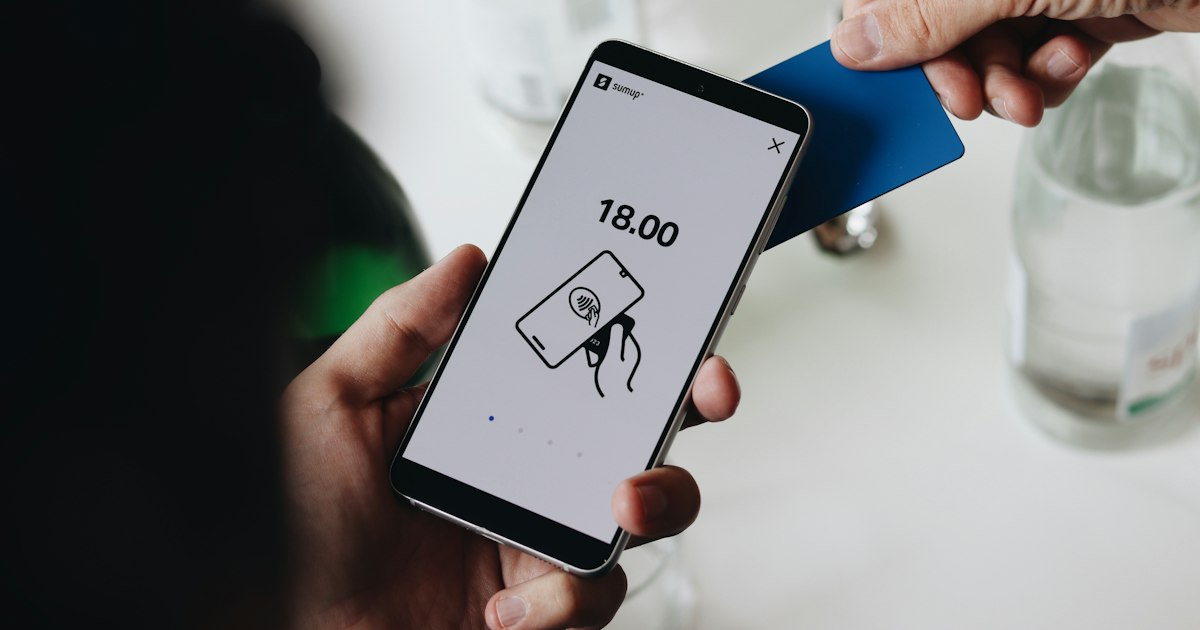
For face-to-face sales, contactless card and mobile wallet payments are now standard. The UK contactless limit stands at £100, a level set by UK Finance and the card schemes in October 2021. Most card terminals also accept Apple Pay, Google Pay, and Samsung Pay, which can process higher values with biometric authentication. The result is fewer abandoned sales at the till and less time handling cash.
Open Banking payments add another option. Launched in the UK in January 2018 by the Open Banking Implementation Entity, the framework lets customers pay directly from their bank account through an authorised third-party provider. These account-to-account transfers typically settle faster than card payments and carry lower transaction fees, which matters when margins are tight.
Lower and more predictable costs
Payment processing used to mean negotiating with a single merchant acquirer and accepting opaque bundled rates. Today, UK businesses can choose from a range of providers including SumUp, Zettle by PayPal, Square, Stripe, GoCardless, and dedicated Open Banking services. Competition has made pricing more transparent, with many providers offering pay-as-you-go transaction fees rather than long-term contracts with fixed monthly costs.
Card interchange fees remain capped in the UK at 0.2 per cent for debit cards and 0.3 per cent for credit cards, following the retained EU Interchange Fee Regulation of 2015. However, the total cost you pay also includes scheme fees and the provider’s margin, so it is worth comparing the effective rate rather than the headline figure. For recurring revenue, direct debit providers or Open Banking variable recurring payments can cut costs further and reduce payment failures.
Cleaner records and Making Tax Digital compliance
Digital payments create an automatic electronic trail. Every transaction is time-stamped and linked to a customer or invoice, which makes reconciliation far easier than matching cash takings or cheque stubs against bank statements. Most modern providers integrate directly with accounting software such as FreeAgent, Xero, QuickBooks, or Sage, so sales flow into your books without manual rekeying.
This matters because HMRC’s Making Tax Digital programme is expanding. VAT-registered businesses are already required to keep digital records and submit VAT returns through compatible software. From April 2026, Making Tax Digital for Income Tax Self Assessment becomes mandatory for self-employed people and landlords with gross income over £50,000, with a further threshold of £30,000 from April 2027. A digital payment setup that feeds straight into your accounting software puts you ahead of those deadlines. Our Making Tax Digital Sole Trader: 2026 Checklist for Women explains the steps in detail.
If your taxable turnover exceeds the VAT registration threshold of £90,000 from April 2024, you must register for VAT and use MTD-compatible software. Even if you are below the threshold, digital records make it easier to spot when you are approaching the limit and to claim allowable expenses accurately.
Security standards customers recognise
Security concerns often hold small businesses back from moving payments online, but modern digital payment solutions are built around recognised standards. The Payment Services Directive 2, implemented in the UK through the FCA’s Strong Customer Authentication rules, requires two-factor authentication for many electronic payments. That reduces fraud risk for both you and your customers.
For businesses taking card payments, PCI DSS compliance is essential. Most card terminal and payment gateway providers handle much of this on your behalf, but you remain responsible for how you store and handle card data. Using a hosted checkout page or a certified card reader is usually the simplest way to stay compliant.
You should also ensure your website uses HTTPS, not HTTP. An SSL certificate encrypts data between your site and your customer’s browser. Search engines also favour secure sites, so it supports both security and visibility.
Choosing the right digital payment solutions
The best payment mix depends on how your customers want to pay and how your business operates. For women founders juggling client work, operations, and family commitments, a setup that automates reconciliation can be as valuable as a low fee. Ask yourself these questions before signing up:
- Do most of your sales happen in person, online, or by invoice?
- Do you need instant settlement, or can you wait one to three working days for lower fees?
- Do you take regular subscriptions or repeat invoices?
- Does the provider integrate with your accounting software?
- What are the total fees, including hardware rental, chargebacks, and currency conversion if you sell overseas?
For sole traders and limited companies alike, it is also worth separating business and personal finances. A dedicated business bank account with built-in invoicing and payment links can simplify bookkeeping and make it easier to pay yourself as a limited company director without confusion.
Practical action steps for your business
- Audit how you currently accept payments and identify the biggest friction point, whether that is late invoices, cash handling, or reconciliation.
- Compare at least three UK payment providers using your typical monthly transaction volume and average transaction value.
- Check that your chosen provider integrates with your accounting software and supports Making Tax Digital record-keeping.
- Confirm your website has an active SSL certificate and that any online checkout meets PCI DSS requirements.
- Review your payment terms and consider adding instant bank transfer or Open Banking options to reduce delays.
Digital payment solutions give UK women-led businesses a practical way to speed up cash flow, cut administrative burden, and stay compliant with evolving tax rules. The technology is already here; the advantage goes to those who choose the right combination for their customers and their bookkeeping.