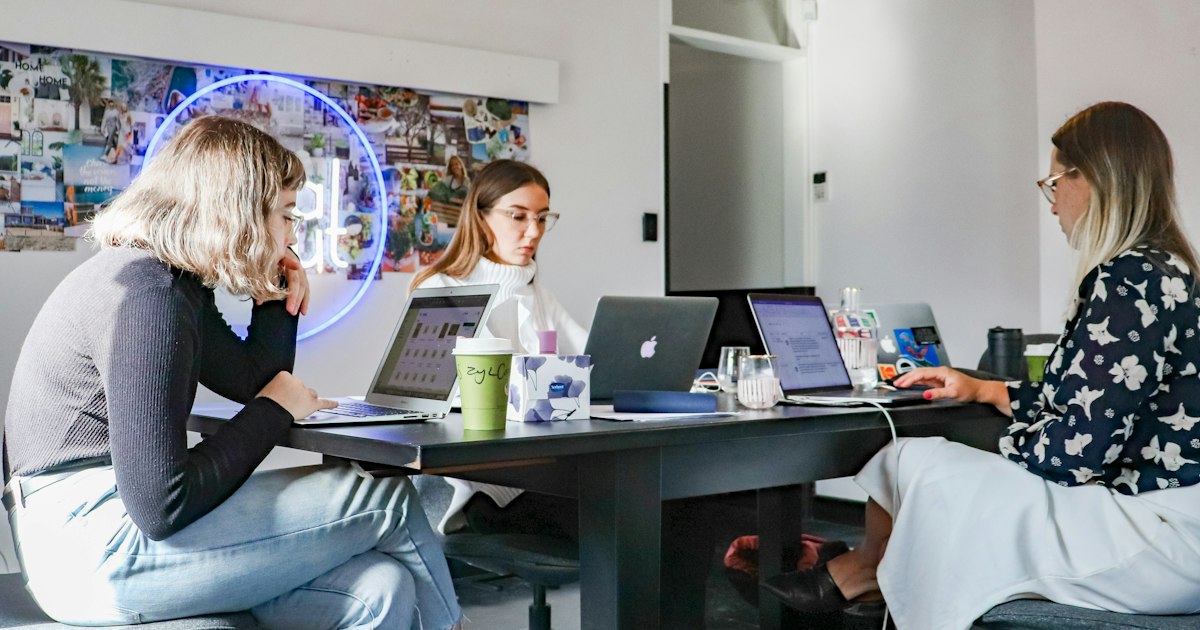
When millions of UK workers swapped the office for spare rooms and kitchen tables in 2020, some hoped remote working would dial down everyday sexism. Without the commute, after-work drinks or open-plan office, surely women would face fewer comments about their clothes, makeup or bodies? Early reports suggested otherwise: women said they faced appearance-related comments and demands during business video calls, while male colleagues were rarely subjected to the same scrutiny. Six years on, video call sexism has not gone away.
Remote and hybrid working are now permanent fixtures for millions. According to ONS data from 2023, 44% of UK workers had worked from home at some point in the previous week, with women more likely than men to report hybrid arrangements. The shift online has created new channels for old prejudices. Research by the TUC published in 2023 found that nearly three in five women had experienced sexual harassment, bullying or verbal abuse at work, and that harassment increasingly happens through video calls, emails, instant messages and social media. Two thirds of women who experienced sexual harassment did not report it, often because they feared they would not be believed or would damage their career.
Employment lawyers say it is categorically wrong for anyone in a position of power to suggest that a woman should be more sexually appealing at work. When a manager links a woman’s appearance to winning business or pleasing a client, it sends the message that her value is decorative rather than professional.
How does video call sexism show up in hybrid work?
The problem goes beyond dress-code comments. Women working remotely report being asked to keep their cameras on when male colleagues are not, receiving remarks about their home backgrounds, childcare interruptions or appearance, and being excluded from virtual meetings where decisions are made. For women with caring responsibilities, the expectation to look camera-ready at short notice can be impossible to meet, compounding the disadvantage they already face. Recognising these patterns is the first step to stopping video call sexism in your workplace. Flexible working rights in 2026 give employees more scope to request predictable hours and location, but cultural expectations on camera can undermine that flexibility.
Despite the #MeToo movement and repeated government promises, workplace misconduct remains chronically underreported. The Equality and Human Rights Commission has highlighted that poor handling of complaints, the use of non-disclosure agreements and a lack of rigorous investigation all discourage women from coming forward.
What counts as sex discrimination on a video call?
Under the Equality Act 2010, sex discrimination at work includes direct discrimination, indirect discrimination, harassment and victimisation. Direct discrimination happens when someone is treated less favourably because of their sex. Indirect discrimination happens when a policy, practice or rule puts women at a particular disadvantage and cannot be objectively justified.
Appearance-based demands can fall into either category. A manager who tells a woman to wear more makeup or dress “sexier” for a client video call is likely committing direct sex discrimination and harassment. A dress code that bans hairstyles associated with Black women, such as cornrows, or that requires high heels, can be indirect discrimination and may also discriminate on the basis of race or disability.
Since 26 October 2024, the Worker Protection (Amendment of Equality Act 2010) Act 2023 has placed a new duty on employers to take reasonable steps to prevent sexual harassment of their staff. The Equality and Human Rights Commission published guidance in 2024 making clear that this duty covers harassment that happens online, including during video calls and on workplace messaging platforms.
When do employees have the right to complain?
Employees do not have to tolerate sexist comments or appearance demands, whether they happen in person or on screen. ACAS, the workplace relations service, advises anyone experiencing bullying or harassment to keep a written record of incidents, including dates, times, witnesses and any screenshots of messages or video-call invitations.
If you feel able, raise the issue informally first. If that does not work, or if the behaviour is serious, use your employer’s formal grievance procedure. You have the right to be accompanied to a grievance hearing by a colleague or trade union representative.
It is unlawful for an employer to victimise you for raising a discrimination complaint. If you are dismissed or treated badly because you complained, you may have a claim for unfair dismissal or victimisation. Citizens Advice and GOV.UK provide guidance on making a claim to an employment tribunal.
Before deciding on a route, think about what outcome you want. If you want the behaviour to stop and your working relationship to improve, a formal grievance or mediation may help. If you have lost your job or want compensation, an employment tribunal claim may be more appropriate. Early conciliation through ACAS is usually required before a tribunal claim can proceed.
What should employers do about video call sexism?
Employers should treat video calls and digital communication as part of the workplace, not a grey area where normal standards do not apply. A 2026 diversity and inclusion guide for small businesses can help you audit policies, train managers and set consistent standards for hybrid teams.
That means updating equality, bullying and harassment policies to cover remote and hybrid working, training managers on unconscious bias and acceptable conduct on camera, and ensuring complaints are investigated promptly and fairly.
Clear dress codes should be reasonable, gender-neutral and justified by business need. Camera-on policies should apply consistently and take into account privacy, disability and caring responsibilities. Most importantly, senior leaders should model respectful behaviour and make clear that sexist comments about appearance are never “just banter”.
What practical action can you take now?
- Review your employer’s equality and harassment policies to check they cover remote and hybrid working.
- Keep a written record of any sexist comments or appearance demands, with dates, times and screenshots where possible.
- Raise concerns informally first if you feel safe to do so, then escalate through the formal grievance procedure if needed.
- Contact ACAS for confidential advice on workplace harassment and early conciliation.
- If you run a business, update your policies and train managers on the 2024 Worker Protection Act duty.
The rise in video calls has not created sexism, but it has exposed how easily gendered expectations adapt to new technology. As hybrid working becomes the norm, employers and regulators must ensure that the digital workplace is held to the same legal and ethical standards as the physical one. Tackling video call sexism is not just about compliance; it is about making hybrid work fair for everyone.