Louise Third received the 2014 Start Your Business Lifetime Achievement Award in recognition of more than 25 years’ service to UK enterprise. A former editor of Business Adviser, the official journal of the Institute of Business Advisers (now part of the Chartered Institute of Management), she has shaped high-profile campaigns promoting small business support and women’s business support. Her work remains highly relevant in 2026: the UK government’s 2019 Rose Review of Female Entrepreneurship found that women-led businesses account for around one in five UK firms and contribute an estimated £85 billion to the economy each year, while closing the gender entrepreneurship gap could add up to £250 billion.
Zia Mallick, founder of Start Your Business magazine and CEO of Gambit Interactive Media, said, “Louise remains an inspirational figure in the SME sector. She has always had an enterprise focus and therefore built an incredible understanding of how entrepreneurship should best be promoted in the UK.”
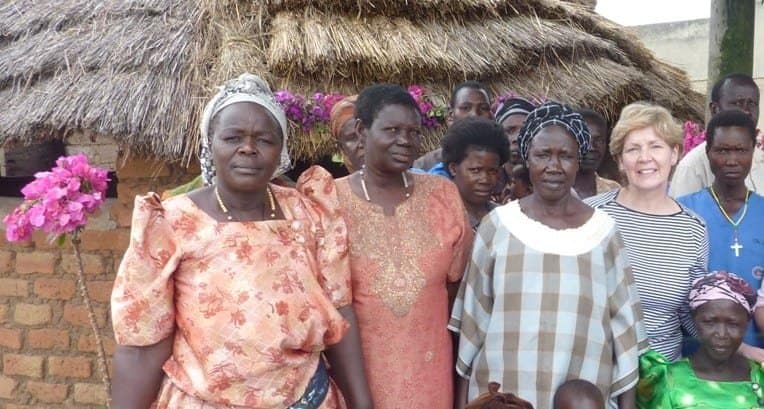
Reflecting on the award, Louise said: “I very much appreciate the recognition, but there is still so much more I want to achieve. It is a real privilege to be able to use my skills in helping ambitious smaller companies, especially those set up by women. I’ve just returned from the remote Teso region of eastern Uganda where women’s cooperatives are having an enormous impact on meagre family incomes and the local economy. We need to encourage many more female entrepreneurs in the UK to have the same energy and courage in business as women in Uganda.”
Louise has been a strong supporter of Prowess for more than two decades and spearheaded many of our campaigns in the past. It is great to see the depth and commitment of her experience acknowledged, and it provides a welcome opportunity to invite her to share that experience with the Prowess community. Read on for the Louise Third Q&A.
How did you first enter business support?
One of my geography degree assignments was to study the role small businesses play in economic regeneration. That was 1982 and in the North East, which had been decimated by the closure of shipyards and coal mines. I became fascinated by the early work of the very first Local Enterprise Agencies and in 1983 joined the Board of Project North East whilst managing a Community Business Venture project for the Tyne & Wear Enterprise Trust. I recall the meetings with various women’s groups in Gateshead and South Shields as they looked for alternative ways to run local facilities through credit unions.
It’s amazing to think that 25 years on, in November 2014, I was sitting with a similar group of women, but this time as a charity volunteer and in a remote village of north-eastern Uganda. I was monitoring the effectiveness of the Village Savings and Loans Associations (VSLA) supported by the Teso Development Trust and already empowering these women to save and invest in education, health and enterprise.
What have been your main career highlights?
The busiest period in my early career was pre-children when I worked for Sheffield Enterprise Agency and headed up the youth enterprise and women’s business programmes. Managing Shell Livewire and monitoring loans for The Prince’s Trust led me to be chosen by Yorkshire Television to act as Chair of Judges on the annual EnterPRIZE competition TV show, an early version of Dragons’ Den and The Apprentice, but far more true to the reality of business. This was my first brush with the media and a foretaste of life in PR.
Integra Communications was launched in 2001 and established a solid reputation for national PR across the enterprise support industry. By 2003 I was editing Business Adviser magazine for the Institute of Business Advisers and handling the PR for organisations such as the National Federation of Enterprise Agencies, SFEDI, the Social Enterprise Coalition, Prowess and WiRE. Building relationships with the key business editors enabled me to work alongside British Chambers of Commerce President Isabella Moore in the successful campaign to establish a Women’s Enterprise Task Force under the Brown government.
When public funding for enterprise support started to dwindle from 2007, Integra was invited to handle the PR for an early-stage life sciences business incubator, BioCity, in Nottingham. We subsequently helped to launch BioCity Scotland, BioHub at Alderley Park and MediCity. The latter now provides our main office base from where we service a number of bioscience, healthcare and med tech innovation businesses.
How have you stayed resilient for 25 years?
I guess it must be down to my early experience in both Newcastle and Sheffield, experimentation with new enterprise support programmes, as well as developing and maintaining contact with those I met in the 1980s. For example, I continue to handle PR for Professor Colin Mason, an expert in business angel funding, but someone I first came across when I referenced his early academic research in my undergraduate study of SMEs. The decision to move from business advisory work into PR gave me both an understanding of the smaller business and the media.
I measure success on the impact made, and I believe our major clients, as well as the charities I support, recognise the added value PR has brought to their standing and reputation.
What have you learned about women in business?
From a media perspective, news stories about smaller growing companies run by characterful individuals are like gold dust. It has been a real pleasure to interview and promote hundreds of enterprising individuals for news pages, magazines, radio and TV. So being an imaginative and creative storyteller helps others to understand the small business start-up and growth process. For a time, I also promoted the role of the business adviser and mentor, which added a further dimension to these stories.
Whilst we need to be aware of the barriers many women face when starting a business, I’m convinced promotional campaigns should focus on the benefits and opportunities self-employment and business ownership undoubtedly bring women. This is the approach to self-help taken in Uganda through the women’s cooperatives, where training in business skills is combined with self-awareness and confidence-building.
The evidence supports this emphasis. The UK government’s Rose Review of Female Entrepreneurship (2019) found that women-led businesses contribute around £85 billion to the economy annually, and that closing the gender entrepreneurship gap could add up to £250 billion. Yet women-led firms made up only around 20% of UK businesses, so there is a long way to go.
Who or what inspires you?
If inspiration provides the motivation to get up and do something, then my two daughters, now in their thirties, have had a significant influence on my most recent ventures. Both used their gap years to work in some of the world’s poorest communities, and it was their example that inspired me to want to volunteer for the Ugandan charity, Teso Development Trust. I travel out on monitoring visits, and come away inspired by the determination and resilience of village women who manage so much on so little. I feel women in the UK could learn a great deal from women entrepreneurs in Africa.
What is your best advice for founders?
Don’t allow self-doubt to undermine your goals. Find a supportive friend or mentor to help you appreciate what you are achieving and to remind you just how far you have travelled.
What is next for you and Integra Communications?
Integra Communications continues to support clients in business support, innovation and finance on creative promotional campaigns. I will continue to provide pro-bono PR support to charities tackling poverty in the UK, including food banks, and will play an active fund-raising role for the Teso Development Trust. Looking ahead, I can see myself spending more time in Uganda working on enterprise development, support and training.
Why does your message still matter in 2026?
Louise’s career shows that promoting women in business is a long-term project, not a single campaign. The numbers today are better than they were in the 1980s, but the gap remains. According to the UK government’s Rose Review of Female Entrepreneurship (2019), women-led businesses accounted for around 20% of UK firms and contributed an estimated £85 billion annually, while closing the gap could add up to £250 billion to the economy.
Support is available. The British Business Bank runs several programmes for women founders, including Start Up Loans and the Women Backing Women initiative. The women in business networks across the UK also offer mentoring, peer support and introductions that can replace the old enterprise agency infrastructure Louise helped to build.
Her advice to find a mentor and silence self-doubt is particularly relevant now. For women moving into self-employment later in life, the need for confidence-building and practical business storytelling remains as strong as ever.
What action steps can you take?
- Review the latest Rose Review of Female Entrepreneurship progress data to understand the current state of women-led business in the UK.
- Explore British Business Bank funding options, including Start Up Loans, if you are looking for finance to start or grow.
- Join a women in business network or find a mentor who can offer practical feedback and encouragement.
- Practise telling your business story clearly: media, investors and customers respond to specific, characterful examples.
- Track your own progress against past milestones so self-doubt does not obscure how far you have already travelled.
Louise Third’s decades of work remind us that women in business need both practical support and visible role models. The tools and networks have changed since the 1980s, but the underlying message has not: back yourself, find your supporters, and keep telling your story.