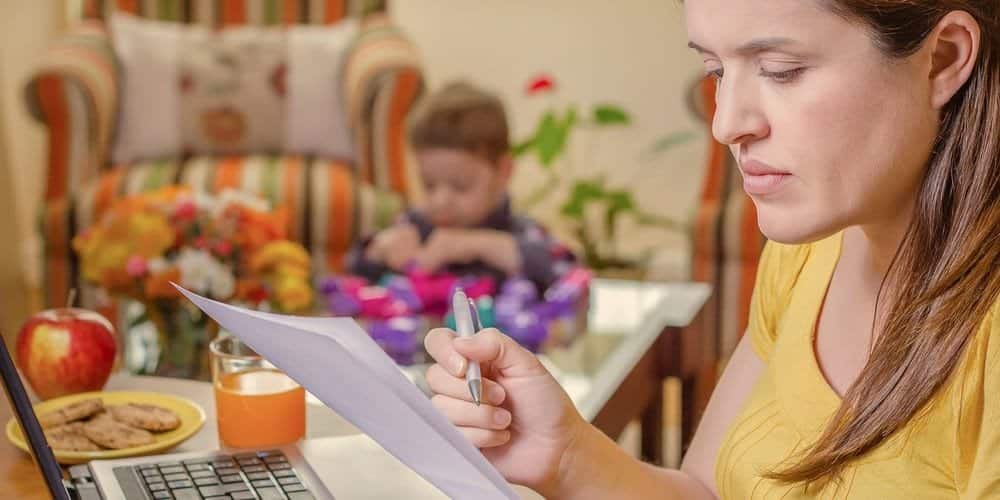
Freelance mums UK: the changing face of self-employment
Self-employment is now a mainstream career path for freelance mums UK who want to combine professional work with family life. According to ONS Labour Force Survey data for 2024, approximately 4.4 million people in the UK are self-employed. Women make up a growing share of this workforce, and mothers with dependent children are among the fastest-growing groups. IPSE analysis of ONS data estimated there were 615,000 self-employed mothers with dependent children in 2023, a rise of roughly three-quarters since 2008.
This shift is not a temporary response to remote working. It reflects long-term changes in the labour market, childcare costs and the technology that makes solo working viable. For women who want control over their hours and income, freelancing offers an alternative to traditional employment that often fails to accommodate caring responsibilities.
Who are today’s freelance mums?
Freelance mums span every sector and skill level. They include copywriters, graphic designers, web developers, consultants, virtual assistants, bookkeepers, tutors, coaches, therapists and social media managers. What unites them is the decision to sell skills on a project-by-project basis rather than accept a permanent employed role.
Many are highly skilled knowledge workers who left senior employed positions after having children and found that traditional employment no longer fitted their caring responsibilities. Others have built micro-businesses around a craft, a professional specialism or a digital service, often starting with a side project while on maternity leave or working part-time.
Why freelance mums UK are choosing self-employment
Several factors are driving the rise. The most frequently cited is flexibility. Self-employment allows mothers to set their own hours, choose their clients and work from home, a combination that can reduce childcare costs and make school runs and emergencies manageable.
The cost and availability of childcare has pushed some women to rethink employment entirely. For others, freelancing is a direct response to the motherhood penalty: the loss of earnings, progression and opportunity that often follows maternity leave. Technology has also lowered barriers to entry. Cloud accounting, project-management tools, video conferencing and freelance marketplaces mean that a solo professional can operate like a small agency from a kitchen table.
Which sectors are growing?
While freelance mums work across the economy, growth has been especially strong in sectors that can be delivered digitally or on a flexible schedule:
- Creative and digital services — copywriting, design, photography, web development and social media.
- Professional and business services — consultancy, HR, marketing, bookkeeping and virtual assistance.
- Education and coaching — private tutoring, online courses, career coaching and wellbeing support.
- Health and beauty — nutritionists, counsellors, personal trainers and beauty therapists.
These sectors suit mothers because the work can often be delivered remotely, scheduled around school hours and scaled up or down as family circumstances change.
The financial realities of freelancing with children
Despite its appeal, freelancing is not an easy option. Income can be irregular, and there is no statutory maternity pay, sick pay or holiday pay for the self-employed. Mothers must plan for gaps in earnings, save for tax bills and build their own pension provision.
Childcare remains a practical hurdle: flexible work does not always mean fewer hours, and many freelance mums find themselves working early mornings, evenings and weekends to fit work around family. There can also be isolation, especially for those working from home, and a lack of clear progression or peer support.
Access to finance can be another barrier. Without a steady payslip, mortgages, loans and business credit can be harder to obtain, which is why maintaining clear financial records and a separate business bank account matters.
Practical steps for aspiring freelance mums
If you are considering self-employment, a few practical foundations will make the transition smoother:
- Register with HMRC. Most freelancers begin as sole traders and must register for Self Assessment by 5 October in their business’s second tax year. See our First Self Assessment Tax Return: A Sole Trader Guide.
- Keep clear records. Track income and expenses from day one. HMRC allows you to claim allowable expenses that reduce your taxable profit.
- Understand your tax and National Insurance. For the 2026/27 tax year, the personal allowance remains frozen at £12,570. Class 2 National Insurance contributions were abolished as a mandatory payment from April 2024, although you can still make voluntary contributions to protect your State Pension and benefit entitlements. Class 4 contributions are 6% on profits between £12,570 and £50,270, then 2% above that.
- Plan for parental leave. Self-employed mothers may claim Maternity Allowance from HMRC. For 2025/26, the standard rate is £187.18 per week for up to 39 weeks, provided you meet the qualifying conditions. Read our Maternity Pay Self Employed: A Complete UK Guide.
- Check your childcare support. Self-employed parents can apply for Tax-Free Childcare, currently worth up to £2,000 per child per year, and may qualify for 30 hours of free childcare for eligible working parents from 9 months old up to school age if they meet the earnings rules. Our Free Childcare Self Employed UK guide explains the details.
- Build a network. Join women’s business networks, attend local enterprise events and connect with other freelance mums online.
- Plan for time off. Build an emergency fund and consider income protection or relevant insurance.
What lies ahead for freelance mums UK
The rise of freelance mums reflects a wider transformation in how, when and where work happens. As employers continue to grapple with talent retention and the cost of living pushes more households to seek additional income, self-employment is likely to remain an attractive option for mothers with marketable skills.
Policy discussions around childcare, parental benefits and pension provision for the self-employed will shape how sustainable this path becomes. For now, the message is clear: freelance mums UK are no longer a footnote in the labour market. They are a growing, influential force in the UK economy.