
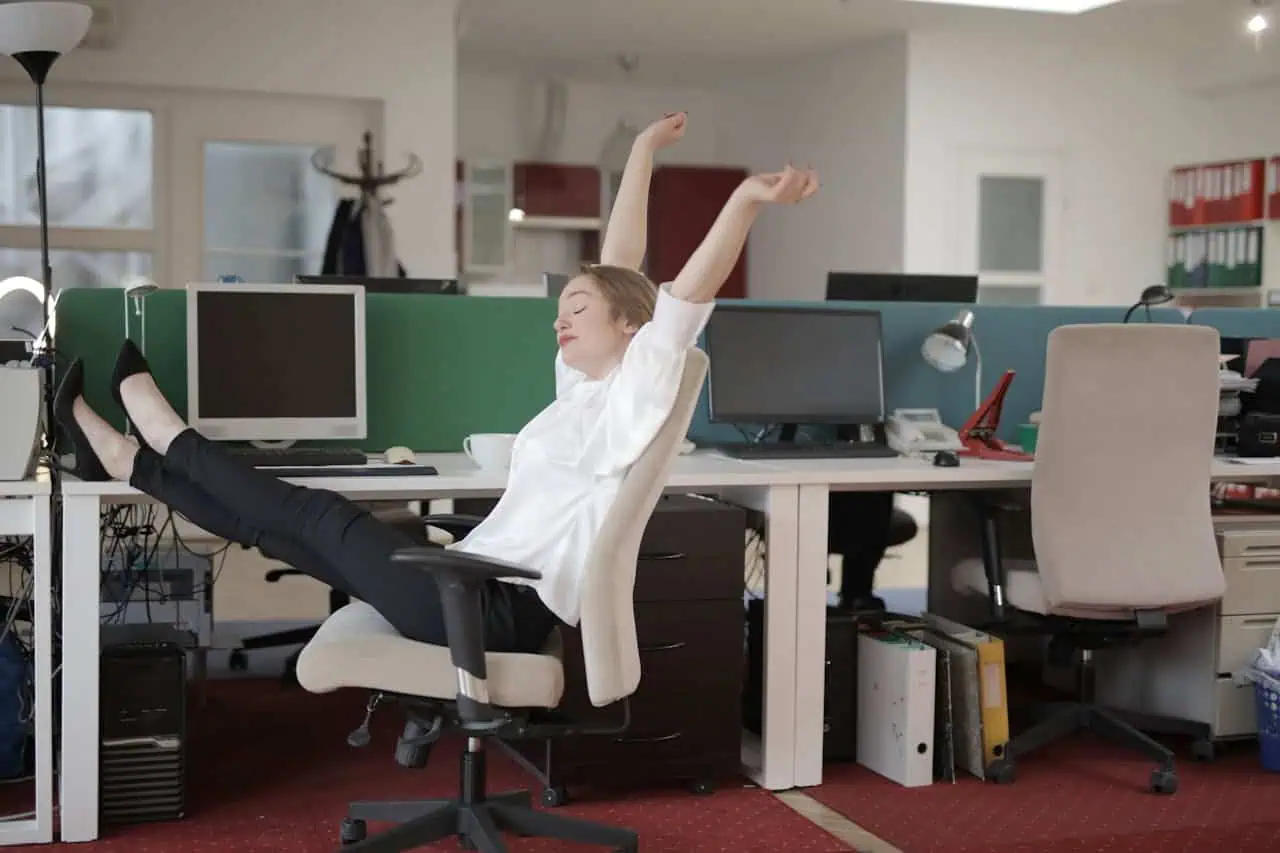
Your office environment might be slowly undermining employee health without you realising it. Here’s how to spot and fix these silent productivity killers
We obsess over ergonomic chairs and standing desks, yet overlook the subtler workplace habits that gradually erode employee health. These aren’t dramatic health crises; they’re quiet degradations that compound over months and years, eventually manifesting as chronic fatigue, illness, and burnout.
The Sedentary Trap
Yes, we’ve all heard that sitting is “the new smoking,” but understanding the problem doesn’t automatically solve it. Employees spend eight hours at desks, then commute home sitting, before collapsing onto sofas. This sustained inactivity wreaks havoc on circulation, metabolism, and mental clarity.
The fix:
The solution isn’t simply installing standing desks and declaring victory. Encourage movement through structural changes: walking meetings, stretch breaks every hour, and parking printers away from desks. Some companies now schedule “movement moments” – two-minute breaks where teams stand, stretch, or walk stairs together.
Make movement socially acceptable rather than apologetic. When managers regularly stand during calls or walk while thinking, teams follow naturally.
Desk Snacking Disaster
Here’s where most offices unknowingly sabotage their own productivity. Vending machines stocked with crisps, biscuit tins circulating endlessly, chocolate bars grabbed from corner shops – these convenience foods create devastating energy patterns.
Ultra-processed snacks spike blood sugar rapidly, delivering temporary alertness followed by inevitable crashes. By 3pm, entire offices slump into fatigue, reaching for more sugar or caffeine to compensate. This cycle repeats daily, leaving employees perpetually exhausted despite consuming substantial calories.
The metabolic consequences extend beyond tiredness. Research from University College London links ultra-processed food consumption to increased disease risk, poor sleep quality, and decreased cognitive function. Your innocent desk drawer stash might be quietly destroying long-term health.
The fix:
This requires environmental redesign rather than willpower lectures. Remove temptation by eliminating vending machines and biscuit supplies. Instead, provide genuinely healthy alternatives like snack boxes or fruit boxes that satisfy hunger without triggering energy crashes.
Research from London based office fruit delivery provider Fruitful Office [known as their Great Fruit Experiment] revealed that over 80% of participating businesses in the 3 month office fruit trial reported that ‘Quality of life in the office’ had improved significantly. The automatic availability of fresh, seasonal fruit to your workplace makes healthy snacking easier, the impulse to grab whatever’s close because you’re busy now works in your favour.
When quality fruit sits readily available, employees naturally gravitate toward it over processed alternatives. An apple provides sustained energy, fibre that stabilises blood sugar, and nutrients that support immune function.
Mental Burnout Creep
Perhaps the most insidious workplace health destroyer operates psychologically. Constant connectivity, blurred work-life boundaries, and relentless productivity pressure create chronic stress that accumulates silently until sudden collapse.
Employees check emails at dinner, answer messages during holidays, and feel guilty taking proper lunch breaks. This sustained activation of stress responses damages mental health, disrupts sleep patterns, and weakens immune systems. Burnout doesn’t announce itself; it gradually steals energy, enthusiasm, and wellbeing.
The fix:
Addressing burnout requires cultural shifts, not just individual resilience training. Establish clear boundaries: no emails after 5pm, mandatory lunch breaks away from desks, and genuinely unplugged holiday time. Model these boundaries yourself: teams watch leadership behaviour far more closely than they listen to wellness speeches.
Introduce “deep work” periods where meetings are banned and interruptions minimized. Protect thinking time as fiercely as you protect budget meetings. When employees can focus without constant disruption, they accomplish more while experiencing less stress.
Creating Change that Lasts
These three habits interconnect dangerously. Sedentary workers eating processed foods while managing chronic stress create perfect conditions for health deterioration. But the inverse also holds true: small improvements compound positively.
Movement breaks improve mental clarity, reducing stress perception. Stable blood sugar from quality nutrition enhances emotional regulation and decision-making. Lower stress levels improve sleep, which supports better food choices and increased physical activity.
Start with nutrition, it’s the easiest intervention with the fastest results. Within two weeks of switching from processed snacks to fresh fruit, teams report noticeably improved afternoon energy levels. This success motivates further wellness initiatives.
Ready to transform workplace health? Begin with one habit this week and build momentum from there – your team’s wellbeing depends on it.

Emily Newall is Health & Lifestyle Editor at Prowess.org.uk, where she commissions and writes evidence-based features on health, wellbeing and contemporary living.
She graduated with a First Class BA (Hons) in Politics and Sociology from the University of East Anglia. Her academic work explored social inequality, gender, public policy and the structural determinants of health — themes that continue to inform her journalism.
Emily’s editorial focus includes women’s health, mental wellbeing, workplace culture, lifestyle sustainability and the societal pressures shaping modern life. She approaches these topics through a research-led lens, analysing trends in the context of policy, culture and social change rather than treating lifestyle as purely individual choice.
As a well-travelled writer, she draws on international perspectives to compare health behaviours, cultural norms and approaches to wellbeing across different societies.
Her work aims to provide readers with informed, thoughtful and socially aware coverage rather than trend-driven commentary.