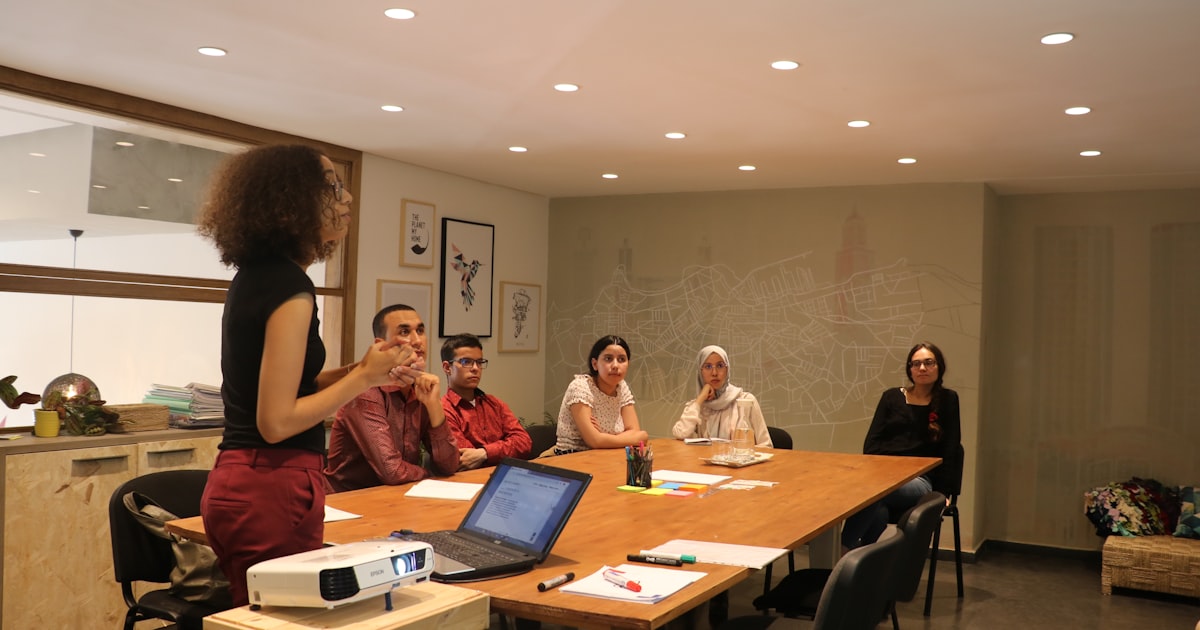
Representation is rising, but power is not keeping pace. That is the uncomfortable message from the UK’s leading organisational behaviour professors, whose research tracks what leadership really looks like for women in 2026. This feature draws on their published studies, interviews and public lectures to distil the lessons that matter most, whether you are scaling a business, stepping into a senior role or deciding which organisations deserve your talent.
What organisational behaviour professors are researching now
UK experts in organisational behaviour are centring their work on issues that matter deeply for female leaders: inclusion, gender identity threats, intersectionality, work-life balance and the challenges of male-dominated sectors. Associate Professor Elinor Flynn at London Business School, for example, explores diversity initiatives and policies aimed at gender equality, showing how these can also generate inequality if they do not engage with power and identity dynamics. Her recent work finds that policies alone are insufficient without cultural change. (london.edu)
Professor Ilaria Boncori at the University of Essex researches worker identity and inclusion, examining how bodily experiences such as menopause, pregnancy and miscarriage intersect with organisational behaviour. These are not niche issues. They are significant constraints on participation and leadership for women when organisations fail to recognise them. (essex.ac.uk)
At the University of Southampton, Professor Elina Meliou studies leadership with a focus on structural inequalities, especially under uncertainty and precarity. Her work indicates that traditional leadership models are increasingly mismatched to the shifting employment landscape, which makes inclusion both more difficult and more necessary. (southampton.ac.uk)
What UK data shows about gaps, trends and leadership representation
| Statistic | Data Point | Source / Year |
|---|---|---|
| Women’s representation on FTSE 350 boards | 43% of board roles held by women; 35% of leadership roles | FTSE Women Leaders Review, report published February 2025 |
| Senior management female representation (Women in Finance signatories) | 37% in 2025, up from 36% in 2024; global banks lowest at around 30% | HM Treasury Women in Finance Annual Review, March 2026 |
| Investing in Women Code: VC deals by signatories to female-led businesses | 32% of investment value in 2025; all-female founder deals 6% | British Business Bank press release, July 2026 |
| Gender pay gap among full-time employees | 6.9% in April 2025 | Office for National Statistics (ONS), annual data |
| Gender pay gap among highest-earning full-time employees (90th percentile) | 15.2% | ONS, 2025 |
These figures echo what professors have long found in qualitative research: the top leadership rungs are still uneven ground for women. Gender pay gaps widen with seniority, and while representation is improving, progress is slow and uneven across sectors. FTSE 350 firms have reached 43% board representation but only 35% of leadership roles (gov.uk). Among Women in Finance Charter signatories, female representation in senior management is still only around 37% (gov.uk).
Leadership through a professor’s lens: five lessons
These lessons are drawn from the published interviews, profiles and research of UK professors of organisational behaviour. They cover not just what leadership should be, but what scholars actually observe inside organisations today.
1. Visible identity matters, but token roles are not enough
Professors such as Boncori and Flynn emphasise that representation in titles is necessary but not sufficient. Women may occupy leadership roles yet remain excluded from decision-making, and inclusion policies may fail to address hidden power dynamics. In either case, those roles become symbolic rather than transformative. Structures such as election to boards or committees without substantive allocation of power often reinforce rather than reduce inequality. For women in leadership, the real test is influence, not title.
2. The pressure of “role congruity” and invisible load
UK research suggests that women often face identity threats, where others’ expectations conflict with the roles they hold, and that this can contribute to leadership avoidance. One study of women academics in higher education underlines the point: institutional climate, role stress and leader-identity threat all correlate with women opting out of visible leadership roles. (frontiersin.org)
Women leaders also disproportionately carry the emotional labour: the constant management of perceptions and the expectation to be nurturing, sympathetic and emotionally expressive. Dr Pascale Daher at the University of Liverpool explores how others judge emotional expression by women leaders differently, and how relational demography (who you are in relation to your team) shapes both perceptions and performance. (liverpool.ac.uk)
3. Intersectionality: when gender meets race, class, health
Alongside gender gaps sit structural inequalities along lines of race, socio-economic background, health status and other axes. Research by Dr Kenisha Linton at the University of Greenwich shows EDI programmes often overlook intersectional identities. Minority ethnic women and women from lower socio-economic backgrounds frequently face both more barriers and less recognition. (gre.ac.uk)
Boncori’s focus on reproductive journeys, including pregnancy loss, miscarriage and menopause, illustrates how organisational norms assume a universal experience that is often masculine or neutral. These assumptions are associated with exclusion, reduced career stability and slower progression for many women. The organisational behaviour perspective shows that inclusive leadership must combine policy with genuinely caring workplace cultures. (essex.ac.uk)
4. Leadership styles and adaptability
Professors increasingly understand leadership style, once framed in stereotypically masculine versus feminine terms, as both flexible and context-dependent. Professor Meliou’s recent work on volatile sectors and uncertain employment contexts suggests that leaders who are inclusive, relational and emotionally intelligent tend to build trust and resilience in their teams, with shared agency a key part of the picture. (southampton.ac.uk)
There are contrarian angles, however. Leadership that emphasises decisiveness, clarity and even toughness has its place, yet women face harsher judgement for such behaviours. Scholars warn that adopting a “typically male” leadership mode does not always work. What matters more is consistency, clarity and knowing when to shift style rather than simply fitting stereotypes.
5. Support infrastructures: mentoring, coaching, sponsorship
Professors in this field stress that structured mentoring, sponsorship and safe spaces are powerful. Flynn’s work shows that women are most underrepresented at particular career stages, particularly mid-career, which is exactly where mentorship and sponsorship interventions have the greatest potential impact. Organisations that fail to give visibility to those networks, or that expect senior leaders to mentor without accountability, tend not to see real progress. (london.edu)
At UCL, Lorenzo Todorow di San Giorgio is Associate Professor in Organisational Behaviour and Head of Executive & Leadership Coaching. He describes coaching not as remedial but essential: in his view, the best coaching helps people recognise patterns they have been repeating unconsciously rather than simply teaching leadership skills. This kind of coaching builds resilience and self-awareness, two qualities women leaders often need most. (mgmt.ucl.ac.uk)
Policy, law and structural change that matter
Leadership lessons do not land in a vacuum. UK law, public policy and voluntary sector frameworks shape what is possible.
- Women in Finance Charter: signatory firms commit to improving female representation in senior and executive roles. Average female senior leadership in signatory companies was around 37% in 2025, up from 36% in 2024. (gov.uk)
- FTSE Women Leaders Review: the government-sponsored review reported record figures in early 2025, with women holding 43% of board roles and 35% of leadership roles across the FTSE 350. (gov.uk)
- Equality law and pay gap reporting: the Equality Act 2010 and mandatory gender pay gap reporting maintain legal pressure. The 250-employee threshold for reporting means larger firms must publish their gaps. (gov.uk)
- Investor-led initiatives: in 2025, Investing in Women Code signatories allocated 32% of equity investment value to female-led businesses. Structural moves of this kind may influence how leadership opportunities cascade into finance and business management. (british-business-bank.co.uk)
Contrarian findings and cautionary signals
Not all leadership progress follows a linear path. Organisational behaviour research reveals tensions and risks that rarely make it into celebratory press releases.
- Leadership avoidance. The study of women academics in the UK and Pakistan produced a striking finding: increased organisational support does not always reduce avoidance of leadership. When identity threats and stress are high, many women rationally decide that leadership is not worth the additional cost. (frontiersin.org)
- Slower progress in certain sectors. While finance and banking have visible policy initiatives such as the Charter, they also show plateaus. In the Women in Finance data, banks were the only sector to show no year-on-year increase in female senior management representation. (gov.uk)
- Widening gaps by intersectionality. Women from ethnic minority backgrounds face compounding disadvantages, and EDI policies that focus only on gender risk leaving these groups behind. Dr Linton’s research indicates that power, race and class combine to reduce visibility, progression and belonging for intersectional groups. (gre.ac.uk)
Lessons for women leaders: what to look for in your organisation
The professors’ insights and the UK data carry practical lessons. This is less a how-to guide than a toolkit for choosing, assessing or influencing from the inside. If you run your own business, apply the same lens to investors, partners and your first senior hires.
- Check for power, not just position. A board seat or senior role is meaningful only if it comes with a real share of decisions, budget and strategy. Ask who speaks in meetings, who chairs, and who gets heard. The same test applies to a co-founder agreement or an investor’s seat on your board.
- Beware identity threats and role expectations. Reflect on whether your organisation tolerates emotional expression and difference, or subtly penalises those who do not conform to masculine norms.
- Seek intersectional inclusion. Gender equity policies alone are not enough. If your organisation has no visible ethnic minority female senior leaders, ask whose voices might be missing. The same applies if there is no data broken down by race or class.
- Use coaching and mentorship actively. Do not wait to be invited. Find mentors or coaches who understand your context. Sometimes the strongest insight comes from academic or peer mentors who question the norms.
- Negotiate expectations early. Talk openly about workload, emotional labour, promotions and supported leave. Make sure policies are in writing, not just “culturally endorsed”.
- Lead flexibly and visibly. Even if you adapt your style, visibility grows when you combine authentic leadership (values, voice, clarity) with flexibility. Let people see decisions, not just outcomes.
What professors wish were different
Across these scholars’ published interviews and profiles, a clear pattern emerges: several areas persistently lag despite decades of research.
We still measure leadership the wrong way
Committees, boards and pay rise decisions often rest on criteria shaped by masculine, individualist norms: risk-taking, decisiveness, self-promotion. Yet many women lead better through collaboration, resilience and emotional intelligence. Scholars argue we need to widen leadership criteria to measure what teams, companies and communities actually value. Professors Daher and Flynn point to a persistent problem: many assessments still penalise the relational or communal behaviours that are more common among women leaders. (liverpool.ac.uk)
Wellbeing is still sidelined
Meliou’s and Daher’s work converges on a shared point: stress, burnout and emotional labour are central to modern organisational behaviour yet often unseen in senior roles. When those pressures combine with identity threats, women leaders carry the burden without support. Organisations that treat wellbeing infrastructure as a nice-to-have rather than an essential are failing their people when the stakes are highest.
When policy and culture do not align
Professors repeatedly emphasise that policies on maternity leave, flexible working and EDI are only effective when aligned with culture. If leaders do not model the practices, and negative micro-behaviours persist, legal or procedural frameworks alone will not shift behaviour. Many women report that culture undermines policy: returning to work may be technically possible, for example, but socially penalised.
Why this matters, and where UK leadership is headed
The UK labour market and business landscape are in flux. Gig working, hybrid and remote patterns, inflation, AI and economic uncertainty are reshaping what leadership demands. The scholars whose work we reviewed agree that leadership effectiveness in 2026 increasingly depends on trust, adaptability and inclusion. Women with experience of navigating systemic bias are uniquely well-placed to lead in that climate, but only if organisations recognise and dismantle the barriers.
Taken together, these lessons point to a clear conclusion. Leadership is not a fixed trait but a practice set in a social environment. Effectiveness depends not just on individual capacity but on context, approach and systemic support. Female leaders may still carry a heavier load, yet the research shows that inclusive, relational leadership is more than “nice”. It is central to organisational resilience, innovation and fairness.
If you are building power, a career or a business in the UK in 2026, look beyond your title. Pay attention to the unseen weight of culture, identity, reciprocity and support. That often makes all the difference.
Within your organisation, explore how you are seen and how power circulates around you. You may also wish to revisit cornerstone reading such as Women in Business: Key UK Facts (Updated 2026) for context and trends. If you are intent on sharpening leadership outcomes in your business, From Expert to Leader: A Promotion Survival Guide for Women offers practical guidance for navigating the transition.