Family businesses are the backbone of the UK economy. According to the Institute for Family Business (IFB) Research Foundation (2021), there are around 5 million family firms in the UK, employing roughly 14 million people and contributing an estimated £1.4 trillion to GDP. Yet if you run one, it is rarely straightforward: ONS data (2024) shows that only around four in ten new businesses survive to their fifth birthday, and you face the added pressure of protecting both livelihoods and legacy when you need to raise cash for your business, whether you are meeting lenders in person or through video conferencing for business.
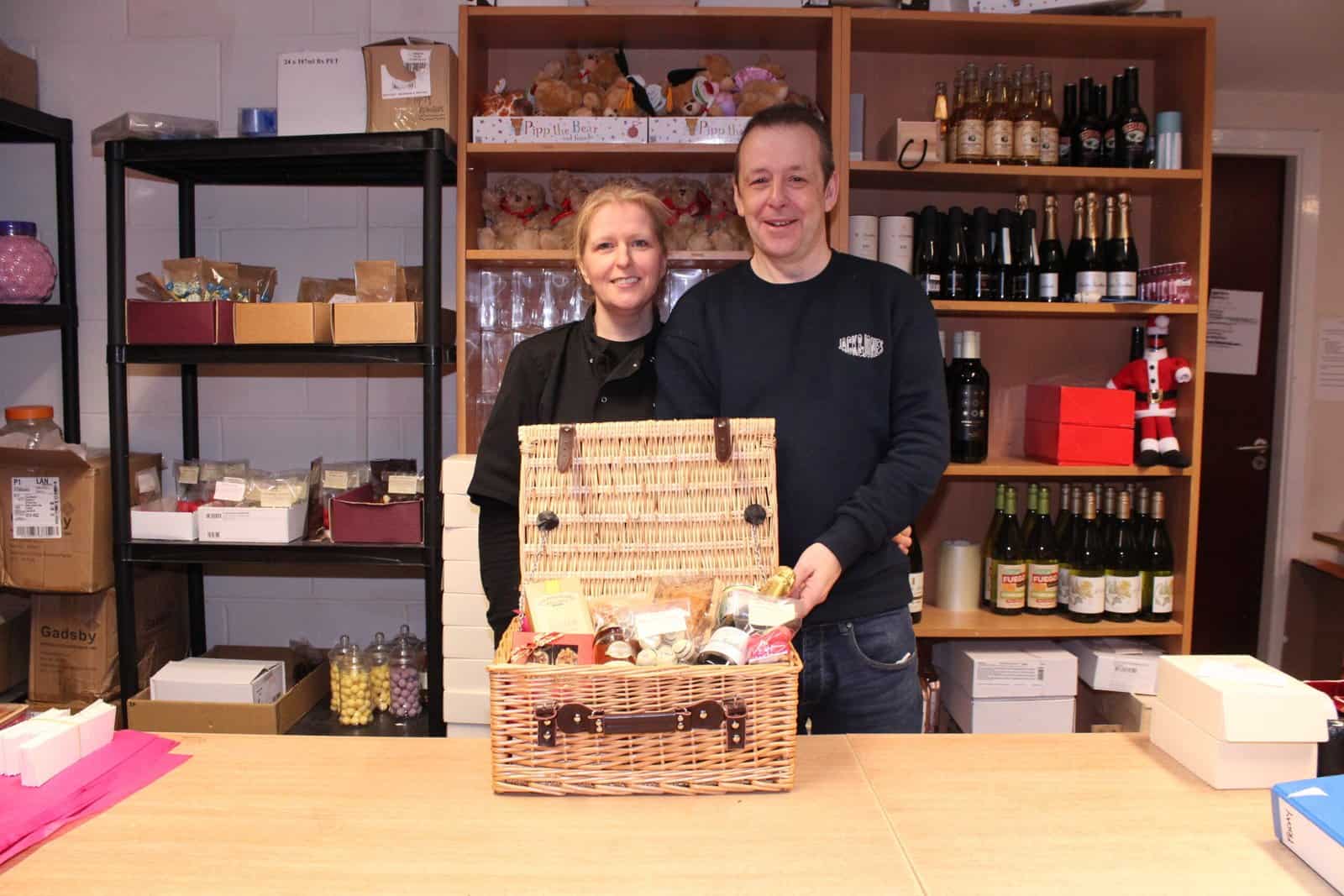
Bradfords Bakers, founded in Glasgow in 1924, is a case study in how resilience and agility in family business can carry a company through crisis. Fourth-generation director Claire McGoldrick and her husband James took the bakery from a failing high-street chain to a thriving e-commerce gift business. Here, Claire shares the lessons that kept Bradfords Bakers alive for a century.
Tell us about the business today
My name is Claire McGoldrick, and I am the fourth-generation family member to run our business, which continues to complement digital marketing with offline marketing. I grew up with the family business and learned baking and confectionery from a young age from my brother and my father, who managed the bakery in its third generation. I never formally studied bakery or confectionery; everything I know came from my father, a craft baker and confectioner.
I joined the company officially in my late teens as an office manager and became a director at 21 in 1992. James owned an IT company that looked after the technical side of our business, which is how we met. We married in 2002 and he joined the company the following year. He focused on technical innovation: together we founded the online branch and created the Bakery ATM, essentially a vending machine that sold fresh cupcakes, which we placed in Glasgow’s St Enoch Centre.
After we had to close our stores, we kept the business afloat and went on to found Send Them Cupcakes and Send Them Balloons. We still live in Scotland and have a son and a daughter. By 2021 the business employed 12 staff, 11 of them women, and dispatched hundreds of gifts nationwide every week. In 2024 Bradfords Bakers marked its centenary.
Why did you start the sister brands?
In the cases of Send Them Balloons and Send Them Cupcakes, we wanted to tell the world that we offered more than hampers. We wanted to reach new customers, and because we already had the e-commerce systems for Bradfords Bakers, it was straightforward to create the two new companies. It made fantastic business sense.
Since we already baked cupcakes as part of Bradfords Bakers, Send Them Cupcakes was simple to launch in June 2014. For Send Them Balloons, we just had to source balloons and the means to inflate and box them for safe delivery. Both cupcakes and balloons were niche markets, so they were easy to enter, and more than a decade on we still face few major competitors.
Send Them Balloons also benefits from its sister companies: we send free gifts with balloon orders over a certain value. These can be vanilla cupcakes, personalised chocolate bars, small chocolate fudge cakes or doughnuts, depending on the order. Because we already have the bakery attached, this is easy to offer and sets us apart.
What are your values?
Agility and resilience. These have been, and still are, our redeeming assets as we face adversity. After the banking crisis wiped out our stores, we showed resilience by refusing defeat; we showed agility by completely altering our business model to trade solely online.
We continue to practise agility and resilience as we face the pressures affecting small businesses across the UK. Post-Brexit rules disrupted our access to some packaging materials, so we adapted by sourcing more from UK suppliers. That was a costly short-term solution, but it kept deliveries moving. More recently, inflation and rising energy costs have forced us to review every process, negotiate harder with suppliers and look for efficiencies while protecting quality. The ability to adapt quickly is still what keeps us trading.
What challenges have shaped the business?
Through my time as a director of Bradfords Bakers, we have seen many challenges, and I’m pleased to say we have overcome them all.
In December 2001 a fire at one of our branches destroyed the offices and 60% of the building. Rebuilding was difficult because we lost a lot of equipment that produced traditional items, so those offerings were unavailable for a time. The fire hit just weeks before Christmas, which made it feel even more devastating.
Of course, the recession was beyond challenging, and it propelled us into administration. Recovery was slow; once we stabilised, we focused on taking care of our customers and developing the business.
Brexit restricted our access to packaging and added paperwork and delays. The pandemic brought further disruption, but it also created opportunity. Demand for delivery services surged during lockdowns, and we were able to double our staff from six to 12. We were glad to offer employment at a time of such insecurity. Today we are focused on retaining those customers and keeping the business resilient through the cost-of-living pressures that many households and small firms are feeling.
What is your best piece of advice?
Be stubborn. When you get into business, you’re going to feel a lot of pushback and sometimes, no matter how good your idea is or how sound your business model is, you’ll probably experience failure to some degree. That doesn’t mean you or your business are failures. So be stubborn, push yourself back up when you’re knocked down, adapt, survive and keep going.
Resilience and agility in family business: what the data shows
Claire’s experience mirrors wider patterns. The Alison Rose Review of Female Entrepreneurship (2019) found that women-led businesses contribute around £85 billion to the UK economy, yet only around one in three UK entrepreneurs is a woman. For women who do lead family firms, the challenges are often personal as well as commercial: succession planning, access to finance, and the pressure to keep a legacy alive.
Family businesses can also be more resilient than the average firm because ownership tends to be long-term and reputation matters. The IFB notes that family firms are more likely to prioritise sustainability and community employment. The key is to turn that stability into adaptability.
What action steps can you take?
- Map your risks. List the top three threats to your business, from supplier failure to energy price rises, and create a one-page contingency plan for each.
- Diversify revenue. Claire launched sister brands using existing systems. Look at what you already do well and whether a new product line or channel could open a new market.
- Review costs quarterly. Inflation and the National Living Wage continue to push up overheads. Negotiate with suppliers and audit processes every three months.
- Get your digital foundations right. If you sell direct to consumers, check your e-commerce setup, payment systems and delivery partners. Making Tax Digital also means keeping digital records is no longer optional.
- Plan the next generation early. Succession is one of the biggest risks for family firms. Document roles, train successors and consider external advisers before a handover is forced.
Resilience and agility in family business are not abstract qualities. For Bradfords Bakers, they meant closing shops, launching websites, sourcing new packaging and keeping a 100-year-old name trading into its second century. For women running family firms today, the same principles apply: protect the legacy, but never stop adapting.