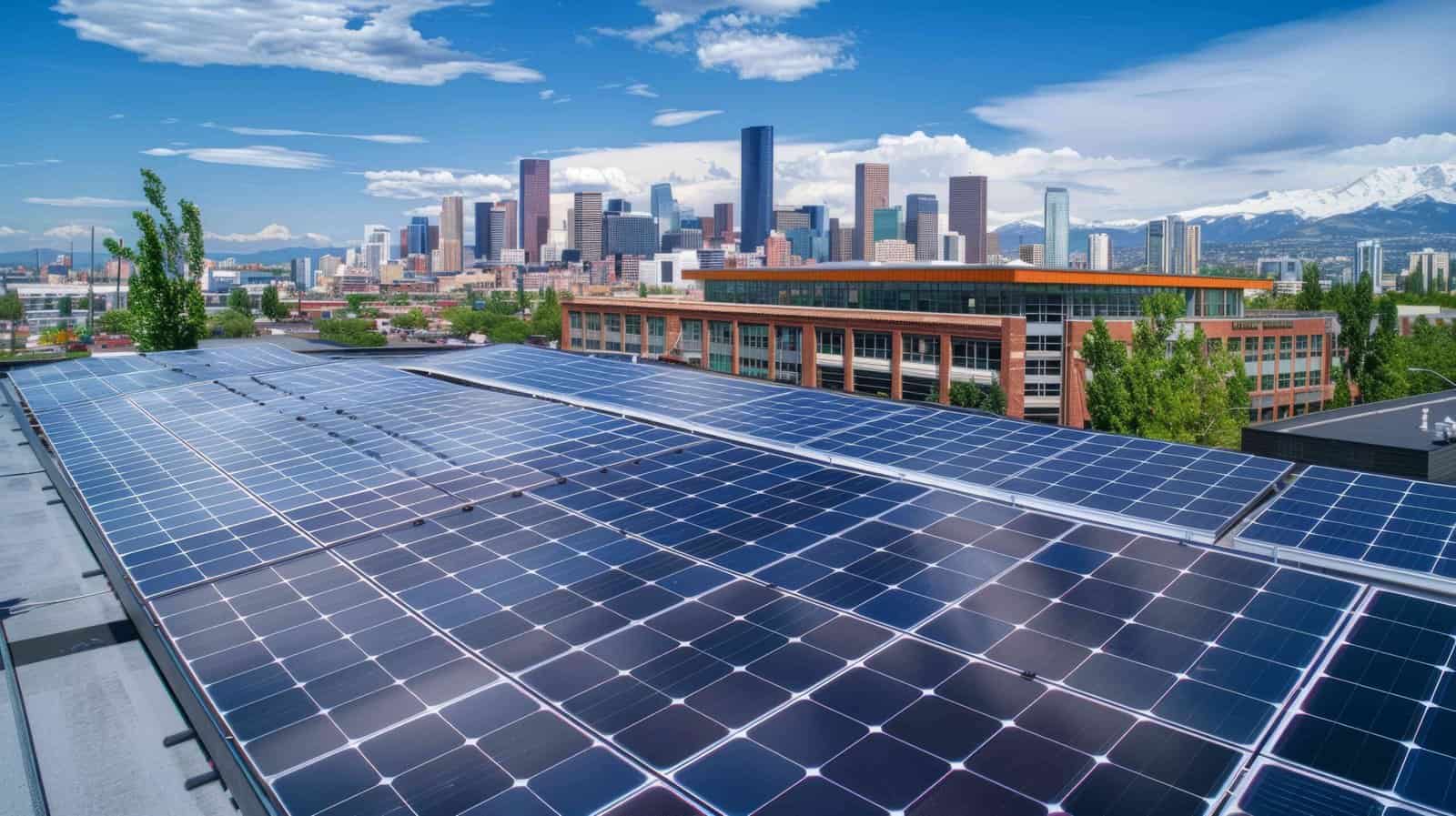
Installing commercial solar panels can cut your business energy bills and protect you from volatile wholesale prices, but the upfront cost often puts women-led SMEs off. The good news is that commercial solar panels financing has matured significantly in the UK. You no longer need to pay the full installation cost in one go to start generating your own power.
In this guide, you will find the main ways to fund a solar installation, the tax reliefs and export schemes that improve the business case, and the practical steps to choose the right option for your company.
Why Solar Still Makes Business Sense in 2026
Energy remains one of the largest uncontrollable costs for UK SMEs. After the Energy Bill Discount Scheme closed in March 2024, businesses have faced market-rate contracts, making on-site generation more attractive. Businesses with high daytime electricity use are usually the best candidates for solar PV, because the power generated on site directly offsets the units you would otherwise buy from the grid.
Beyond bill savings, solar gives you price certainty. Once the system is installed, the marginal cost of the electricity it generates is close to zero. That stability is valuable for cash-flow planning, especially for businesses operating on tight margins.
Commercial Solar Panels Financing Options
Most UK businesses fund solar through one of four routes. The right choice depends on whether you want to own the asset, your appetite for balance-sheet debt, and how quickly you need to see savings.
1. Solar Asset Finance and Secured Loans
An asset finance agreement or secured solar loan lets you spread the cost of the panels and inverter over several years. You own the system from day one, which means you can claim capital allowances and any export income.
Interest rates vary by lender, security, and your business’s credit profile. Before signing, compare the total cost of credit against the expected energy savings. If the payback period is shorter than the loan term, the system will have paid for itself before the finance is settled. For a broader look at borrowing decisions, see our guide on what UK directors must consider when choosing business loans.
2. Power Purchase Agreements (PPAs)
Under a PPA, a third-party investor funds, installs, and maintains the solar panels on your roof or land. You buy the electricity generated at a pre-agreed rate, typically at a discount to your current grid price, for a contract term that usually runs for a decade or more.
The main advantage is zero capital expenditure. The drawback is that you do not own the system, so you cannot claim capital allowances or export tariffs. PPAs work best for businesses with stable daytime electricity demand and a roof or site lease that outlasts the contract.
3. Leasing Solar Equipment for Your Premises
A solar lease is similar to a PPA but with fixed monthly payments rather than per-unit electricity charges. You rent the equipment and use the power it produces to offset your grid consumption.
Leases give predictable outgoings, which helps with budgeting. However, read the maintenance and end-of-term clauses carefully. Some leases include a buy-out option after a set period; others require the lessor to remove the panels at their own cost.
4. Grants and Local Authority Funding
Although national solar grants for businesses are limited, regional schemes appear regularly through local enterprise partnerships, councils, and devolved administrations. Some areas offer low-interest green business loans or match-funded capital grants for energy efficiency projects.
Our business grants for women in the UK page is updated with current national and regional funding opportunities worth checking before you commit to a finance route.
Tax Relief and Export Income
Ownership matters because it unlocks two valuable UK tax reliefs and an export income stream.
Annual Investment Allowance (AIA). HMRC’s Annual Investment Allowance lets businesses deduct the full cost of qualifying plant and machinery, including solar panels, from profits before tax. The AIA limit is permanently set at £1 million from April 2023, which covers most SME solar installations in full.
Full expensing. For companies subject to corporation tax, full expensing provides 100% first-year relief on qualifying plant and machinery. This was made a permanent feature of the corporation tax system from April 2024 and can be used alongside or instead of the AIA in many cases.
Smart Export Guarantee (SEG). Administered by Ofgem, the SEG requires large energy suppliers to pay small-scale generators for excess electricity exported to the grid. SEG tariffs vary widely by supplier and tariff type, so compare offers carefully. To qualify, your installer and equipment must be certified under the Microgeneration Certification Scheme (MCS).
Sustainability and Energy Independence
Generating your own electricity also supports broader business goals. Customers, investors, and tender panels increasingly ask for evidence of environmental action. A visible solar installation provides a tangible signal of commitment.
Energy independence reduces your exposure to wholesale price spikes and supply disruption. For women-led businesses already navigating funding gaps and operational pressures, predictable energy costs are a genuine competitive advantage. For context on the wider landscape, see Women in Business: Key UK Facts.
How to Choose the Right Financing Route
Start with a site survey and a realistic estimate of your daytime electricity use. A system that is too large for your consumption will export most of its output, which may still be worthwhile under a good SEG tariff but changes the financial model.
Then compare the lifetime cost of each option:
- Ownership through a loan or cash purchase usually delivers the highest lifetime return if you can use the tax reliefs.
- PPAs and leases protect cash flow and transfer maintenance risk, but the benefits to you are narrower and the lifetime cost is often higher.
- Grants can improve any model, so check eligibility before you finalise funding.
For women-led businesses, where growth capital can be harder to secure, choosing a structure that preserves working capital can be as important as the headline savings rate. Always use an MCS-certified installer and ask for projected savings based on your actual tariff and usage data, not generic assumptions.
Conclusion
Commercial solar panels financing is now accessible enough that most UK SMEs can install a system without draining working capital. Whether you choose asset finance, a PPA, a lease, or a grant-backed purchase, the combination of lower bills, tax relief, and export income can make solar one of the more reliable capital investments available to a growing business. Get quotes from at least three MCS-certified installers, model the numbers against your current energy spend, and pick the structure that best protects your cash flow.