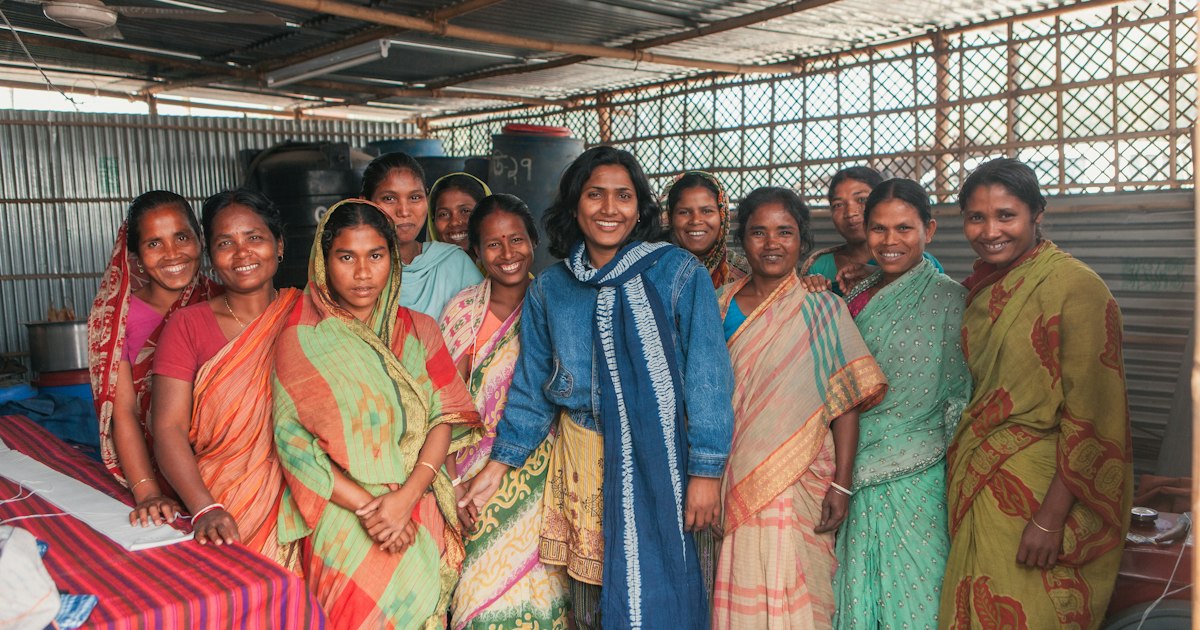
Community finance can help when banks say no
High-street banks are still the first port of call for most UK business owners seeking finance, but a rejection is not the end of the road. Community Development Finance Institutions (CDFIs) offer relationship-based loans to businesses that mainstream lenders turn down, including start-ups, microbusinesses and women-led enterprises. If your bank has declined your application, community finance could be the route that keeps your business moving.
CDFIs provide finance outside mainstream criteria
CDFIs are not-for-profit or social-enterprise lenders that provide affordable finance to businesses and social enterprises unable to secure funding from mainstream banks. They have operated across the UK for more than two decades and take a different approach to risk. Instead of relying mainly on automated credit scoring, they look at your business plan, cash-flow forecasts, trading history and future potential.
Because CDFIs are rooted in their communities and have a social mission, they spend time understanding the people behind the business. Many continue to offer mentoring, advice and networking introductions after the loan is approved. This personalised approach is especially valuable for women founders who may have strong business plans but limited assets or a shorter trading record.
Women-led businesses still face a funding gap
Women founders in the UK still access less external finance than men. The 2023 Alison Rose Review of Female Entrepreneurship found that women-led businesses receive, on average, lower amounts of external finance than male-led businesses and are more likely to be discouraged from applying in the first place. For more context, see our Women in Business: Key UK Facts page.
This gap matters because underfunded businesses grow more slowly. CDFIs help close it by assessing applications on business merit rather than on the personal wealth or credit history of the founder alone. For women-led enterprises, that can mean a fairer hearing and a better chance of securing the capital needed to scale.
Community finance has grown strongly by 2026
The CDFI sector has scaled significantly. By early 2024, Responsible Finance, the UK membership body for CDFIs, reported that its members had lent more than £1 billion cumulatively to businesses and people, supporting thousands of enterprises and creating or safeguarding tens of thousands of jobs.
Government support has strengthened the sector’s capital base. The British Business Bank has invested in CDFIs through facilities including the Community Investment Enterprise Facility, and the Bank Referral Scheme, launched in 2016, requires the UK’s largest banks to refer SMEs they decline for finance to designated finance platforms. These platforms match businesses with alternative lenders, including CDFIs, so a “no” from the bank can become an introduction rather than a dead end.
CDFIs support businesses that banks decline
CDFIs are designed for businesses that fall outside mainstream lending criteria. That often includes:
- Start-ups and microbusinesses
- Women-led enterprises
- Ethnic-minority entrepreneurs
- Social enterprises and community businesses
- Businesses in disadvantaged areas
- Founders with a short trading history or thin credit file
A recent bereavement, a career break or a previous financial difficulty does not automatically disqualify an applicant. CDFIs look at the whole picture, which means they can often support women returning to work after caring responsibilities or founders rebuilding after a setback.
UK CDFIs have created real-world impact
One of the best-known CDFI success stories is the Cambridge Satchel Company. Founder Julie Deane started making satchels at her kitchen table in 2008 and, after being refused by high-street banks, secured a £100,000 loan from Finance South East, now the FSE Group, in 2010. The funding allowed her to move into a factory and scale into an internationally recognised brand.
Foundation East, a CDFI serving the East of England, has supported hundreds of businesses that banks would not back, including women-led nurseries, food manufacturers and care providers. CDFIs across the UK continue to fund similar enterprises, using business merit rather than credit score alone.
CDFI support continues after the loan
Many CDFIs provide ongoing support alongside the loan. Borrowers often receive regular contact from a dedicated loan officer, help with cash-flow management and introductions to local business networks. That personal relationship can be a valuable safety net, especially for first-time business owners.
For women founders who are navigating business finance for the first time, this combination of capital and guidance can build confidence as well as cash flow. It also creates a track record that may make future borrowing from mainstream sources easier.
You can apply for a CDFI loan
If you have been declined by a bank, ask whether your application can be referred through the Bank Referral Scheme. You can also approach a CDFI directly. Be ready to present:
- A clear business plan
- Realistic cash-flow projections
- Evidence of demand for your product or service
- Details of how you will use the loan
- Your plan for repaying the finance
CDFIs are interested in viability and commitment, not perfection. For broader funding options, see our guide to Business Grants For Women in UK and Start Up Loans Female Founders.
You can find a CDFI near you
You can search for a CDFI through Responsible Finance’s lender directory. The directory lets you filter by location and type of finance, so you can identify lenders that work with businesses like yours.
Take these practical action steps next
- Review your business plan and cash-flow forecast before applying.
- If a bank declines you, ask to be referred through the Bank Referral Scheme.
- Use the Responsible Finance directory to identify CDFIs that serve your area.
- Prepare evidence of trading history, demand and repayment capacity.
- Consider combining a CDFI loan with other support, such as grants or mentoring.
Community finance offers a practical alternative when high-street banks say no. For women-led businesses, microbusinesses and social enterprises, CDFI loans can provide not just capital but also the ongoing support needed to build a sustainable enterprise.