Selling online is now the default route into retail for many UK women founders. If you want practical ecommerce advice from female startups, the experiences of two UK women who launched online businesses in 2015 are a useful starting point. An ONS retail sales update from 2024 shows that internet sales continue to account for more than one quarter of all UK retail spending, and platforms such as Shopify, WooCommerce and Etsy have lowered the cost of opening a store to a level that was unimaginable a decade ago. That makes ecommerce one of the most accessible ways to test a product, build a customer base and scale without the overheads of a physical shop.
In 2015 we spoke with two UK women who had recently launched ecommerce businesses. Their advice on stock, cash flow, customer service and brand identity still holds up. This article revisits their insights and pairs them with the practical steps, thresholds and funding options you need to know if you are starting an ecommerce venture in 2026.
Why ecommerce advice from female startups still matters
Starting online reduces upfront risk. You can validate demand before committing to warehousing, staff or long leases. For women juggling caring responsibilities, location constraints or limited start-up capital, an ecommerce model also offers flexibility.
The UK start-up landscape reflects that appeal. According to Women in Business: Key UK Facts from Prowess, women run a substantial and growing share of the country’s small businesses, with many operating from home or on a part-time basis before scaling. Ecommerce fits that pattern because it can grow in stages: a spare-room operation one year, a small warehouse the next.
Founder insight one: Ann Whorrall, Olivia May
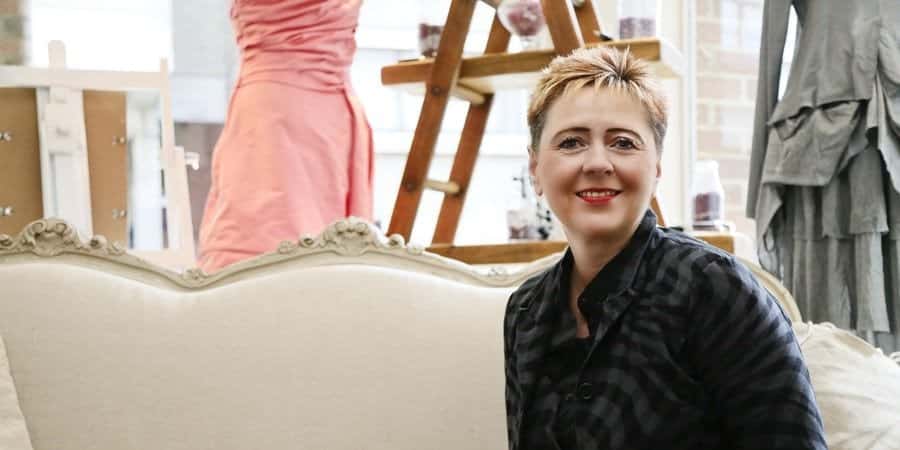
Ann Whorrall launched Olivia May, an online designer fashion retailer, after a career in education. Her background in leading creative teams shaped how she built the business.
What made you start the business?
“My background is in education and leading teams of people in this creative educational arena opened my eyes to ways of thinking differently, breaking out from the norms. My love of clothes and an increased understanding of the skills and complexity involved in the design process provided me with inspiration to bring this all to the high street through Olivia May. I wanted to showcase my love of art, fashion and culture through a collection that I had handpicked.”
What was the biggest challenge?
“Definitely the logistics of making sure that you always have stock available for a customer. Having great images is crucial too, so that a customer can see an item at its finest, as they’re making high-value purchases. We also try hard to empower staff to use their skills as widely as possible across all disciplines so that people don’t feel like they’re working in their own silos.”
What do you do differently for customers?
“I consider myself as well as all of my staff to be personal stylists. We replicate the high-street buying experience online by helping customers all over the world to put together outfits, offering bespoke suggestions, providing images and supporting them through the process of choosing an outfit.”
What advice would you give a new ecommerce founder?
“You’ve got to have a real passion for the product you’re selling. Because you’re not in front of the customer, you’ve got to constantly find ways to engage and communicate so that you don’t lose momentum and slip off their radar. To do that, you need engaging content all of the time: new products, new trends and themes.”
Founder insight two: Sandy Ruddock, Scarlett & Mustard
Sandy Ruddock founded Scarlett & Mustard, a producer of dressings, sauces and marinades. The business grew from a family recipe sold at a young age into a fully-fledged food brand.
What made you start the business?
“I didn’t exactly sit down one day and decide to start it. It was a series of events, but mostly it was started as a bit of fun. Then when I realised there was a real gap in the market for good quality products, I turned it from a sideline into a fully-fledged start-up.”
What was the biggest challenge?
“Managing the finances, particularly cash flow. There are so many upfront costs involved, and ideally you want to set it up in such a way that you can start small and build on it. This helps to spread the cost, but also means you can iron out things that don’t work right from the start. Write yourself a good business plan and remember that starting a new business takes twice as long and costs twice as much as you think it will.”
What do you do differently for customers?
“We like to make sure our customers are well informed, so we give them lots of information about our products and lots of ideas of how to use them. It’s really important to be up to date with current trends in food, and to inspire people with new and bold ideas.”
What advice would you give a new ecommerce founder?
“Research your web development partner really carefully, and make sure you talk to their existing customers. It’s crucial you pick a team who totally gets you and what you’re trying to achieve, and who also react quickly when you want something done. Be absolutely confident in your own brand and what it says about you and your product, and don’t let anyone try and compromise this to save time or money.”
What has changed for UK ecommerce founders by 2026
The principles above, passion, stock control, cash flow and brand clarity, are unchanged. What has changed is the regulatory and competitive environment. If you are launching now, these are the practical boxes to tick.
Choose the right business structure
Most ecommerce founders begin as sole traders because the setup is simple. Once turnover grows, a limited company can offer liability protection and more tax-efficient ways to pay yourself. Our guide on sole trader vs limited company explains how Making Tax Digital is changing the calculation.
Register for VAT when you hit the threshold
The UK VAT registration threshold is £85,000 of taxable turnover in a 12-month rolling period (HMRC, 2024). If you sell through an online marketplace, be aware that some platforms now collect and remit VAT on certain sales, but you remain responsible for registering and reporting when your total turnover crosses the threshold. HMRC guidance on VAT registration is the authoritative source.
Prepare for Making Tax Digital
Making Tax Digital for Income Tax Self Assessment requires self-employed individuals and landlords with turnover above £50,000 to keep digital records and submit quarterly updates from April 2026. The threshold drops to £30,000 from April 2027 (HMRC, 2024). If you are a sole trader selling online, our Making Tax Digital sole trader checklist sets out the software and deadlines.
Protect your cash flow
Sandy Ruddock’s warning about cash flow is even more relevant today. Payment processors, marketplace fees, returns and shipping costs all eat into margins before you account for stock. Build a cash-flow forecast for at least 12 months and model what happens if your best-selling line is out of stock for six weeks or if a seasonal promotion underperforms.
Explore funding designed for women founders
If you need start-up capital, the Start Up Loans programme, delivered by the British Business Bank, offers government-backed loans of up to £25,000 for early-stage businesses, alongside free mentoring (British Business Bank, 2024). For growth-stage ecommerce brands, the British Business Bank’s focus on women-founded businesses has expanded the range of venture and growth debt options. You can also compare routes in our overview of business grants for women in the UK.
Invest in photography and product detail
Ann Whorrall’s emphasis on great images and personal service remains one of the strongest differentiators online. Customers cannot touch or try your product, so clear sizing, ingredients, dimensions, usage ideas and fast, human customer service reduce returns and build loyalty.
Action steps for launching your ecommerce business
- Validate demand with a small batch or pre-order campaign before committing to large stock orders.
- Choose a platform that matches your technical skills and growth plans; Shopify, WooCommerce, Squarespace and Etsy each suit different stages.
- Open a separate business bank account from day one to simplify bookkeeping and tax reporting.
- Set up accounting software that is compatible with HMRC’s Making Tax Digital requirements.
- Register for VAT as soon as your rolling 12-month turnover approaches £85,000.
- Build a returns and customer-service policy that matches the standards of larger competitors.
- Apply for Start Up Loans or a relevant grant if you need capital for stock, photography or marketing.
Conclusion
The ecommerce advice from female startups shared here is as relevant in 2026 as it was in 2015. Passion for the product, disciplined cash-flow management, strong visuals and a clear brand identity are still the foundations of a successful online store. What has changed is the toolkit and the tax environment. By pairing timeless founder wisdom with current UK thresholds, funding routes and digital compliance, you give your ecommerce venture the best chance of moving from side project to sustainable business.