A small business website is no longer optional. For UK women founders, the essential features of every small business website can determine whether a visitor becomes a customer or clicks away. Whether you run a consultancy from home, a retail shop with a local high street presence, or a product business shipping nationwide, your website is your most visible trading asset.
Yet many small firms still underinvest in their online presence. Research by the Federation of Small Businesses (FSB) shows that a significant minority of UK small firms still operate without a website, leaving revenue on the table. For women founders, the stakes are particularly high: the 2019 Alison Rose Review of Female Entrepreneurship found that only one in three UK entrepreneurs is a woman, making a strong, visible website a valuable competitive tool. This guide sets out the practical, legal, and technical features your site needs in 2026.
The essential features of every small business website
1. A clear, trustworthy domain name
Your domain name is your digital address. Choose a name that matches your business name as closely as possible, is easy to spell, and avoids hyphens or unusual abbreviations. For UK businesses, a .co.uk or .uk domain often signals local trust, though .com remains widely recognised.
Before you register, check that the name does not infringe an existing trademark. You can search the UK Intellectual Property Office (IPO) trademark database. Once chosen, register the domain with a reputable registrar and set it to auto-renew so you do not lose it.
2. Prominent contact information and company details
Visitors should find your contact details within one click from any page. At minimum, include a business email address, phone number, and physical address if you serve customers face to face. Embed a map and link to your Google Business Profile so local customers can find directions and reviews.
If you are a limited company, you must also display certain company details on your website. Under the Companies Act 2006, your site should show your company registration number, registered office address, and place of registration. With Companies House identity verification now required for directors, keeping these details accurate and current is more important than ever.
3. Unambiguous calls to action
Every page should guide the visitor toward a next step. Use clear, familiar language such as “Book a consultation,” “Get a quote,” “Buy now,” or “Download the guide.” Avoid clever but confusing labels. Place your primary call to action above the fold on mobile and desktop, and repeat it where it makes sense further down the page.
For service businesses, a simple contact form with three or four fields typically converts better than a long form. For product businesses, the path from product page to checkout should involve as few clicks as possible.
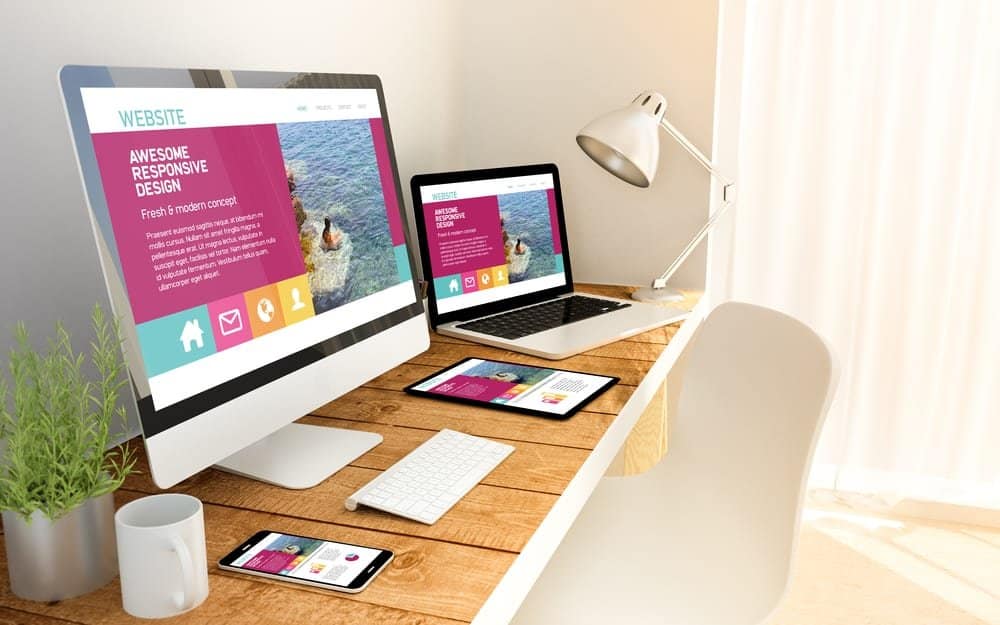
4. Mobile-first responsive design and speed
Mobile commerce accounted for more than half of UK online sales in 2024, according to eCommerce Expo and IMRG data. ONS retail sales figures from 2025 also show that online sales consistently account for around a quarter of all UK retail spending. This means your site must work flawlessly on smartphones and tablets, not just as an afterthought.
Test your site on multiple devices and screen sizes. Text should be readable without zooming, buttons should be large enough to tap, and navigation should collapse into a clear menu. Page speed matters too: slow-loading mobile pages lose visitors quickly.
5. Legal compliance: GDPR, cookies, and accessibility
UK websites must comply with UK GDPR and the Data Protection Act 2018. If you collect email addresses, process orders, or use analytics, you need a lawful basis for processing personal data and a clear privacy notice. The Information Commissioner’s Office (ICO) provides templates and guidance.
Cookie consent is also regulated. ICO guidance from 2024 makes clear that cookie banners must give users a genuine choice and that non-essential cookies should not be set before consent. Avoid pre-ticked boxes and make it as easy to reject as to accept.
Accessibility is a legal requirement under the Equality Act 2010. The Equality and Human Rights Commission (EHRC) states that service providers, including websites, must make reasonable adjustments for disabled users. With ONS data from 2024 showing that around 24% of people in the UK have a disability, an inaccessible site excludes a large audience and creates legal risk. Use descriptive alt text for images, sufficient colour contrast, and keyboard-navigable menus.
6. Fast, secure hosting and HTTPS
Security is not optional. The UK government’s Cyber Security Breaches Survey 2024 found that 50% of businesses identified at least one cyber security breach or attack in the previous 12 months. An SSL certificate, which gives your site HTTPS rather than HTTP, encrypts data between your visitor and your server. Most hosting providers include this free.
Choose a hosting provider with UK-based servers or strong UK support, regular backups, and clear uptime guarantees. Keep your website software, plugins, and themes updated to close security gaps.
7. A clear value proposition and about page
Within seconds, a visitor should understand what you do, who you serve, and why they should choose you. Your homepage headline should state this plainly. Your about page should explain your story, your expertise, and what makes your approach distinctive.
For women founders, authenticity can be a genuine differentiator. Customers increasingly want to know the person behind the business. A professional photograph, a short founder story, and clear service or product descriptions build trust faster than generic corporate language.
Action steps for your website
- Audit your existing site against the seven features above, or use them as a brief if you are building a new site.
- Check your legal pages are up to date for UK GDPR, cookie consent, and company information requirements.
- Test your site on a mobile phone and measure its loading speed using a free tool such as Google PageSpeed Insights.
- Review your calls to action and ensure every page has a clear next step.
- If you are starting from scratch, read our guide on creating your first website and consider which AI tools for UK small businesses could speed up content creation.
Your website is a genuine growth asset
The essential features of every small business website have moved far beyond a homepage and a contact form. In 2026, UK women in business need sites that are mobile-first, legally compliant, secure, and built around clear customer actions. Get these foundations right and your website becomes a genuine asset for growth rather than a static brochure.