Rising business energy costs remain one of the biggest pressures on UK small firms. Although wholesale gas prices have fallen from their 2022 peak, many women-led businesses still face unit rates well above pre-2021 levels. The Energy Bill Discount Scheme, which gave businesses a discount on wholesale gas and electricity prices, closed on 31 March 2024, HM Treasury confirmed. According to Department for Business and Trade data from 2024, SMEs account for 99.9% of the UK business population, and the Federation of Small Businesses continues to list energy bills as a top overhead concern. Improving business energy efficiency is now a financial necessity, not an optional green gesture.
The good news is that most energy-saving measures pay for themselves within months. This guide sets out practical, UK-specific steps to cut business energy costs, from comparing tariffs to claiming tax relief on efficient equipment.
Why business energy efficiency matters for women-led firms
Women-led businesses are over-represented in sectors with tight margins, including retail, hospitality, professional services, and care. In these businesses, heating, lighting, and equipment can account for a significant share of overheads. The Energy Saving Trust estimates that simple no-cost and low-cost measures can reduce a typical small business’s energy use by 10-20%. Previous BEIS analysis from 2021 also estimates that SMEs are responsible for around half of UK business emissions, so cutting energy waste supports national net-zero targets as well as your bottom line.
1. Check your contract and compare business energy tariffs
Ofgem does not set a price cap for non-domestic customers. Business energy contracts are negotiated, so your rate depends on your credit profile, usage pattern, and contract length. Women-led businesses are often time-poor, so diarise a contract review at least once a year. If you are out of contract or on deemed rates, you are almost certainly paying more than you need to. Use Ofgem-accredited comparison services and request quotes from at least three licensed suppliers. Check whether a fixed or flexible contract suits your cash flow.
2. Conduct an energy audit
An energy audit identifies where your premises waste heat and power. Start with a walk-around survey: note lights left on in empty rooms, doors propped open near heaters, and equipment running overnight. This is especially helpful if you run your business from home and need to separate personal and business use. For a deeper review, the Carbon Trust offers guidance and, in some cases, on-site audits for SMEs. Record meter readings weekly so you can spot unusual spikes before they appear on a bill.
3. Switch to LED lighting
According to Carbon Trust guidance, LED bulbs use up to 80% less energy than halogen or incandescent alternatives and last significantly longer. Retail and hospitality premises, where many women founders operate, often see fast returns from lighting upgrades. Replacing all bulbs and installing occupancy sensors in toilets, store rooms, and corridors can cut lighting costs by half.
4. Improve heating and insulation
Heating often accounts for the largest share of a small business’s gas bill. Care and hospitality settings, common among women-led firms, typically have high heating demand. Lowering the boiler flow temperature to around 60°C, bleeding radiators, and fitting thermostatic radiator valves can improve comfort without increasing cost. The Energy Saving Trust estimates that draught-proofing doors, windows, and loading bays can reduce heating bills by up to 20%. If your boiler is more than 15 years old, consider a modern condensing boiler or an air-source heat pump.
5. Install a smart meter
A smart meter gives you half-hourly or daily readings instead of estimated bills. This visibility helps you identify peak usage and negotiate better tariffs. For home-based businesses and micro-businesses, a smart meter makes it easier to track and claim allowable energy costs. Most small businesses are eligible for a free smart meter from their supplier. If you use more than 100,000 kWh of electricity or 293,000 kWh of gas a year, you are likely already on a half-hourly meter; smaller firms can request one.
6. Upgrade to energy-efficient equipment
When replacing computers, fridges, or manufacturing equipment, choose the highest energy rating you can afford. The Energy-related Products label makes it easy to compare running costs. Women-led professional services firms can start with efficient laptops, monitors, and printers. Under HMRC’s Annual Investment Allowance, most plant and machinery, including energy-efficient equipment, can be deducted from taxable profits up to £1 million a year. Check our guide to allowable expenses for the self-employed for what counts.
7. Cut heat loss and draughts
Insulate hot water cylinders, pipework, and loft spaces. Fit self-closing doors between heated and unheated areas. Home-based businesses and small shops can benefit quickly from low-cost insulation. Even simple measures, such as closing blinds at night or using thermal curtains in customer-facing premises, reduce heat loss. The Energy Saving Trust notes that a well-insulated building can cut heating demand by around a third.
8. Generate your own renewable energy
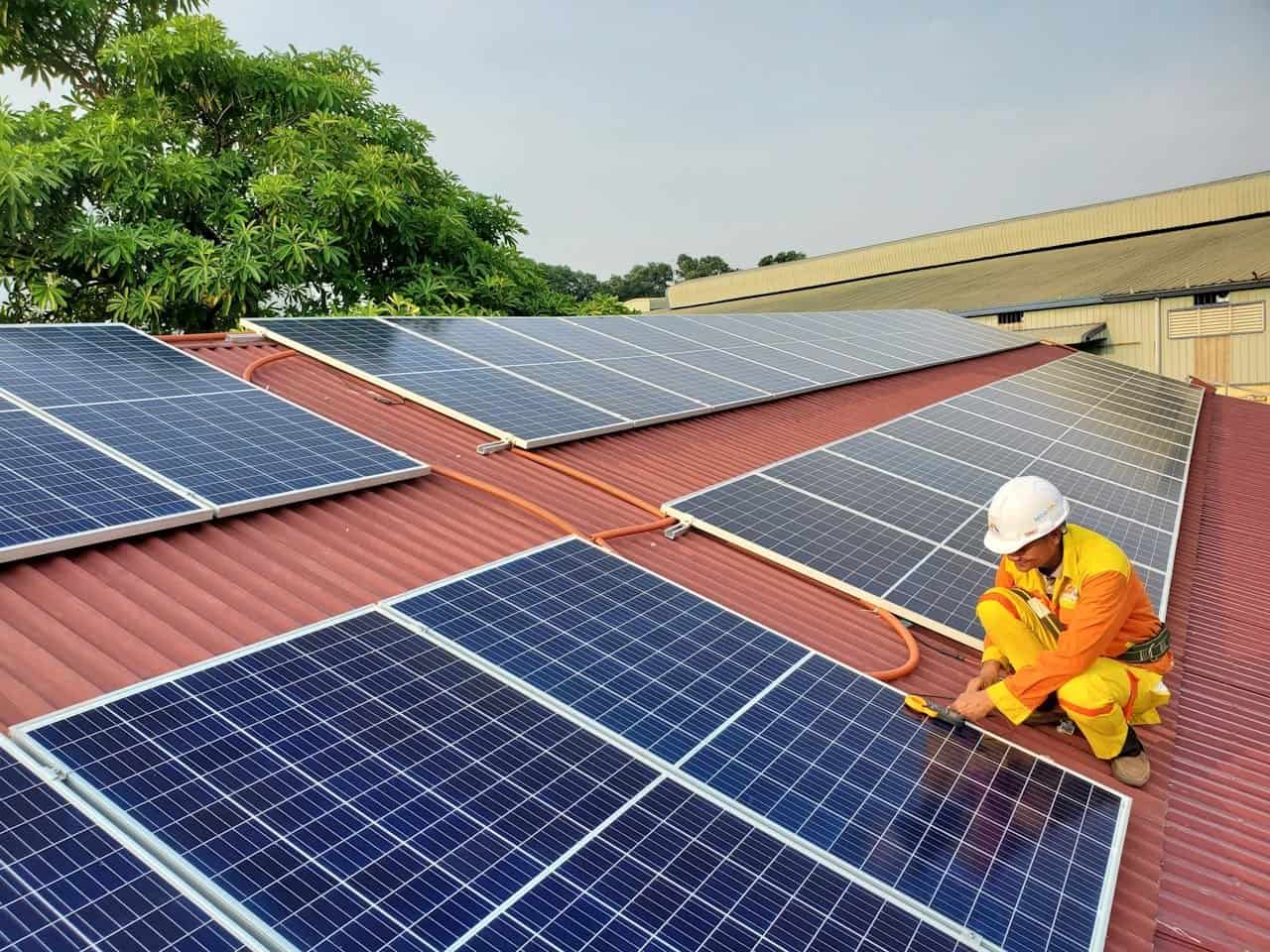
Solar PV panels can reduce daytime electricity bills and provide income through the Smart Export Guarantee. Battery storage can increase savings by allowing you to use stored solar power during peak-price periods. Some women founders use solar to fix a predictable share of their energy costs and protect against future price rises. Payback periods vary widely depending on roof size, electricity use, and installation cost, so obtain quotes from MCS-certified installers. For larger projects, the British Business Bank and several high-street lenders offer green asset finance.
9. Change staff behaviour
Energy waste is often a behaviour issue. Appoint an energy champion to remind colleagues to switch off lights, shut down computers, and close doors. Label switches so staff know what can be turned off. In the small teams typical of many women-led businesses, peer reminders and shared goals work well. The Carbon Trust estimates that behaviour change alone can deliver 5-10% savings with no capital spend.
10. Claim tax relief and check sector agreements
Beyond the Annual Investment Allowance, some energy-saving technologies qualify for First Year Allowances or enhanced deductions under research and development rules. Women founders often under-claim available capital allowances, so check what your equipment qualifies for. The Climate Change Levy, charged on business gas and electricity bills, can be reduced by up to 92% if you sign a Climate Change Agreement with your sector trade body, HMRC confirms. See current guidance on climate change levy rates and the annual investment allowance. For tax changes on the horizon, see our Autumn Budget 2026: What Women-Led Businesses Should Watch summary.
Turn energy savings into business resilience
Improving business energy efficiency in 2026 is about combining quick wins, LED bulbs, smart meters, and draught-proofing, with longer-term investments such as solar panels and efficient heating. Start with a walk-around audit this week, compare your tariff before your contract renews, and make one change that your team can see and copy. For more context on the UK business landscape, read our Women in Business: Key UK Facts page. Small steps add up to lower bills and a more resilient women-led business.
Four action steps to take this week
- Compare your current business energy tariff against at least two other suppliers.
- Book a smart meter installation if you do not already have one.
- Walk around your premises after hours and list every light and appliance left on.
- Check whether your sector has a Climate Change Agreement.