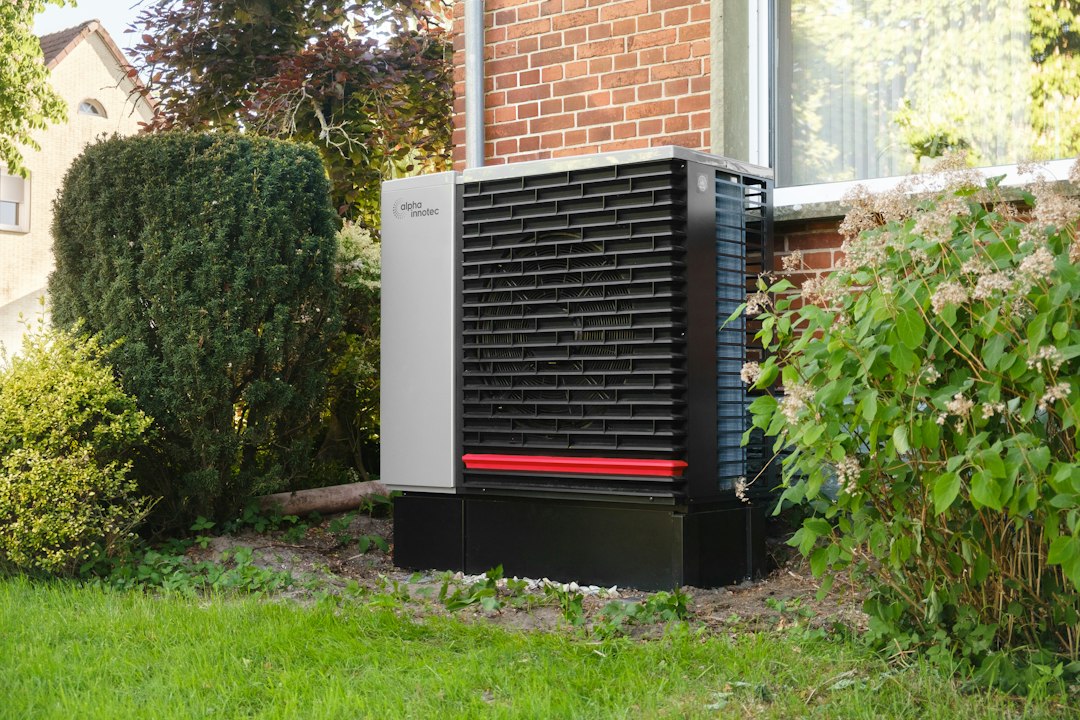
Working from home has changed how British households use energy. Instead of heating the house for a few hours in the morning and evening, millions of people now need a comfortable temperature all day, five days a week. For women running businesses from home, the result is a familiar dilemma: either heat empty rooms at full price, or work in a cold house with numb fingers and a hot water bottle.
Heat pumps have become the government’s preferred solution for home heating, with grants of up to £7,500 available through the Boiler Upgrade Scheme. For home workers, they offer a specific advantage: they are designed to run continuously at a steady, ambient temperature, which is exactly what a home office needs. This guide explains how they work, what they cost, and whether they make sense for your home working setup.
How heat pumps differ from traditional boilers
A traditional gas boiler burns fossil fuels to generate heat. A well-maintained boiler operates at roughly 80 to 95 per cent efficiency, meaning some energy is always lost through combustion and exhaust. Boilers also work in bursts: they fire up, heat the house quickly, then switch off until the temperature drops again.
Heat pumps work differently. Instead of generating heat, they move it. An air source heat pump draws warmth from the outside air, even in cold weather, and pumps it inside. This allows it to produce three to four units of heat for every unit of electricity it consumes, according to the Energy Saving Trust. That efficiency ratio is why heat pumps are significantly cheaper to run than direct electric heating, and competitive with gas in a well-insulated home.
Because they work best running continuously at a lower temperature rather than in short bursts, heat pumps create even, consistent warmth throughout the house. For a home worker, that means no more cycling between freezing and sauna.
What a heat pump costs in the UK
The upfront cost of an air source heat pump typically ranges from £8,000 to £15,000 installed, depending on the size of your home and the complexity of the installation. This is significantly more than a replacement gas boiler, which usually costs £1,500 to £3,500.
However, the Boiler Upgrade Scheme, launched by the government in 2022 and running through 2028, offers a grant of £7,500 towards the cost of an air source heat pump. For many homes, this brings the net cost down to between £1,000 and £7,500, which is comparable to a boiler replacement.
Ground source heat pumps cost more (typically £15,000 to £35,000) but qualify for the same £7,500 grant and are more efficient still, because underground temperatures are stable year-round.
Why heat pumps suit home workers
The case for a heat pump is strongest for people who are at home all day, and here is why.
First, the running model matches the usage pattern. A boiler heating an empty house for two hours morning and evening is reasonably efficient. A boiler heating a house all day, every day, is not: it burns gas in repeated bursts, each with its own start-up inefficiency. A heat pump running continuously at a lower flow temperature is more efficient the longer it runs, which is precisely the home worker’s pattern.
Second, the comfort is even. Anyone who has worked from home through a British winter knows the problem: the room with the desk is either the warmest room (because the thermostat is there) or the coldest (because it faces north). A heat pump, properly sized and installed, distributes heat more evenly, which means fewer decisions about which room to work in.
Third, if you have already noticed the benefits to getting dressed to work from home, a consistently warm house is the same logic applied to your environment. Comfort is not indulgence when it is the condition under which you earn your living.
Running costs compared
According to the Energy Saving Trust, a typical air source heat pump costs around £950 per year to run for a medium-sized, well-insulated home, compared with roughly £1,100 for a gas boiler at current energy prices. The exact figures depend on your insulation, the size of your home, and the gap between gas and electricity unit prices, which has narrowed since 2023.
The key variable is insulation. A heat pump operates at a lower flow temperature than a boiler, which means it needs a well-insulated home to maintain comfortable temperatures efficiently. If your home loses heat quickly through the walls, roof or windows, the heat pump will work harder to compensate. Before installing, it is worth getting an assessment of your insulation: loft insulation, cavity wall filling and draught proofing are all cheaper than a heat pump and improve its performance.
Is a heat pump right for your home office?
The honest answer depends on three factors: your current heating system, your insulation, and how long you plan to stay in your home.
If your boiler is approaching the end of its life (most last 10 to 15 years), the £7,500 grant makes a heat pump a serious option rather than a luxury upgrade. If your home is well insulated, the running costs are likely to be comparable to or better than gas. And if you are working from home for the foreseeable future, the all-day comfort and even heating are a genuine quality-of-life improvement, not a nice-to-have.
For a woman running a business from home, the calculation is straightforward: you are already paying to heat your workspace during working hours. A heat pump does the same job more efficiently, with a government grant covering most of the installation cost, and with the added benefit of reducing your home’s carbon footprint.
To explore your options, domestic heat pumps from GSM include a full assessment of your home’s suitability, insulation checks and running cost projections for your specific property.
Working from home is a business decision, and so is how you heat the space. For more on making the most of a home-based business, see our guide to online and home business, and our tips on cutting business energy costs. If you are weighing the broader costs of working for yourself, our guide to building a buffer fund covers the essentials.