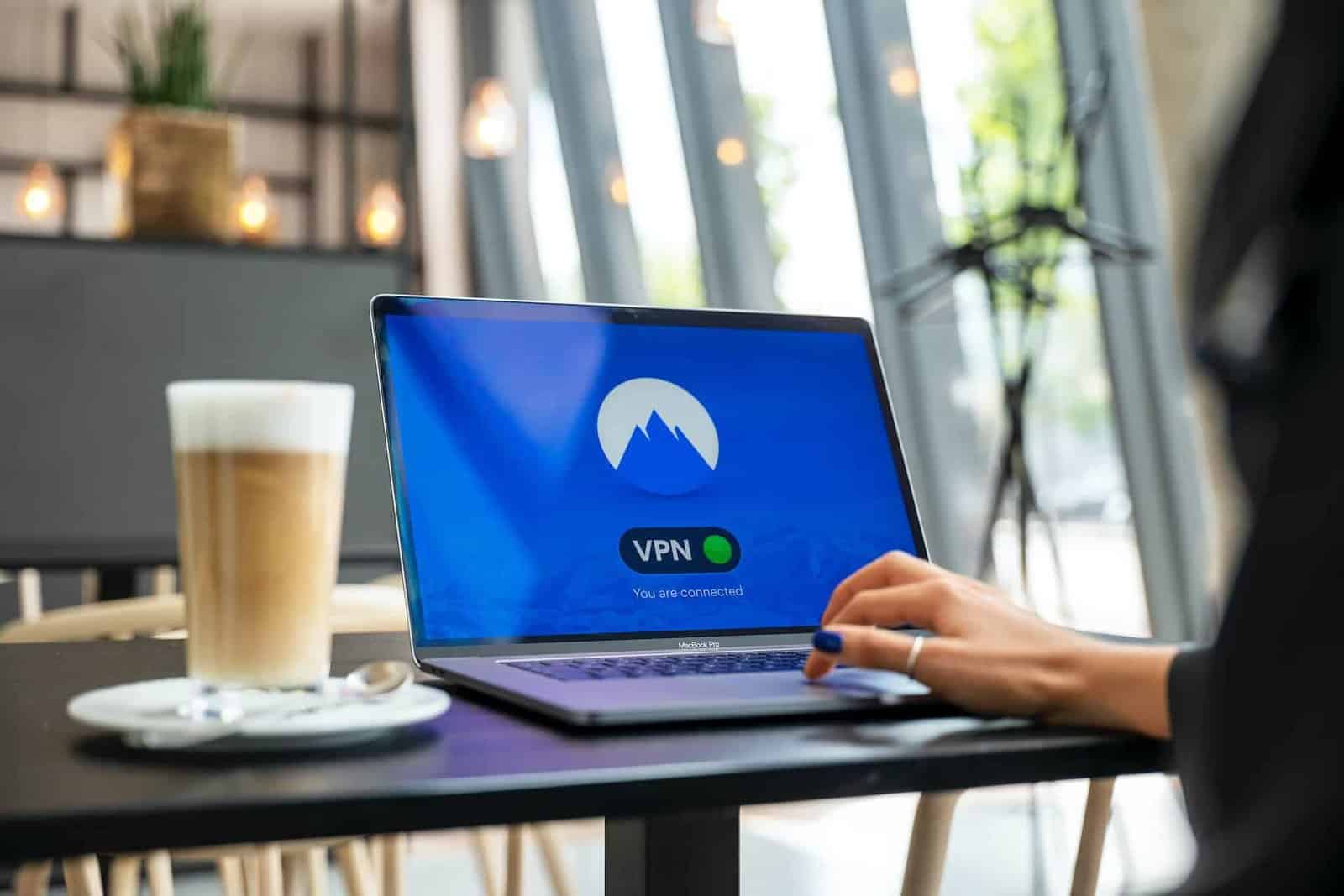
If you run a UK business with staff working from home, client sites, or coffee shops, choosing a VPN for your UK business is one of the simplest ways to reduce cyber risk. A virtual private network encrypts internet traffic between a device and your company systems, making it far harder for attackers to intercept passwords, client files, or financial data.
Remote and hybrid working is now a permanent feature of the UK labour market, and women-led enterprises span every sector and region. Many women founders build businesses around caring responsibilities, local supply chains, or flexible client work, which means customer and employee data often travels across home broadband, public Wi-Fi, and mobile networks. This guide explains what to look for when selecting a business VPN, how it fits with UK data protection law, and the practical steps to get it right.
Why a VPN for your UK business still matters in 2026
Cyber attacks remain one of the most common business risks in the UK. The government’s Cyber Security Breaches Survey 2024, published by the Department for Science, Innovation and Technology, found that half of UK businesses (50%) reported a cyber security breach or attack in the previous 12 months, with phishing the most common threat. A VPN is not a complete security solution, but it is a useful layer of protection when staff connect to company systems outside the office.
Under the UK GDPR and the Data Protection Act 2018, you must process personal data securely. The Information Commissioner’s Office (ICO) can impose fines of up to £17.5 million or 4% of total global annual turnover, whichever is higher, for the most serious failures. For less severe breaches, the maximum is £8.7 million or 2% of global turnover. Using encryption, including a properly configured VPN, is one of the technical measures the ICO highlights to help meet that obligation.
Six criteria for choosing a business VPN
1. UK and EU server locations
Choose a provider with servers in the UK and EU. This can improve connection speeds for your team and help you keep data flows within jurisdictions covered by UK GDPR and EU GDPR adequacy decisions. If you handle client data subject to specific contractual terms, server location may also be a compliance point.
2. Encryption standards and protocols
Look for AES-256 encryption and modern protocols such as WireGuard or OpenVPN. Avoid providers that rely on outdated protocols like PPTP. The National Cyber Security Centre (NCSC) advises organisations to use strong, well-maintained encryption for remote access.
3. Device compatibility and simultaneous connections
Check that the VPN works across the devices your team actually uses: Windows, macOS, iOS, Android, and Linux if applicable. Count how many simultaneous connections the licence allows. A five-user plan is no use if ten devices need protection.
4. No-logs policy and data handling
Read the provider’s privacy policy carefully. A genuine no-logs policy means the VPN provider does not store records of your browsing activity or connection timestamps. Because you remain responsible for personal data under UK GDPR, you need to know how any third-party service handles information that could identify your staff or customers.
5. Admin controls and user management
Business plans should include a central admin dashboard. You want to be able to add and remove users, enforce two-factor authentication, allocate server locations by team, and review connection logs for troubleshooting, not surveillance. Role-based access makes onboarding and offboarding much easier.
6. Transparent pricing and UK support
Compare annual and monthly costs, but also check what is included. Some providers charge extra for dedicated IP addresses, priority support, or additional server locations. Look for a provider with UK-based support hours or a clear service-level agreement, so you are not waiting for a response across time zones when a deadline is looming.
GDPR and data protection considerations
A VPN helps satisfy the UK GDPR security principle, which requires you to protect personal data against unauthorised processing, accidental loss, destruction, or damage. ICO guidance recommends that organisations consider encryption for data in transit, which is exactly what a VPN provides.
However, a VPN does not make you GDPR-compliant on its own. You still need up-to-date privacy notices, lawful bases for processing, data retention schedules, and staff training. If you are unsure where you stand, the ICO’s self-assessment checklist is a useful starting point.
Fitting a VPN into wider cyber security
Think of a VPN as one component of a wider security plan, not a substitute for it. Pair it with multi-factor authentication on all cloud services and email accounts, automatic software updates and patch management, regular backups stored separately from your main network, and clear policies on devices, passwords, and acceptable use.
Consider Cyber Essentials certification, which starts at around £300 plus VAT for the basic self-assessment and can reduce your cyber insurance premiums. The scheme is backed by the NCSC and gives you a clear baseline of security controls.
Compliance is broader than technology. Since 2025, new company directors must verify their identity with Companies House under anti-economic crime rules, and existing directors have a transition period to comply. Our guide to Companies House Identity Verification: What Every Female Director Must Do Now explains the process.
For more on protecting your business financially, see our guide to What Is Cyber Insurance? A Guide For Women-Led SMEs.
Remote working and expenses
If your team works from home, a VPN is part of the infrastructure that keeps client data safe on home broadband. Women-led businesses often operate with lean teams and tight margins, so claiming every allowable cost matters. You may also be able to claim tax relief on some home working costs. Our guide to Home Working Expenses Self Employed Can Claim Through HMRC explains what sole traders and directors can include.
Action steps
- Audit where and how your team accesses company systems.
- List the devices and operating systems that need VPN coverage.
- Shortlist three providers with UK/EU servers, AES-256 encryption, and business admin controls.
- Review each provider’s privacy policy and no-logs claims.
- Check whether Cyber Essentials certification would strengthen your overall security posture.
- Document your VPN policy and train staff to use it.
Choosing the right VPN for your UK business is about more than speed and price. It is about protecting customer data, supporting remote staff, and demonstrating that you take security seriously. Match the VPN to your actual working patterns, pair it with strong authentication and staff training, and keep your wider GDPR obligations in view. Get those basics right and you will have a practical, affordable layer of protection that scales with your business.