Running a small business in the UK as a woman founder means handling customer data, supplier details, financial records and employee information every day, whether you rely on desk booking and smart offices or a more traditional workspace.
Why a VPN matters for UK small businesses
Small businesses account for 99.2% of UK private sector businesses, according to Department for Business and Trade business population estimates from 2024. Yet many still treat cyber security as an enterprise issue. A VPN creates an encrypted tunnel between your device and the internet, hiding your IP address and scrambling the data you send and receive. That makes it much harder for attackers to intercept passwords, invoices or customer records.
The UK government’s Cyber Security Breaches Survey 2025 found that 50% of businesses and 32% of charities reported cyber security breaches or attacks in the previous 12 months. Among the businesses affected, 84% said phishing was the most common attack type. Those figures show that cyber crime is not a big-business problem only. Small firms are targets too, often because attackers assume their defences are weaker.
For women-led businesses, which are more likely to be micro-businesses or sole traders, the impact of a breach can be especially severe. A single compromised email account or intercepted payment can disrupt cash flow and client relationships for weeks. You can see the scale of the sector in our Women in Business: Key UK Facts page.
1. Protect customer and business data under UK GDPR
UK GDPR and the Data Protection Act 2018 require every business that processes personal data to keep it secure. The Information Commissioner’s Office can fine organisations up to £17.5 million or 4% of total annual worldwide turnover, whichever is higher, for the most serious breaches.
A VPN helps by encrypting internet traffic between your devices and the services you use. That matters when you log into cloud accounting software, customer relationship management tools or online banking from a home office, co-working space or client site. Even if someone intercepts the connection, the encrypted data is unreadable without the decryption key.
This is not a replacement for strong passwords, multi-factor authentication and staff training. It is an extra layer. For women-led micro-businesses, where the founder often manages client relationships and bookkeeping personally, this extra protection is particularly valuable. Think of it as the digital equivalent of locking a filing cabinet.
2. Secure remote and hybrid working
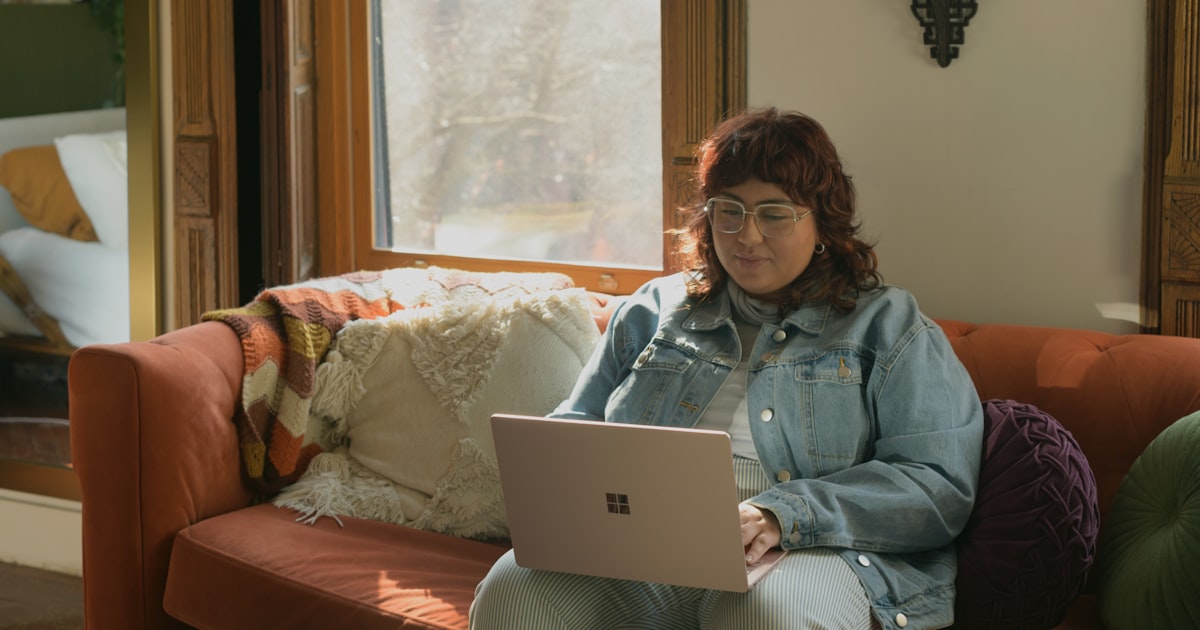
Remote and hybrid working remain common across UK professionals, and many small firms operate without a traditional office at all. Women-led businesses are among those most likely to use flexible, home-based or remote working arrangements, so secure access is essential. Whether you employ a virtual assistant, work with a bookkeeper in another city or run your company from a garden office, your team needs secure access to business systems.
A business VPN lets remote workers connect to your company network as if they were in the office. That protects file shares, internal apps and email servers from being exposed directly to the public internet. It also means you can control which devices and users can reach sensitive systems.
If you are claiming home working expenses, HMRC has specific rules about what counts as allowable costs. Our guide to Home Working Expenses Self Employed Can Claim Through HMRC explains what to include.
3. Stay safe on public Wi-Fi and co-working networks
Coffee shops, hotel lobbies, airport lounges and co-working spaces offer convenient Wi-Fi, but they are also convenient for attackers. Public networks are often unencrypted, which means anyone on the same network can potentially intercept data sent between your laptop and the websites you visit.
A VPN encrypts that traffic before it leaves your device. So even if you connect to a compromised or fake hotspot, your passwords, emails and client files are protected. Women who travel to client meetings, networking events or conferences can protect their work by keeping a VPN active on every device. This is particularly important if you run a hospitality business that offers guest Wi-Fi.
For businesses that handle payment card data, a VPN is also a useful step towards meeting PCI DSS requirements, although it does not replace the full standard.
4. Reduce cyber insurance and compliance costs
Cyber insurance premiums have risen as insurers respond to higher claim volumes. Many insurers now ask what security controls you have in place before they quote. Using a VPN, alongside endpoint protection, patch management and multi-factor authentication, can help demonstrate that you take security seriously.
Women founders often need to show robust risk management to lenders, investors and insurers, making these controls particularly important. You may also find that a VPN supports the principles behind Cyber Essentials, the government-backed certification scheme administered by IASME and supported by the National Cyber Security Centre. Cyber Essentials sets out five baseline controls: firewalls, secure configuration, user access control, malware protection and patch management. While a VPN is not one of the five controls, it supports the secure configuration and access control principles that the scheme tests.
If you are unsure whether cyber insurance is worth the cost, read our guide to What Is Cyber Insurance? A Guide For Women-Led SMEs.
How to choose a small business VPN
Not every VPN is suitable for business use. Free consumer VPNs often have data limits, fewer server locations and weaker privacy policies. Most women-led small businesses do not have an in-house IT team, so choose a provider with clear UK-based support and straightforward setup. For a UK small business, look for:
- Business-grade encryption: AES-256 is the current standard.
- No-logs policy: the provider should not store records of your browsing activity.
- Multi-user accounts: you should be able to add team members and manage permissions centrally.
- UK and EU servers: this helps with connection speed and can support compliance with data residency expectations.
- Kill switch: this blocks internet access if the VPN connection drops, preventing accidental data exposure.
- Two-factor authentication: protects the VPN admin console itself.
Prices vary, but most business VPNs cost between £5 and £15 per user per month. That is usually far less than the cost of recovering from a breach.
Practical next steps for women-led businesses
- Audit where your team accesses business systems: home offices, co-working spaces, client sites, hotels and cafes.
- Check whether your current security setup includes encrypted connections for remote access.
- Compare business VPN providers that offer centralised user management and UK-based support.
- Pair the VPN with multi-factor authentication, password managers and regular software updates.
- Review your cyber insurance position and consider whether Cyber Essentials certification would help.
A VPN belongs on your 2026 security checklist
A small business VPN is no longer a niche tech tool. For women-led businesses in the UK, it is a practical, affordable control that protects customer data, supports remote working and reduces the risk of a costly breach. With half of UK businesses reporting cyber attacks in 2025, the question is not whether you can afford a VPN, but whether you can afford to operate without one.