When visual impairment made traditional employment difficult, fashion designer Steph Cutler decided to try self-employment with sight loss. More than 30 years later, she reflects on the lessons that turned a challenge into a lasting business.
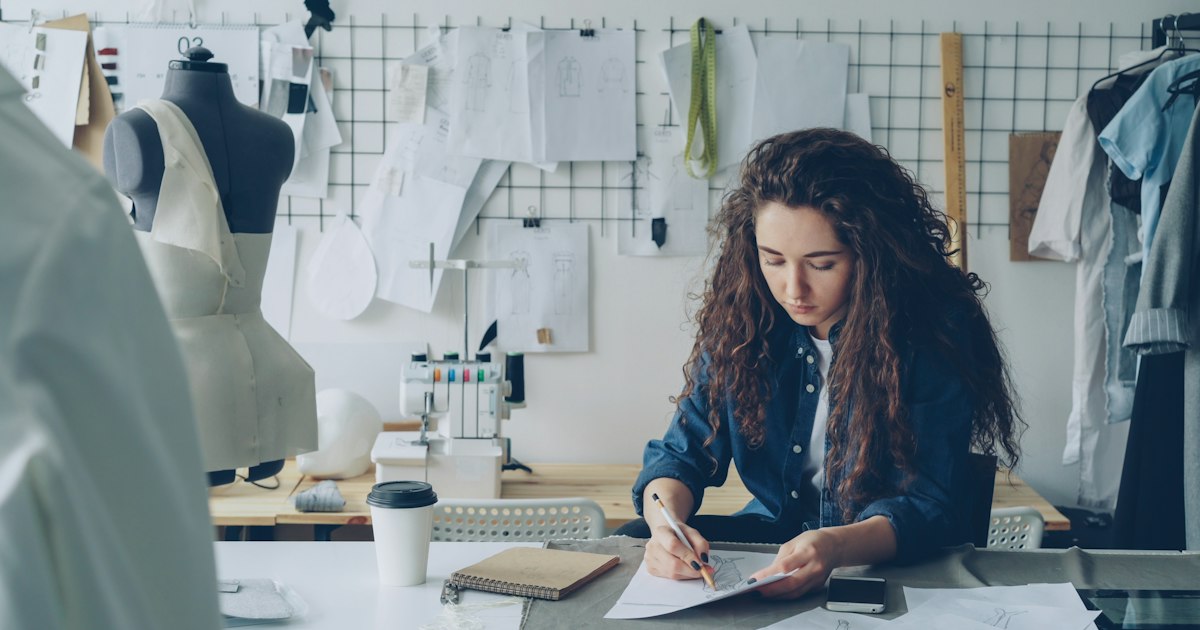
I was working as a fashion designer when I noticed the sight in one of my eyes was failing. I was on holiday at the time and assumed it was nothing serious, but the optician sent me straight to the eye hospital. I was diagnosed with a hereditary eye condition that would gradually take my central vision.
As my sight deteriorated, I moved closer to family for support. It soon became clear that sitting at home trying to adjust to sight loss would not help me to live with it. I set myself two goals: in the short term, to become employable again; in the long term, to rebuild my life on my own terms.
Turning a challenge into an opportunity
I quickly encountered the barriers many disabled people still face when looking for work. According to ONS Labour Force Survey data from 2024, the disability employment rate stands at around 54%, compared with roughly 83% for non-disabled people. Self-employment can be a practical alternative: ONS figures from 2024 show that around 15% of disabled workers in the UK are self-employed, compared with around 12% of non-disabled workers, often because it offers flexibility that traditional jobs do not.
I saw a business opportunity in the legal, social and commercial case for making services more accessible. I also had lived experience of the barriers customers and employees with disabilities face. Starting a business offered a way around the difficulty I was having finding work as a visually impaired applicant. I decided to stop waiting for permission and employ myself.
I had no business background, so I used the free start-up support available through local Growth Hubs and the GOV.UK guidance on setting up a business. I also spent time writing a business plan and researching my idea to make sure it was viable before committing time or money.
For anyone with a health condition or disability considering self-employment, the government’s Access to Work scheme can help cover specialist equipment, travel support and support workers. Since April 2024, Access to Work no longer has an annual cap on the amount of support it can provide, which means visually impaired entrepreneurs can apply for the full cost of reasonable adjustments. Charities such as RNIB and Blind in Business also offer practical advice and mentoring for visually impaired entrepreneurs. It is worth exploring support as early as possible, because it can make working for yourself far more viable.
The business case for women founders is strong. The Alison Rose Review of Female Entrepreneurship (2019) found that women-led businesses contribute more than £85 billion to the UK economy each year, yet women founders still receive a small share of equity investment. For disabled women, the barriers are compounded. Research from the British Business Bank (2024) highlights that disabled entrepreneurs remain underrepresented in equity finance, which makes low-cost, service-based start-up routes particularly valuable. You can read more about the wider context on our Women in Business: Key UK Facts page.
I did not need much start-up capital, which was fortunate because I had very little money. The bigger challenge was contacts: nobody in my new field knew who I was. I had to work hard to raise my profile and prove my credibility from scratch.
I began with a consultancy offering disability awareness training and accessibility advice. Soon, so many disabled people got in touch about adapting to impairment or finding work that I expanded into coaching and personal development. Today I work mainly, though not exclusively, with disabled people who want to find work, start a business or become more confident in moving forward with their lives.
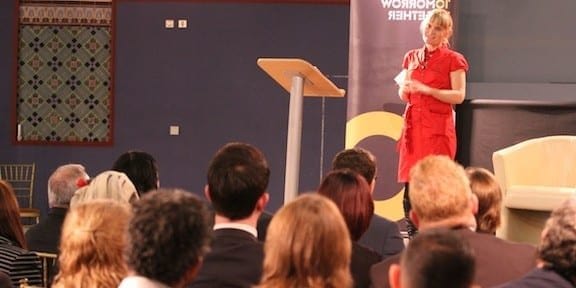
I am now a qualified coach and personal development trainer. I facilitate leadership and start-up workshops and speak at events about resilience, accessibility and entrepreneurship.
Creating opportunities through persistent networking
My advice to anyone starting out is to make networking a priority from day one and keep it up. Most of the opportunities I have created came from meeting people and staying in touch.
Networking did not come naturally to me. I had no experience of it, and my sight loss made it harder to read name badges, navigate rooms or pick up on visual cues. I persevered, learned how to network effectively, and built a support system that has carried me through economic uncertainty and personal setbacks.
Supportive people are essential. By supportive, I mean people who encourage you to try things even when you might fail. Not everything works, and you have to be willing to pick yourself up and try again. No one can do it for you, so you have to want it enough to keep going.
Patience is another asset. It has never been my strongest quality, but I have learned that sometimes patience is vital and sometimes impatience is the kick you need. Stepping outside your comfort zone is also essential when starting or growing a business. If you only do what feels safe, you limit what you can achieve.
Finding inspiration from positive role models
Positive influences matter. My father has always inspired me with his optimistic outlook. Early on, I was also encouraged by Liz Jackson, a successful blind entrepreneur. Hearing her speak made me believe that if she could build a business, so could I. That was the moment I fully committed to my venture.
These influences shape the work I do and the approaches I share with clients. My business is called Making Lemonade because I believe that when life gives you lemons, you make lemonade. I support people to turn their setbacks into something positive and to build lives and businesses where they feel successful and fulfilled.
Practical steps for self-employment with sight loss
- Apply for Access to Work before you start trading. The scheme can fund specialist software, magnification equipment, travel support and support workers. Apply as early as possible, because claims can take several weeks to process.
- Use free start-up support. Local Growth Hubs, the GOV.UK business support service and programmes such as those in the Free Digital Support for Women in Business: UK 2026 Guide offer mentoring, training and digital skills help.
- Track your allowable expenses from day one. Costs such as specialist equipment, home office adjustments and accessible transport may be deductible. Read our guide to allowable expenses for self-employed people in the UK.
- Build a network before you need it. Attend events, join online communities and follow up with contacts. Many business opportunities come from relationships built over time.
- Start small and test your idea. You do not need a large investment to begin. A service-based business, consultancy or coaching practice can be launched with minimal capital.
I choose to see my sight loss as a gift. It has given me things I would not want to be without, and my business is one of them. Self-employment with sight loss is not always easy, but for me it has been the route to independence, purpose and a career on my own terms.
About the author: Steph Cutler is the founder of Making Lemonade, a coaching and training consultancy supporting disabled people and others to achieve their work and life goals.