International trade is one of the most effective ways for a small business to grow. It opens new revenue streams, reduces dependence on a single market and exposes a business to fresh competition. Yet women-led firms in the UK remain less likely to export than their male-led counterparts. Closing that gap matters: according to the 2024 Rose Review of Female Entrepreneurship Progress Report, women-led businesses contribute an estimated £105 billion to the UK economy each year. The original 2019 Rose Review found that only one in three UK entrepreneurs is a woman and that closing the entrepreneurship gender gap could add up to £250 billion in new value. Helping more women-led firms trade internationally can boost turnover, create jobs and build resilience. Whether you are exploring your first overseas market or scaling an existing export operation, knowing where to find impartial export support for women-led businesses is the first step.
The exporting gap for women-led businesses
Research by the Federation of Small Businesses (FSB) and the Women’s Business Council consistently shows that women-led SMEs are less likely to export than the wider SME population. The reasons are practical rather than aspirational. Women-led firms often start smaller, grow more slowly and have less access to external finance. British Business Bank research has repeatedly found that women-founded businesses receive a disproportionately small share of UK equity investment. Women-led firms are also more likely to operate in service sectors where exporting can seem less straightforward, and they report fewer international networks and mentors. Care responsibilities and a preference for organic growth can also mean international expansion is deprioritised until the business is larger.
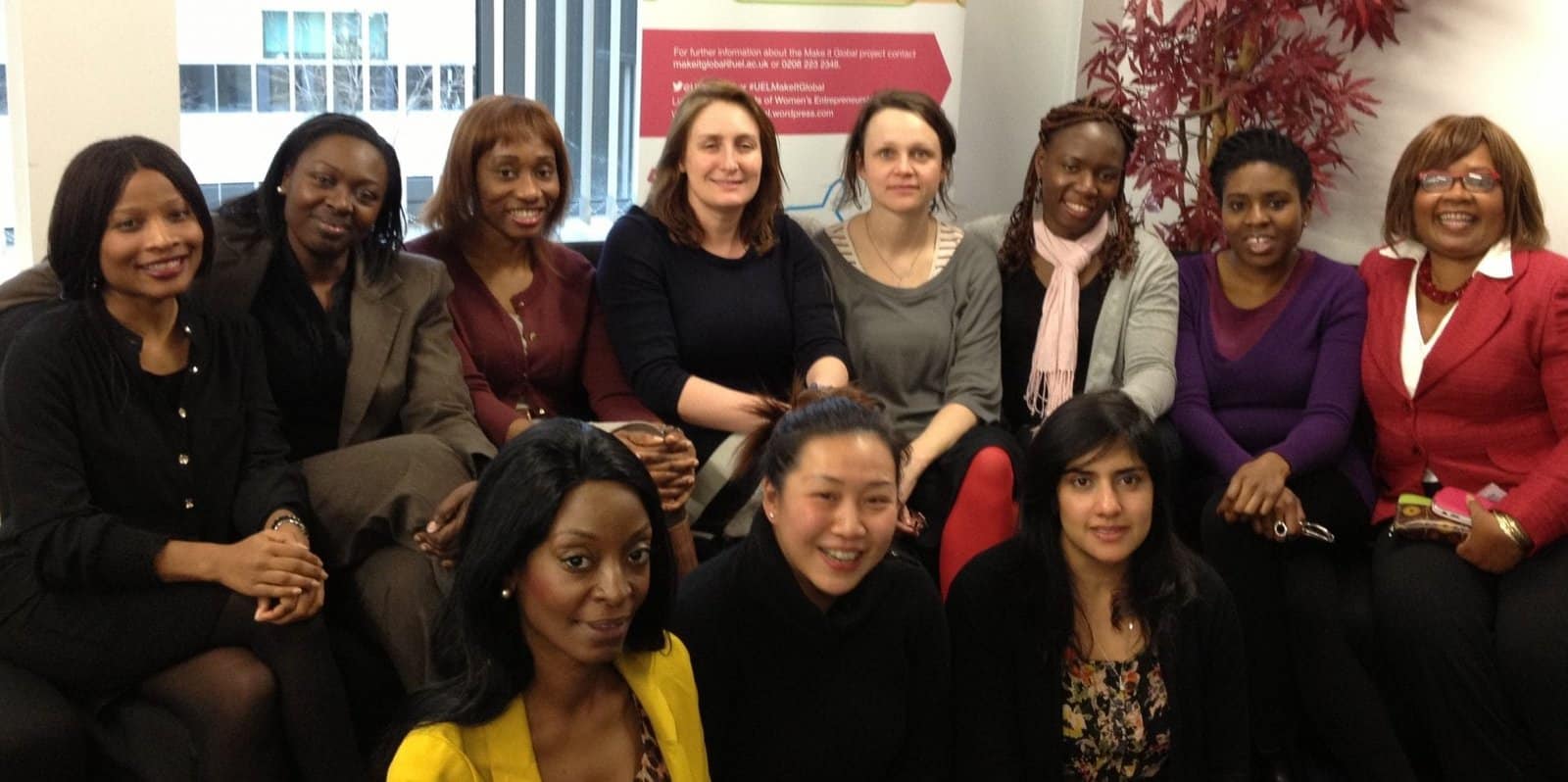
These barriers are not insurmountable. Targeted programmes that combine training, peer support and introductions to buyers can make a measurable difference. The University of East London’s Make It Global project, funded by the European Regional Development Fund in the early 2010s, was an early example of this approach. It offered London-based women-led SMEs workshops, country-specific events, peer learning groups and access to international networks. Although that programme has now closed, the principles behind it—practical advice, market intelligence and a strong support network—remain the foundation of good export support today.
Current UK export support for women-led businesses
The main source of government export advice is the Department for Business and Trade (DBT). Its great.gov.uk platform is the starting point for any UK business looking to sell overseas. It includes free online training through the Export Academy, detailed market guides for individual countries, sector briefings and the Export Support Service, which offers personalised guidance by phone and email.
For women-led businesses specifically, the Women’s Business Council publishes research and recommendations on the barriers facing women entrepreneurs, including those looking to trade internationally. The Women’s Enterprise Taskforce also works with finance providers, investors and business networks to improve women founders’ access to markets and capital.
Other organisations that provide practical export support include:
- UK Export Finance (UKEF) – the UK’s export credit agency. It helps businesses win, fulfil and get paid for overseas contracts by providing finance, insurance and guarantees that private lenders may be unable to offer. You can explore what UKEF covers on gov.uk.
- Innovate UK EDGE – specialist support for innovative SMEs, including market exploration, introductions to overseas partners and advice on grant and equity funding.
- British Chambers of Commerce – local chambers offer export documentation, training, trade missions and networking events.
- Federation of Small Businesses (FSB) – guidance, templates and advocacy for small firms, including those new to exporting.
- Women-focused networks – groups such as the British Association of Women Entrepreneurs (BAWE), everywoman and the Association of Scottish Businesswomen run events, mentoring and international trade content.
Building an export-ready business
Before committing to a new market, it pays to do structured research. The DBT market guides cover regulations, tariffs, local business culture, intellectual property rules and sector demand. Free Export Academy modules can help you write an export plan, understand Incoterms, price in foreign currencies and manage payment risk. Starting with one or two priority markets is usually more effective than spreading resources across many countries.
Finance is often the biggest practical hurdle. Overseas orders can strain cash flow because of longer payment terms, currency fluctuation and the cost of compliance. UKEF can step in when private finance is hard to secure, while the British Business Bank and regional growth funds may provide working capital. Talking to your bank or accountant early, and preparing a cash-flow forecast that includes shipping, duties and insurance, will put you in a stronger negotiating position.
Networks are equally important. Exporting can be isolating, especially for sole traders and micro-businesses. Peer learning groups, sector associations and women’s business networks can share contacts, recommend reliable freight forwarders or agents, and provide moral support. Attending a trade mission or sector-specific webinar can lead to partnerships that would take years to develop alone. Many networks also run virtual events, so you do not need to be based in London to access high-quality advice. Our guide on saving time and money with international business partners covers more practical ways to manage overseas relationships.
Practical first steps
- Register for the free DBT Export Academy on great.gov.uk to learn the fundamentals of exporting.
- Read the market guides for your target countries on great.gov.uk.
- Contact your local Chamber of Commerce for export documentation, training and events.
- Explore UK Export Finance on gov.uk if you need funding or insurance for an overseas contract.
- Join a women-led business network for mentoring, peer support and sector-specific introductions.
Exporting is no longer the preserve of large corporations. With clear planning, the right finance and a supportive network, women-led businesses across the UK can compete internationally, diversify their income and build stronger, more resilient companies. The right export support for women-led businesses can turn a local success into a global one.