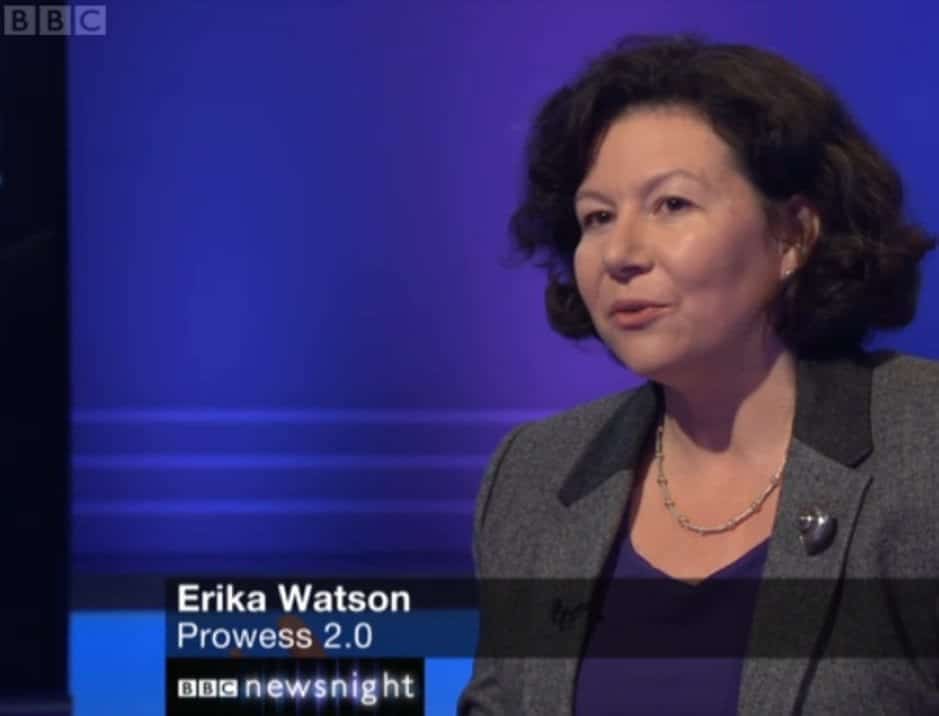
In 2013, Prowess founder Erika Watson appeared on BBC Newsnight to respond to a report on the rapid rise of self-employment in the UK. The programme noted that self-employment had risen by 367,000 since 2008 to reach 4.2 million, while employee jobs had fallen. What it missed was that women were driving the shift: 53% of the newly self-employed were women, and 80% of those who became self-employed between 2008 and 2011 were women. Not a single new business owner interviewed was a woman.
Erika called it a “silent revolution”. More than a decade later, women’s self-employment UK is still growing, but it remains overlooked by policymakers, media and mainstream business support. This article updates the figures and sets out why tailored support for women in business is as urgent in 2026 as it was in 2013.
Women’s self-employment UK: the 2026 picture
According to the Office for National Statistics (ONS), there were around 4.8 million self-employed people in the UK in early 2026, roughly 14% of everyone in work. That is above the 4.2 million figure discussed on Newsnight in 2013 and close to the pre-pandemic peak of 5 million in 2019.
Women continue to make up a large share of the self-employed workforce. ONS data from 2026 show there are roughly 1.8 million self-employed women in the UK, accounting for around 37% of all self-employed workers. Between the 2008 financial crisis and the 2019 peak, women accounted for the majority of the net increase in self-employment.
The pandemic disrupted this trend. Hundreds of thousands of self-employed people left the labour market in 2020 and 2021, and women were disproportionately affected by caring responsibilities and the closure of sectors such as personal services and creative industries. Recovery has been slow: although self-employment has climbed back from its 2021 low, the number of self-employed women remains below its pre-pandemic level in some sectors.
These figures matter because self-employment is no longer a fringe activity. The self-employed now create a substantial share of private-sector jobs and economic activity. Yet the policy conversation still treats employment and self-employment as separate worlds, and women’s contribution to the latter is frequently overlooked. For a broader snapshot, see Women in Business: Key UK Facts.
The support gap: funding and finance still favour big business
On Newsnight, Erika pointed out that while big companies were receiving substantial government support through vehicles such as the Regional Growth Fund, the budget for supporting each new self-employed business was far smaller. That imbalance has not disappeared.
Today, self-employed women can access schemes such as Start Up Loans for women founders, local Growth Hubs and the British Business Bank’s finance programmes. By early 2025, the Start Up Loans programme, delivered by the British Business Bank, had lent more than £1.1 billion to over 100,000 businesses since its launch in 2012, with women founders making up a significant share of recipients. But many women report that provision is fragmented, hard to navigate and not designed around their lives.
Childcare costs, caring responsibilities, uneven digital access and a persistent gender finance gap all make it harder for women to start and scale a business. The 2019 Alison Rose Review of Female Entrepreneurship found that women start businesses with 53% less capital on average than men, and that advancing women in enterprise could add up to £250 billion to the UK economy. Yet women-led businesses remain under-represented in equity investment, and women entrepreneurs frequently cite difficulty accessing affordable finance as a major barrier. The support that does exist often focuses on start-up rather than sustained growth, leaving women who want to employ others or enter supply chains without a clear pathway.
Why skills, mentoring and networks still matter
Learning to run a business when you have never done it before is hard. Good-quality training, peer networks and mentoring are proven to improve survival rates and profitability. Women’s business support organisations have historically played a vital role in providing safe space, practical advice and confidence-building.
Yet many of those organisations have been hollowed out by funding cuts over the last decade. The shift towards online provision and volunteer-led mentoring can be valuable, but it is not a substitute for specialist, sustained support that understands the barriers women face. As Erika argued on Newsnight, “This is a cause for celebration if you have the infrastructure in place to really support people to make the best of this opportunity.” That infrastructure is still patchy.
Prowess has long argued that business support should be designed with women’s realities in mind: flexible delivery, childcare-friendly events, finance products that do not rely on property collateral, and networks that connect women to buyers, investors and each other. These principles are just as relevant now as they were in 2013. For practical tax guidance, see Self Employed Tax UK: A Complete Guide for 2026/27.
What needs to change in 2026
The first step is to stop treating women’s self-employment as invisible. Official statistics, media coverage and policy debates should recognise the scale of women’s contribution and the specific challenges they face. That means collecting and publishing sex-disaggregated data on self-employment, business survival and access to finance.
Second, government should invest in tailored business support for women, not as a nice-to-have add-on but as core economic infrastructure. This includes ring-fenced funding for women’s enterprise organisations, accessible finance, affordable childcare, and procurement policies that open doors for women-led businesses.
Third, the business support sector must do more to reach women where they are: in community centres, online after school hours, and through trusted networks. One-size-fits-all provision will continue to miss the women who need it most.
Action steps for self-employed women in 2026
- Check your eligibility for Start Up Loans or local Growth Hub support if you are planning to start or grow a business.
- Review your tax obligations under Making Tax Digital for sole traders before the 2026 deadlines.
- Join a women-led business network to access peer mentoring, procurement opportunities and investor introductions.
- Contact your MP or local enterprise partnership to ask what sex-disaggregated support data they publish for self-employed women in your area.
The BBC Newsnight discussion is no longer available on BBC iPlayer, but the questions it raised are still live. Women’s self-employment UK has been one of the defining labour-market shifts of the last fifteen years. Without the right support, it risks becoming a story of precarious work rather than economic empowerment. Prowess will keep speaking out until women’s business ownership gets the recognition, investment and support it deserves.