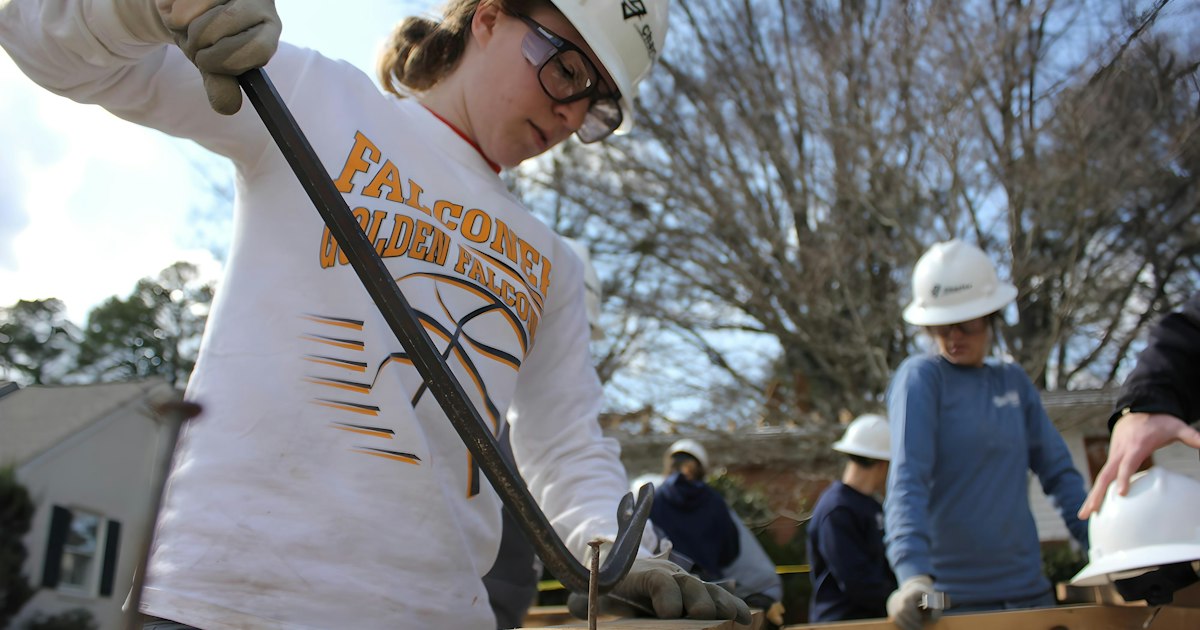
Civil engineering shapes almost every structure you use: roads, bridges, flood defences, railways, water treatment plants and the buildings where we work. Yet the profession remains one of the most male-dominated corners of the UK economy. If you are a woman considering a move into engineering, or a business leader trying to hire one, the case for change is stronger than ever. The wider picture for women in business shows progress, but technical professions still lag behind. Here is why the UK needs more female civil engineers, backed by current data.
Why female civil engineers remain underrepresented
According to EngineeringUK’s 2024 report, women hold 16.5% of engineering roles in the UK. That is a marked improvement on the 10.5% recorded in 2010, but it still means fewer than one in six engineers is a woman. Within civil engineering specifically, representation is even lower than the engineering average, and the UK lags behind several European peers where the profession carries greater prestige.
The image problem has not gone away. In the UK, the word “engineer” covers everyone from a washing machine repair technician to a chartered civil engineer leading a multi-billion-pound infrastructure project. In countries such as Spain and Germany, the title is protected and carries the same social status as medicine or law. Until the UK gives engineering the status it deserves, it will struggle to attract the brightest women and men.
Diverse teams design better infrastructure
Civil engineers are problem solvers at scale. They must balance cost, safety, accessibility, sustainability and public opinion when delivering projects that last decades. Research by the Royal Academy of Engineering and EngineeringUK has consistently linked workforce diversity to stronger innovation and better problem-solving in technical teams.
When women are missing from design teams, the built environment can fail half the population. Examples range from public transport systems designed around male commuting patterns to workplaces with inadequate facilities. More female civil engineers mean infrastructure that works for everyone, not just the demographic that designed it.
The skills gap is widening
The UK already faces a serious engineering recruitment shortfall. EngineeringUK estimates that the UK needs around 173,000 new engineering recruits each year through to 2030. At the same time, the workforce is ageing: a significant proportion of chartered engineers are approaching retirement, and the pipeline of young people studying relevant subjects is not large enough to replace them.
Raising women’s share of civil engineering roles from below one in six to closer to parity would transform the talent pipeline. Employers cannot afford to ignore half the working population when the sector is crying out for skilled people. For women considering a career change, this shortage puts you in a strong position: your skills are in demand, and the entry routes are more accessible than many assume.
Net zero depends on civil engineers
The UK’s legally binding net zero target by 2050, and the interim carbon budgets set under the Climate Change Act 2008, rely on civil engineering. Offshore wind farms, nuclear power stations, solar arrays, upgraded rail networks, flood defences, low-carbon housing and improved water infrastructure all require civil engineers.
The Infrastructure and Projects Authority and HM Treasury have made clear that delivering these projects on time and on budget depends on having enough qualified people. Without more women entering the profession, the UK risks missing its climate and growth targets simultaneously.
The pay and progression case
Civil engineering pays well. ONS data from 2024 puts the median full-time salary for civil engineers at roughly £48,000, well above the UK median full-time figure. Starting salaries for graduate civil engineers are strong, and senior chartered engineers and project directors can earn six-figure salaries.
Beyond pay, the work offers tangible job satisfaction. Civil engineers see projects through from design to completion and know that their work will be used by society for decades. For women who want a career with impact, security and progression, civil engineering is a strong option.
What employers and women can do next
Change requires action from both sides. Employers should review recruitment language, offer flexible working from day one, and build clear progression paths. They can also use the apprenticeship levy to fund degree apprenticeships in civil engineering, creating paid routes into the profession that do not require full-time university study.
Professional bodies such as the Institution of Civil Engineers and the Women’s Engineering Society run mentoring, accreditation and networking programmes that make the path clearer. For women exploring the field, options include degree apprenticeships, graduate schemes, and career-change retraining programmes. If you are moving from another sector, our guide to career change at 40 sets out how to plan a confident transition. You can also read about building a successful career as a woman in manual trades for practical advice on entering male-dominated sectors.
Conclusion
The UK needs more female civil engineers because the current pipeline cannot deliver the infrastructure, energy transition and economic growth the country has promised. The profession offers strong pay, meaningful work and a clear route to senior roles. For women, it is an opportunity. For employers, it is a necessity. For the country, it is overdue.