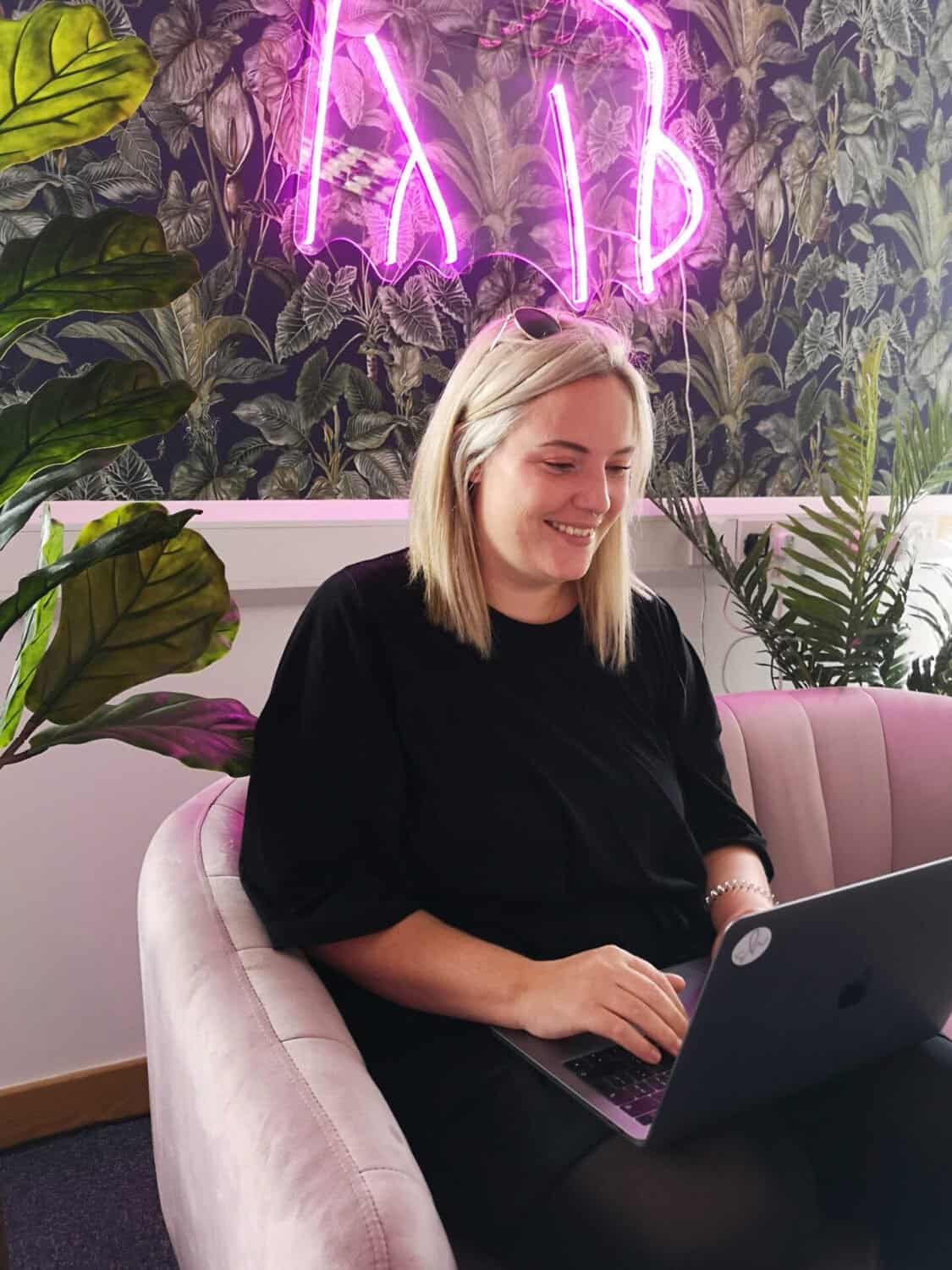
Amy Filippaios launched SimplyHair in 2013 from a cupboard stockroom at the University of Kent. An experienced hairstylist with a background in marketing, digital, and customer experience, including email marketing UK, she set out to improve the service that independent stylists and salon owners received from wholesalers. What began as a tiny order that fitted on a single shelf has grown into a Canterbury-based e-commerce wholesaler of hair extensions and salon supplies, supplying professionals across the UK and working with productions such as Dancing on Ice.
Her story is a practical example of how women in UK e-commerce can turn sector expertise into a scalable product brand without relying on large amounts of external funding. Below are the key lessons from SimplyHair’s journey that still apply to women building e-commerce businesses today.
From mobile stylist to online wholesaler
Amy did not follow the classic path of a childhood entrepreneur. She describes herself as a sociable introvert, driven more by academic achievement and a need for control over her career than by a traditional entrepreneurial personality. After graduating during a recession into a role with limited progression, she trained in hair extensions in her spare time and built a mobile client base.
When her appointment diary filled up, she left her employed role and worked as a mobile hair extension technician for two years. The business model had a ceiling, though. She could only serve so many clients in a day, and she noticed that the wholesalers she bought from were not giving stylists the service or quality they needed. That gap in the market became the foundation for SimplyHair.
The move from service provider to product wholesaler is one of the most common ways women scale beyond trading time for money. It also changes the legal and tax structure you need. Many founders start as sole traders and later move to a limited company as turnover and risk grow. If you are making a similar transition, compare the two structures carefully, especially with Making Tax Digital changing the maths for sole traders and limited companies.
Bootstrapping without external funding
SimplyHair was started on a very small budget. Amy and her husband used personal savings, a small business overdraft, and a short-term loan from a family friend that was repaid with interest. The first stock order was small enough to fit on one shelf. For years, they reinvested every penny of profit back into the business rather than taking a salary.
This cautious approach meant the business did not over-invest before it had proved product-market fit. It also avoided the pressure of servicing debt or giving away equity early. For women founders, who still receive a minority of UK venture capital, bootstrapping remains a realistic and often necessary path. If you do need external finance, the Start Up Loans programme for female founders offers government-backed loans alongside free mentoring, which can be a lower-risk alternative to equity finance.
Why customer service still wins online
SimplyHair was founded on good customer service, but Amy extended that idea beyond fast delivery and fair pricing. The team treats customer success as integral to their own, offering specialist resources and commercial advice to help stylists and salon owners grow.
In a crowded e-commerce market, where customers can compare prices in seconds, service and expertise become the differentiator. This is especially true in B2B e-commerce, where buyers are making repeat purchases and need reliability. Amy’s approach shows that an online brand can still be built on relationships, not just transactions.
Technology that scales an e-commerce business
As an e-commerce business, technology is fundamental to SimplyHair. The website must load quickly, handle traffic, and make ordering straightforward. Amy has continued to invest in systems that improve the customer experience.
One example is a client order management tool called Personal Assistant. It lets stylists assign client names to each item they order, so the warehouse can pack and label deliveries by appointment. Customers can keep digital records for each client and reorder the right products quickly. Tools like this reduce admin time for customers and increase loyalty, because they embed the supplier into the customer’s own workflow.
For any woman building a product business online, the message is clear: your website is not just a shop window. It is an operational tool that should save your customers time and make reordering easy.
Navigating maternity and economic shocks
Amy has been open about two of the biggest challenges she faced. The first was maternity leave. SimplyHair was only four years old when she had her first child, and a second pregnancy followed quickly. Her maternity leave lasted around 18 months before she returned part-time, while dealing with postnatal depression.
The experience forced her to trust her team to manage without her, which she describes as a valuable but difficult lesson. For women founders, this is one of the most under-discussed aspects of business ownership. Building a team that can operate without you is not a sign of redundancy; it is what makes growth and personal leave possible.
The second major challenge was the pandemic. Because SimplyHair predominantly serves hairdressers, who were forced to close during lockdowns, the business came under severe pressure. The team furloughed staff, refocused priorities, and launched a free business masterclass to re-energise professionals in the hair industry. That pivot kept the brand visible and valuable even when core sales were disrupted.
Building your own support network
Amy has been clear that her support network does not look traditional. She leans on her husband and friends for emotional support, and finds motivation from her children. She also values business networks and online communities of like-minded founders.
This matters because entrepreneurship can be isolating, particularly for women who may be underrepresented in their sector or in investor rooms. Finding peers, whether through formal networks or informal groups, helps with problem-solving, accountability, and resilience.
Action steps for women in UK e-commerce
- Start small and prove demand before committing large amounts of capital. Amy’s first order fitted on one shelf.
- Reinvest profits early on if you can. Delaying a salary is hard, but it can protect you from debt and dilution.
- Choose a niche where you have genuine expertise. Amy understood what stylists needed because she had been one.
- Invest in technology that makes your customers’ lives easier, not just your own.
- Build a team and systems that can function without you. This is essential if you plan to take maternity leave, step back, or scale.
- Explore government-backed funding such as Start Up Loans before giving away equity.
Final thoughts for women in UK e-commerce
Amy Filippaios built SimplyHair by combining sector knowledge with disciplined reinvestment and a genuine focus on customer success, and her story shows women in UK e-commerce that launching a successful ecommerce startup does not require a large startup budget or a conventional entrepreneurial background—only a clear gap in the market, a willingness to start small, and the patience to grow sustainably.