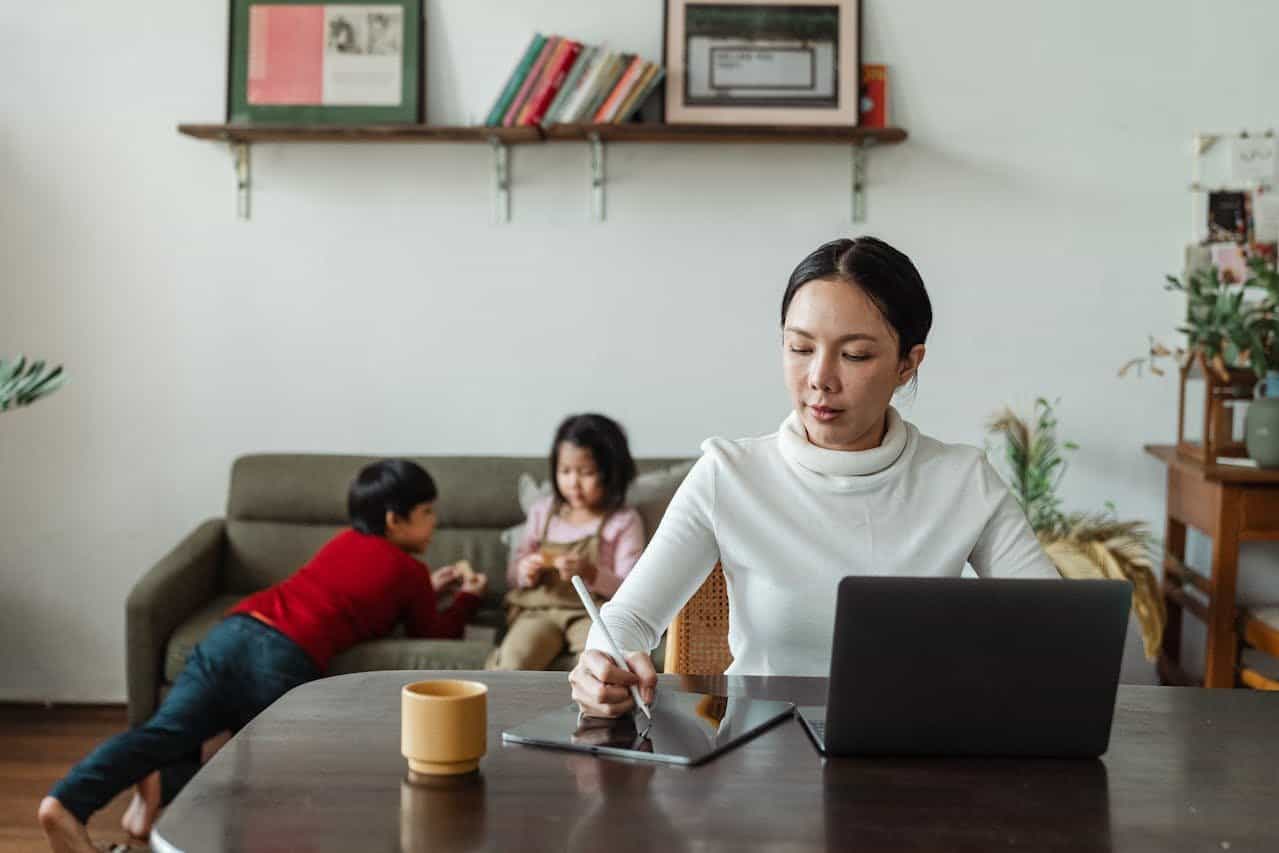
If you are a mother of young children reading this, the chances are you have already thought about running your own business, or you are already doing it. ONS data for 2024 puts the number of self-employed women in the UK at around 1.6 million, and a growing share of those are mothers building businesses around school runs, nap times and family life. Here are the top five reasons mums start a business from home.
A “mumpreneur” is simply a mother who runs her own business. Some women find the term empowering; others feel it downplays their professional skills. You can use it or ignore it. What matters is that it is entirely possible to start and grow a successful business while raising young children. In fact, the structure of working around school runs, clubs and bedtime can become an advantage, forcing you to focus and use your time well.
Of course, being a self-employed mum is not all plain sailing. Income can be unpredictable, boundaries between work and home can blur, and you may find yourself catching up after the children are in bed. But for many, the benefits, especially the control over time and income, are worth it.
The top five reasons mums start a business from home
Here are the five motivations most often cited by UK mothers, supported by the latest ONS, Coram and British Business Bank data. For a fuller picture, see our Women in Business: Key UK Facts page.
1. Spend more time with your children
One of the most common motivations is also the simplest: to spend more time with your children. With around 1.6 million women now self-employed in the UK according to ONS data for 2024, many cite family time as the single biggest reason for leaving traditional employment. Running your own business lets you decide when and where you work, making it easier to be present for school pick-ups, assemblies and family meals. That control over your diary is hard to put a price on, and for many mothers it is the single biggest reason for making the leap. It is not about being available every minute, but about having the choice to be there when it matters.
2. Cut the cost of childcare
Childcare costs in the UK are among the highest in the developed world. According to the Coram Family and Childcare Survey 2025, full-time nursery care for a child under two often exceeds £15,000 a year, and many families find that full-time employment barely covers the bill once travel and other work-related costs are added. Working from home lets you fit tasks around school hours, naps and evenings, cutting the number of paid childcare hours you need. For some, the saving on childcare alone makes self-employment financially viable. It also removes the time and expense of a daily commute.
The government has expanded childcare support: working parents in England can now claim 30 hours of free childcare per week for children from nine months old up to school age. If you are self-employed, the rules on qualifying income can be different from those for employees, so check our guide to Free Childcare Self Employed UK: The 30-Hour Offer Explained.
3. Enjoy flexibility as your own boss
Flexibility is about more than avoiding rush hour. Under current rules, all employees in Great Britain have the right to request flexible working from day one, yet many mothers still find that self-employment offers a level of control that employed roles cannot match. It means you can work when you are most productive, take time off when a child is ill, and scale your hours up or down as family life changes. This flexibility is particularly valuable during school holidays, when traditional childcare cover can be difficult and expensive to arrange. There may be intense periods, especially in the early days, but the autonomy you gain often outweighs the longer hours. Over time, many mums find they have created a working pattern that simply would not be possible in a traditional job.
4. Fulfil a lifelong ambition
Many women have always wanted to work for themselves. Starting a business later in life, often after children, can be the moment that ambition finally becomes reality. Digital tools, online marketplaces and low-cost marketing channels have made it easier than ever to start a small business in the UK, whether you sell products online, offer consultancy or launch a creative service. The Alison Rose Review of Female Entrepreneurship set a target to increase the number of female entrepreneurs by 50% by 2030, and government-backed schemes such as the British Business Bank’s Start Up Loans programme are designed to help close that gap.
5. Escape a job that no longer fits
A smaller number of mums start a business because they are unhappy in their current job. While dissatisfaction can be a powerful push, it is better to build towards something positive. Under current rules, all employees in Great Britain have the right to request flexible working from day one, so exploring that option may give you breathing space while you plan your next move. Take time to define what success looks like for you: the income you need, the hours you want and the work you enjoy, so your business becomes a destination, not just an escape. If this is your main driver, use it as a catalyst to create a working life that genuinely suits you.
Support available in 2026
If one of these reasons resonates with you, the next step is to turn the idea into action. Several schemes and rules are particularly relevant for mums starting a business from home this year.
- Start Up Loans: The British Business Bank’s Start Up Loans scheme offers government-backed loans of up to £25,000 per director, capped at £100,000 per business, with free mentoring for successful applicants. See our Start Up Loans Female Founders guide.
- Making Tax Digital: From April 2026, self-employed people with turnover above £50,000 must keep digital records and submit quarterly updates through compatible software. The threshold drops to £30,000 from April 2027.
- Home working expenses: If you work from home, you can claim a proportion of household costs such as heating, electricity and council tax through HMRC, either using simplified flat-rate expenses or working out actual costs.
- Flexible working rights: Under current rules, employees have the right to request flexible working from day one. If you are still employed while planning your business, this can help you transition gradually.
Ready to start your business
Mums start a business from home for many reasons, but the most successful ventures begin with a clear plan and realistic expectations. Start small, test your idea with real customers, and seek support from networks and mentors who understand the realities of running a business around family life. Building a realistic plan that works for you and your family is the best first step.