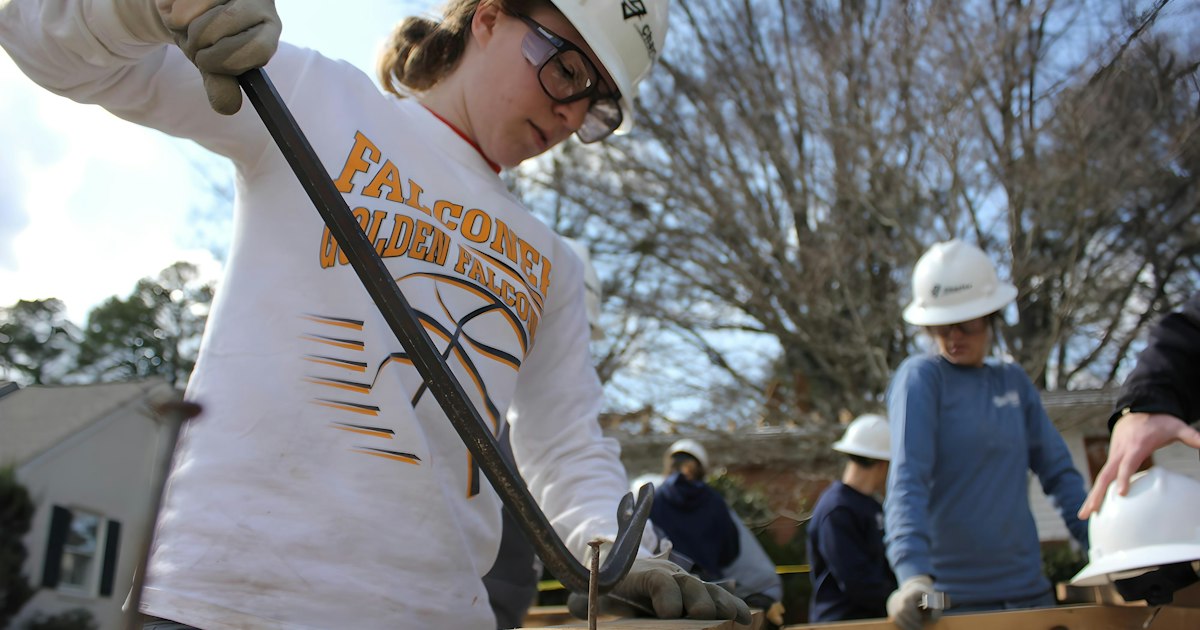
Women now start more apprenticeships in England than men do, and have done for years. In 2024/25 they accounted for 52.5% of all starts. Yet that headline majority hides a harder truth: women remain concentrated in health, care and business administration, while the sectors with the most acute skills shortages, such as engineering and construction, are still only around 11% female. Here is what the latest figures show, and what they mean for women in business.
Apprenticeship policy is devolved, so the figures in this article cover England, where the most detailed statistics are published by the Department for Education (DfE).
How many women are starting apprenticeships in England?
In the 2024/25 academic year, female learners accounted for 52.5% of apprenticeship starts in England, against 47.5% for male learners, according to the DfE’s apprenticeship statistics and the House of Commons Library apprenticeship briefing. The female share has sat between 52% and 53% every year since 2019/20.
In total, there were around 353,500 apprenticeship starts in England in 2024/25, and 761,500 people participated in an apprenticeship programme over the year.
Which sectors and levels are most common for women apprentices?
The overall majority masks sharp differences by subject. Women cluster in Health, Public Services and Care, and in Business, Administration and Law. Men cluster in Engineering and Manufacturing Technologies, and in Construction, Planning and the Built Environment.
STEM and traditionally male-dominated sectors
- In Engineering and Manufacturing Technologies, only about 11% of starts in 2024/25 were female: 4,900 women compared with 41,170 men.
- Digital technology is the clear bright spot: women’s share rose to 40% in 2024/25, with 12,570 female starts, and female starts have grown faster than male starts since 2018, according to WISE/IET apprenticeship data. That pipeline is feeding the next generation of women in UK AI leadership.
- Construction, Planning and the Built Environment remains at around 11% female, although the number of female starts has risen by 81% since 2018/19.
Levels of apprenticeship
Demand for higher-level apprenticeships is growing quickly, but women’s access to the routes into higher-paid technical work still lags. Provisional DfE figures for the first nine months of 2025/26 (August 2025 to April 2026) show:
- Higher apprenticeships (Level 4 and above) reached 126,660 starts, up 13.6% on the same period a year earlier.
- Women accounted for only 19.5% of starts in STEM subjects, equivalent to 17,790 female STEM starts.
- At degree level (Levels 6 and 7) the pattern is starker: in 2024/25 women made up roughly three in ten starts in digital technology and related higher-level subjects, well below their 40% share of digital apprenticeships overall.
Trends over time: is progress consistent?
- The female share of starts is stable rather than rising. It has held between 52% and 53% since 2019/20, reaching 52.5% in 2024/25, which means the majority is established but not growing.
- Achievement rates, the share of apprentices who complete their programmes successfully, are improving. Provisional figures put the overall rate at about 65.4% for 2025/26 to date.
- Within STEM, digital technology shows strong growth in female starts, while engineering and construction, the areas with the lowest female representation, are improving more slowly.
What gaps remain for women in apprenticeships?
Sector imbalance
Women are still concentrated in Health, Public Services and Care, and in Business, Administration and Law, while men dominate Engineering and Manufacturing Technologies and Construction. The split matters for earnings as well as numbers: engineering and construction roles typically pay more than care and administration roles, so the apprenticeship divide feeds directly into the gender pay gap.
STEM under-representation
Women made up under one in five STEM starts in 2025/26. The bright spots are real but small: in 2024/25 female starts in science and maths apprenticeships outnumbered male starts by 63% to 37%, yet the whole subject area saw only around 570 starts.
Younger versus older apprentices
Apprenticeships are no longer mainly a school-leaver route. In the first nine months of 2025/26 there were 308,770 starts in England; learners aged 25 and over accounted for 52.4% of them, while under-19s made up 20.6%. That holds for both sexes, but it matters especially for women, for whom apprenticeships have become one of the main routes back into work, or into a new career, after a break.
What this data means for women in business
For women running businesses, these numbers are not abstract. They shape who you can hire, how you train and where the talent pools are:
- If you employ apprentices, your pipeline is already majority female. Recruitment, mentoring and programme design should be built around that reality from the outset, not retrofitted.
- If you work in engineering, construction or digital, the female talent pool is small but growing fast; female construction starts are up 81% since 2018/19. Employers that build links with schools, make female role models visible and offer flexible working will have first pick of that talent.
- If you are weighing up your own next step, degree apprenticeships (Levels 6 and 7) let you earn while you gain a qualification, with no tuition fees to pay, and can be a route into senior or technical roles without stepping out of work, ideal preparation for the step from expert to leader.
- If you want apprentices to stay the course, remember that a 65.4% achievement rate still means roughly one in three apprentices does not complete. Mentoring and proper support make a measurable difference, particularly for women in male-dominated workplaces.
Looking ahead: priorities for closing the gaps
Progress is real but uneven. To make it faster and fairer, the priorities are clear:
- Build awareness of apprenticeships, especially STEM routes, among girls aged 14 to 16, before subject choices narrow.
- Support returners and mid-career changers, now that the over-25s are the majority of starts.
- Design apprenticeships with the flexibility that people with caring responsibilities, still disproportionately women, need to complete them.
- Track and publish gender-disaggregated data by subject, level, region and ethnicity, and use it to target intervention where the gaps are widest.
The headline is genuinely good news: women are the majority of England’s apprentices and have been for years. But a majority in aggregate can conceal a minority where it counts. Until women start engineering, construction and degree-level STEM apprenticeships in numbers that match health and business administration, the system will keep reproducing the occupational divides, and the pay gap, it has the potential to close.
For more on the wider picture, from female entrepreneurship to investment, see our key facts about women in business.