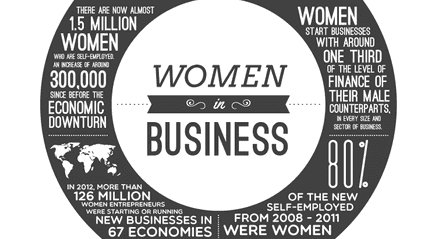
Since Prowess launched in 2001, we have tracked how women’s enterprise in the UK has changed. The original infographic on this page visualised the surge in women’s business ownership following the 2008 downturn. More than a decade on, the picture is more nuanced: women’s entrepreneurship has grown, yet access to funding, leadership pipelines and sectoral segregation remain stubborn barriers. This updated guide replaces the 2014 graphic with the latest UK statistics and context, giving entrepreneurs, policymakers and supporters a clear snapshot of where women in business UK stand today.
Women in business UK: the current scale
Women-led businesses are a significant force in the UK economy. According to the 2024 progress report from the Alison Rose Review of Female Entrepreneurship, there are around 1.6 million women-led small and medium-sized enterprises (SMEs) across the UK, up from roughly 1.1 million in 2018. The 2019 Rose Review estimated that women-led SMEs contribute around £85 billion to the economy each year.
ONS business demography data published in 2024 shows that business creation remains strong. In 2023, there were approximately 383,000 business births across the UK. Women-led registrations continue to be concentrated in professional services, health and social care, retail and digital sectors.
Self-employment is also a major route into enterprise for women. ONS Labour Force Survey data from 2025 estimates that around 1.6 million women are self-employed in the UK, representing roughly one third of the total self-employed workforce. Many combine freelancing with caring responsibilities, drawn by flexibility even where income security is weaker.
Growth and long-term trends
The long-term trajectory is upward. Women are increasingly likely to start businesses after the age of 40, often using prior professional experience rather than entering entrepreneurship straight from education.
Part of the rise reflects structural shifts: the growth of the knowledge economy, remote working and low-cost digital platforms have lowered some traditional barriers to entry. Yet growth is not evenly distributed. Women remain under-represented in high-growth technology, engineering and construction firms, and are over-represented in lower-turnover personal and care services. Understanding these patterns matters because they shape earnings, investment potential and resilience.
Key challenges facing women entrepreneurs
Despite progress, women entrepreneurs still encounter a funding gap. Beauhurst data from 2024 shows that women-founded businesses receive less than 2 per cent of UK venture capital investment. The British Business Bank and industry reviews have repeatedly found that women start businesses with less capital and are less likely to seek external finance.
Other barriers include:
- Access to networks: Women are less likely to have established commercial networks or mentors who can open doors to customers, investors and partners.
- Sectoral segregation: Concentration in lower-margin sectors limits average turnover and scalability.
- Childcare and caring responsibilities: The cost and availability of childcare affects the hours women can devote to a new venture, particularly in the early years.
- Confidence and risk perception: Research consistently shows women rate their readiness to start a business lower than men, even when qualifications and experience are comparable.
These issues are interconnected. Addressing finance alone will not close the gap without parallel progress on networks, skills and infrastructure. For a deeper look at the investment gap, see our guide to the women founder VC funding gap.
Leadership, boards and the workplace
Women’s representation in senior corporate roles has improved, but parity remains distant. The FTSE Women Leaders Review 2024 found women hold more than two in five board positions in FTSE 350 companies and more than one in three leadership roles. While boardrooms are approaching gender balance, the pipeline to executive positions is still uneven.
The gender pay gap offers another measure of progress. ONS figures for 2024 put the median hourly gender pay gap for all employees at 7.0 per cent, down from 7.3 per cent in 2023. The gap is narrower for younger workers but widens significantly for women over 40, reflecting the cumulative impact of caring breaks and occupational segregation.
For women running their own businesses, these workplace patterns matter. They influence customer demand, talent availability and the policy environment in which women-led firms operate. Employers with 250 or more staff must still report gender pay gap data under the Equality Act 2010 (Gender Pay Gap Information) Regulations 2017.
Opportunities and support for women-led businesses
The good news is that support for women entrepreneurs has expanded. Government-backed schemes such as Start Up Loans for women founders, the British Business Bank’s regional funds and Innovate UK grants are increasingly targeting under-represented founders. Business support organisations, angel networks and accelerators now run women-only or women-focused programmes designed to tackle the funding and network gaps.
Recent developments include the Women Backing Women fund, which is deploying capital from a £130 million vehicle to back women-founded businesses, and THENA Capital, an all-women investment team that won British Business Bank backing for a £45 million fund. These signal a shift in the availability of growth capital, even if overall volumes remain small.
At Prowess, we curate practical resources for women at every stage of the business journey. Whether you are exploring an idea, seeking finance or scaling an established company, our facts and figures, business advice and events can help you make informed decisions.
Looking ahead, the opportunity is substantial. Research by the 2019 Rose Review suggests that if women started and scaled businesses at the same rate as men, up to £250 billion could be added to the UK economy. Closing that gap is not only a matter of fairness but also of economic growth.
Practical steps to grow your venture
- Benchmark your business against the latest women in business UK statistics to identify growth opportunities.
- Explore funding routes designed for women founders, from Start Up Loans to sector-specific grants.
- Build your network through women-focused business groups, angel networks and industry events.
- Review your pay and progression practices if you employ staff, and prepare for gender pay gap reporting obligations.
- Stay across policy changes, including Making Tax Digital, employment rights reforms and regional business support.
What comes next for women founders
Women in business UK have made real gains since the original infographic was published in 2014. More women are starting businesses, more are reaching senior roles, and the policy conversation has shifted. Yet significant barriers remain, particularly around finance, networks and sectoral choice. By staying informed and connected, women entrepreneurs can turn these challenges into opportunities and continue to reshape the UK economy.