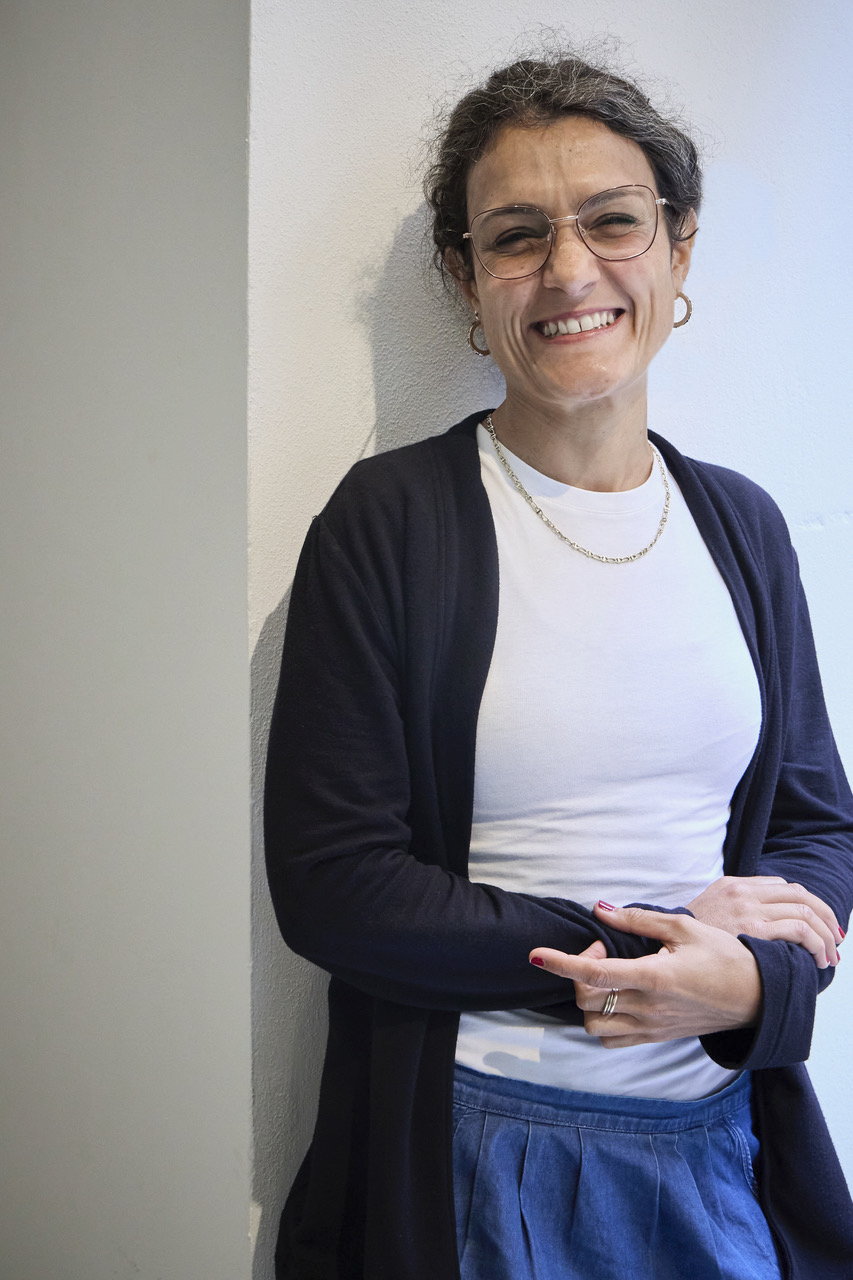
Elizabeth Joss is a South African entrepreneur based in the Netherlands and the founder of WordWorx B.V., a corporate communications agency working with clients across Europe. She is also the founder of SecondSoil, an audio-led app helping internationals navigate everyday life in the Netherlands.
The cost of building an app is the question most services-business owners ask first, and the answer they get is usually a development quote. Elizabeth Joss built the app anyway, and found the quote was the small part. She runs WordWorx B.V., a corporate communications agency working with clients across Europe, and she has spent more than a year building SecondSoil, an audio-led app that helps internationals settle into life in the Netherlands.
She moved from South Africa to the Netherlands on her own in 2013 and built her agency from nothing, so the starting-over advice below is lived rather than theoretical. SecondSoil was built alongside WordWorx, a few hours a week, because the agency remained her core business, and that is how most of our readers would have to build a product too. The product serves the Netherlands; the lessons travel.
You run an established communications business and have now built a product. What did the services world teach you about money that you had to unlearn for the app?
Running my corporate communications agency, WordWorx B.V., has taught me a great deal about pricing, managing cash flow and understanding the value of my time. In a service business, there’s usually quite a direct relationship between the work you deliver and the revenue you generate. You agree on a project, do the work and invoice the client. So it’s quite a simple model.
Developing an app is a completely different business model. You’re investing money and time long before you know whether the product will generate a return. Even when the app is technically ready, you still need to attract users, build trust and figure out how to generate sustainable revenue.
I think one of my biggest adjustments has been accepting that the financial return may take considerably longer than I’m accustomed to. I’m naturally quite commercially minded and impatient. So it’s sometimes difficult to keep investing without seeing immediate results, but I know I need to keep going to gain traction.
What are the costs of building an app that nobody warns service-business owners about?
AI can create a lot nowadays, including entire apps. But there’s nothing like working with a proper developer who knows the ins and outs of app development and can draw upon AI tools when and if needed. Working with someone reliable and experienced who has created apps is, of course, imperative, and you need to invest in this expertise to see a return. It’s easy to go the route of having AI create the tools and content, but it’s much harder to build something that is human-driven and genuinely valuable, based on experience that AI cannot replicate.
I think people underestimate how much happens after the initial development. When you start, you tend to think about the cost of building the app itself. But there are so many other expenses and demands on your time, including testing, fixing technical issues, meeting app store requirements, creating content, managing subscriptions and maintaining the product.
One of the biggest surprises for me has been just how many small adjustments are necessary. Something that seems straightforward from a user’s perspective can require considerable development work behind the scenes.
There’s also the enormous investment of your own time. SecondSoil is an audio-led app, so I’ve spent hundreds of hours researching information, writing down everything in my head based on my experience, writing practical guides, recording audio files and ensuring that the content is useful to internationals living in the Netherlands.
And then there’s marketing. Having a functioning app doesn’t mean people will automatically find it. You need a separate budget and strategy for distribution, user acquisition and building awareness. And the advice is to do this alongside development, which is something we didn’t do enough of, but that’s life.
My advice would be to budget for the entire process, not just development. An app isn’t a finished project that you hand over once it’s on Google Play or the App Store. It’s an ongoing business that needs continual attention and investment.
You also very much need good, reliable people to help you with the different aspects of the product, such as social media, marketing in general and SEO content. Even though I’m well-versed in many of these areas, and AI can make your life a lot easier nowadays, you can’t do it all alone. Having help is fundamental to launching anything and ensuring continued growth.
You moved countries alone and built a life from scratch. What do you know about starting over that a woman restarting her career could use?
I moved from South Africa to the Netherlands in 2013, completely on my own. I arrived in The Hague with a single suitcase and no permanent place to stay. I had to build a new life, establish friendships, understand a different culture and find my place professionally. For the first month, I ate pasta with no sauce and slept on a small IKEA sleeper couch until I could afford a mattress.
What I remember most clearly is the loneliness in those early days and how overwhelming it felt trying to figure everything out. I was fortunate to meet some wonderful colleagues, and I’m still in contact with some of them today.
I think starting over teaches you that you’re far more adaptable than you might initially believe. And you definitely don’t need to have everything figured out before making a change. Sometimes you simply need to take the first step and work things out along the way.
For women thinking about restarting their careers, I would also say that starting again doesn’t mean starting from zero. You take your experience, knowledge, skills and judgement with you. Those things don’t disappear because your circumstances change.
Price your services or products appropriately. Not too high, but high enough to reflect their value and the significant amount of time and effort you’ve put into them. Never undersell yourself or accept work ‘just because’. In many cases, the smallest clients are often the most difficult to work with, and the pay isn’t great. Sometimes it’s far better to have a few really good clients who see your value than to work yourself to death for hundreds who do not appreciate you.
What has soft-launching on Google Play taught you about testing an idea before the full launch?
It’s taught me a lot. The biggest lesson has been that launching an app and launching a successful business are two very different things.
SecondSoil became available on Google Play in early October 2026, but I’ve deliberately approached this as a soft launch rather than immediately investing heavily in promotion. It’s given us an opportunity to identify technical issues, make improvements and look critically at the user experience before reaching a much wider audience.
As the founder, you’re incredibly close to the product. You understand how everything works because you’ve been involved in developing it. But that doesn’t necessarily mean the experience is intuitive for someone opening the app for the first time.
I’ve also realised that an app can contain excellent information and still need considerable work to make that information easy to find and access.
For me, the soft launch is about getting those foundations right. But I also recognise that technical testing is only one part of the equation. The bigger commercial test will be whether we can consistently attract users, keep them engaged and build a sustainable revenue model. Many businesses give up too early, so we know we need to have skin in the game.
What would you do differently if you started SecondSoil again?
I’d speed up the process, launch earlier and start marketing and promotion much earlier, even before the app is launched. Since this was a side project for me and my company, WordWorx, I invested only a few hours per week in it, as running WordWorx has been my core business over the last few years.
When I began developing SecondSoil with a developer over a year ago, I wasn’t aware of any apps specifically helping internationals navigate everyday life in the Netherlands. Since then, more platforms and apps have entered the market, so moving quickly in any business and being able to respond to changes in the market are crucial.
My instinct, coming from a communications background, was to create a genuinely useful, well-researched app that is regularly updated. And that’s still central to SecondSoil. We’ve developed guidance across a wide range of everyday topics, from housing and healthcare to finances, education and finding work. But creating and validating all that content takes an enormous amount of time, particularly when you’re also running another business.
Looking back, I would have focused on a smaller initial product, tested it with users earlier and started building relationships with potential distribution partners much sooner. I would have also roped in a content writer much earlier in the process.
That said, I would never want to change the fundamental idea behind SecondSoil. I never wanted to create another platform that simply added to the overwhelming amount of information already available online. For me, the real differentiator is how information is written, presented and made accessible. The human-recorded audio guides are particularly important because they offer a more personal, convenient way for people to find practical answers.
We’re still at the beginning, and there is plenty we need to improve. But I’ve learnt that building something worthwhile is as much about listening, adapting and refining as it is about having a good idea in the first place. Who knows, maybe we’ll develop another app soon.
Permission to be a beginner
I’ve spent years developing my expertise in corporate communications, managing clients and building a professional services company. Entering the technology and app market has put me back into the position of being a beginner in many respects. Which is both exciting and frustrating. I want things to go faster, but I need to have some patience with myself, which is hard.
It’s been challenging, but also incredibly stimulating. And I think that’s worth remembering for any woman considering a new direction. You can be established in one field and still give yourself permission to learn something completely different.
Elizabeth’s move from agency to app is one route to revenue that does not depend entirely on you; our guide to founder dependency covers the others. If her pricing advice landed, read how to raise your rates next. And for the data behind women-led businesses in the UK, our facts page is where to start.