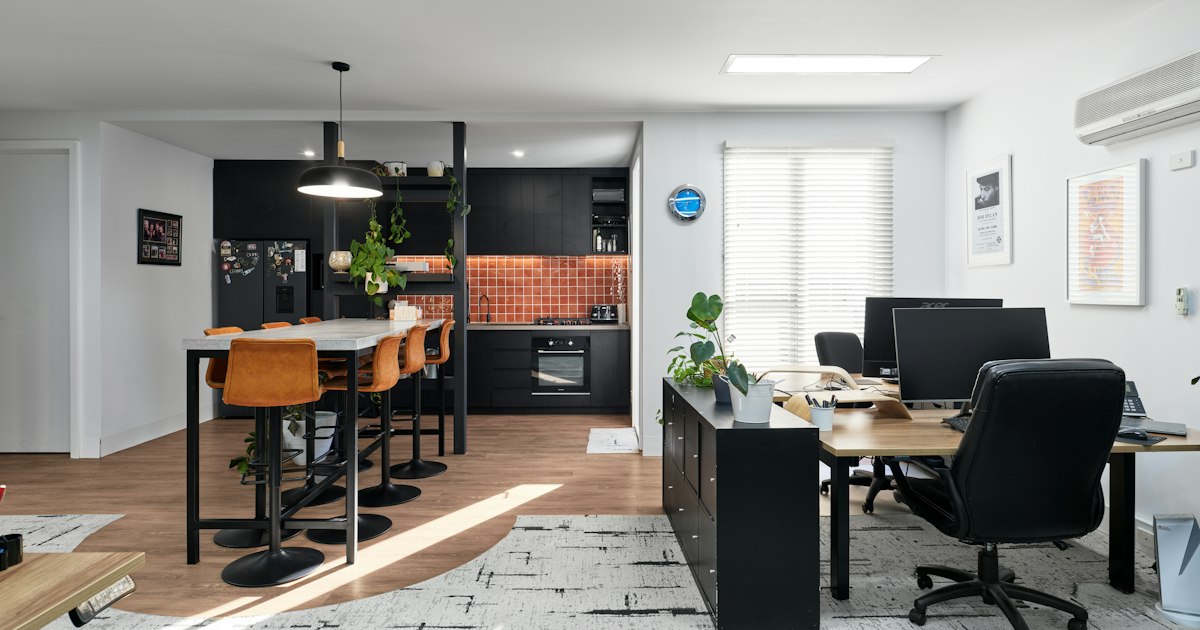
For women running their own company, work hours are often squeezed between client calls, team management, childcare and admin. The space you work in shapes how you think, communicate and perform. Office layout productivity is not just about aesthetics; it is a practical lever for wellbeing and retention.
Research consistently links physical workspace design to business outcomes. The British Council for Offices and workplace experience data from the Leesman Index show that access to quiet focus areas, natural light and ergonomic furniture directly affects concentration and satisfaction. Yet UK productivity has struggled to return to its pre-pandemic trend. ONS data shows UK output per hour worked has remained weak and below the pre-2008 financial crisis trend, suggesting that how and where we work still matters enormously.
So can your office layout affect your productivity? Yes. Here is what UK women in business should consider when designing or influencing a workspace.
Open-plan spaces: collaboration versus distraction
Open-plan offices became widespread in the UK after their popularity in US tech firms during the 1990s. The format encourages collaboration, quick questions and a sense of shared purpose. For small teams and start-ups, that energy can be valuable.
The downside is well documented. Noise, interruptions and lack of privacy can reduce deep-focus work. Leesman Index workplace experience data consistently shows that employees who lack access to quiet areas report lower satisfaction with their ability to concentrate. The CIPD 2024 Health and Wellbeing at Work report also notes that poor workplace environment factors, including noise and overcrowding, contribute to stress and absence.
Health is another consideration. Open-plan layouts can increase the spread of illness if ventilation is poor. CIPD data from 2024 puts average sickness absence at 7.8 days per employee per year, the highest figure in over a decade. HSE data from 2023/24 estimates that 875,000 workers in Great Britain were suffering from work-related stress, depression or anxiety, making it the leading cause of work-related ill health. While not all of that is down to office design, dense, poorly ventilated spaces do not help.
If you use open plan, balance it with quiet rooms, phone booths and a clear policy that allows people to work from home when they need uninterrupted focus.
Quiet work spaces and focus zones
Quiet zones suit tasks that require concentration: writing proposals, analysing accounts, coding or strategic planning. For introverted team members, a silent area can reduce the mental load of monitoring conversations and social cues.
The risk is isolation. Teams that never share physical space can lose informal knowledge transfer and morale. The answer is choice. A hot-desk model with bookable focus rooms, meeting pods and open benches lets people match the space to the task.
This approach also supports flexible working rights in the UK. Since April 2024, employees have had a day-one right to request flexible working, and a well-designed office makes hybrid arrangements easier to manage.
Hybrid working and the home office
The pandemic permanently shifted where many UK businesses work. ONS labour market data from 2024 shows that around 27% of working adults in Great Britain had worked from home in the previous seven days, with hybrid patterns strongest in professional services, tech and finance. For women founders, this can mean lower overheads and better work-life balance, but only if the home office is set up properly.
Poor home working environments cause back pain, eye strain and fatigue. Our guide to home office ergonomics explains how to arrange a desk, chair and monitor to protect your health and output.
If your team works remotely part of the week, think of the office as a collaboration hub rather than a row of permanent desks. Reduce fixed workstations, increase meeting and breakout space, and make the commute worthwhile.
Light, plants and air quality
Small environmental details have measurable effects. Natural light supports alertness and mood. Plants improve air quality and reduce stress. Good ventilation lowers the risk of airborne illness and headaches.
Lighting also shapes the type of work people do best. Bright, cool light supports analytical and evaluative tasks. Dimmer, warmer light can encourage creative thinking. If your space has limited daylight, invest in adjustable LED lighting and position screens to avoid glare.
Office layout productivity for women-led businesses
You do not need a Silicon Valley budget to improve your workspace. Start with a practical audit:
- Ask your team which tasks need quiet and which need collaboration.
- Identify the noisiest and quietest zones in your current space.
- Check that desks, chairs and monitors meet basic ergonomic standards.
- Review your flexible working policy against current UK employment rules.
- Measure sickness absence and stress-related leave as indicators of environmental problems.
For more on improving output, read our guide to workplace productivity in UK women-led businesses. If stress and burnout are concerns, our free workplace mental health tips offer practical steps.
Practical action steps for your office
Office layout productivity depends on how well the space supports focus, health, communication and morale. The best design is not open plan or private offices alone; it is a mix that matches your business tasks and gives your team control over where they work.
- Map your team’s daily tasks to the spaces they need.
- Create at least one quiet focus area, even in a small office.
- Invest in ergonomic chairs, adjustable monitors and good lighting.
- Document a flexible working policy that complies with UK law.
- Review absence and productivity data every quarter to spot patterns.
Getting the layout right is a low-cost, high-impact way to support your team and protect your own productivity as a founder.