People are interested in reading about young women setting up businesses and making a name for themselves. I have found my local support to be invaluable.
Starting a fashion business in the UK often begins with a single opportunity rather than a detailed business plan. Helen Rhiannon launched her eponymous womenswear label in 2005 after a chance conversation in a local boutique led to her first stockist. More than two decades on, her experience still illustrates how local support, creative determination and careful cash-flow management can turn a small collection into a growing brand.
Helen Rhiannon: the case study
What does your business do?
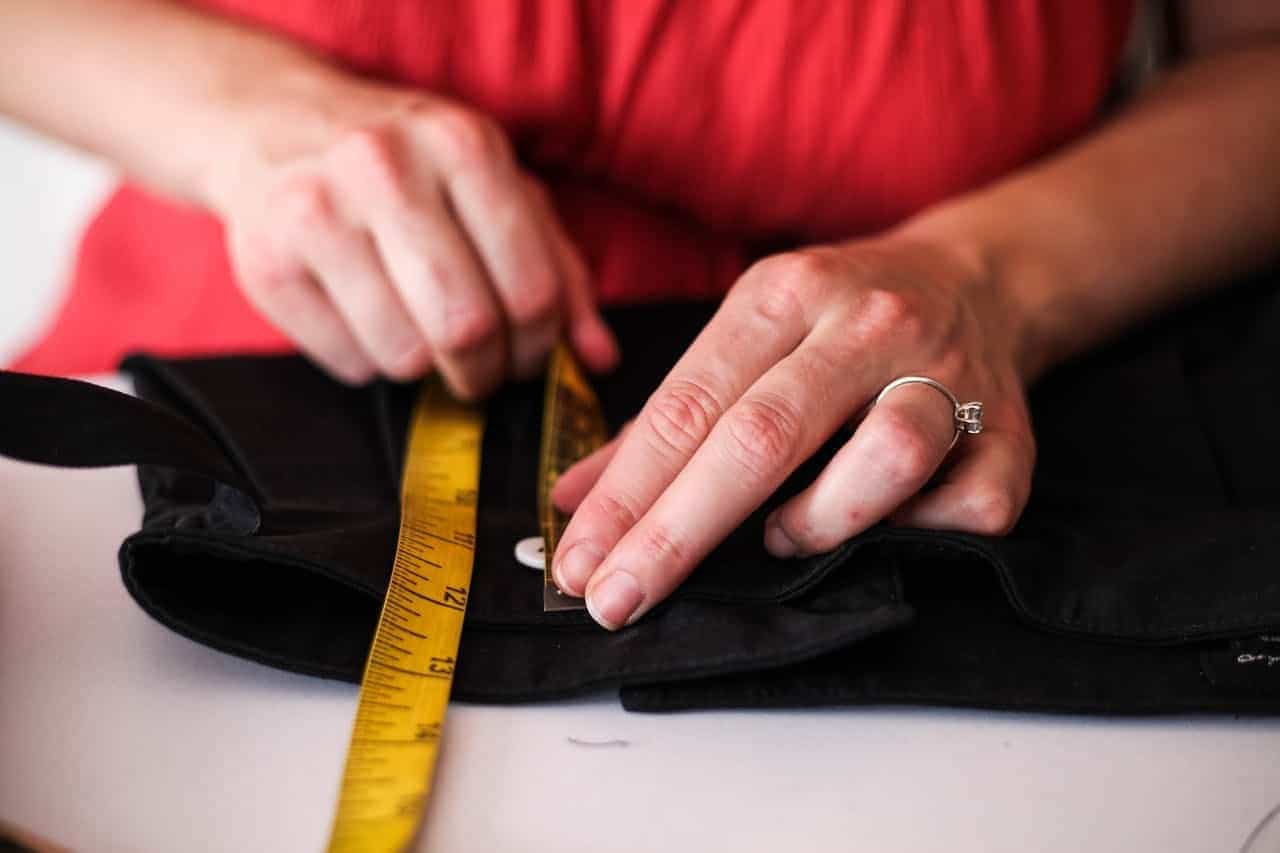
“Helen Rhiannon” is a designer label specialising in satins and silks to create luxurious camisoles, unique corsets and glamorous evening wear. The brand also works extensively in designer denim, using detailed panel work and colourful, contrasting top stitching to produce quirky, individual garments. Every piece is carefully constructed, blending craftsmanship with a strong, recognisable aesthetic.
When did you launch?
I launched the label on 1 March 2005.
What motivated you to become self-employed?
I started the business almost by accident after buying a pair of polka-dot shoes from a local boutique. I mentioned that I had graduated in Fashion Design in London, and the boutique invited me to sell a mini collection. As I had not planned to set up a business, the first year was a massive learning curve. Three years on I had designed and maintained my own website, completed various business courses and taken on some fantastic projects, such as making a dress for international opera star Katherine Jenkins.
Have you used business support services?
After completing a number of courses, I developed a comprehensive business plan through my local business centre. I used that plan to secure start-up funding towards the cost of my studio, and I am now looking at further funding for marketing. I have found the local business support invaluable.
Editor’s note, 2026: The funding schemes Helen originally accessed have now closed. Today, UK fashion founders can explore options such as a Start Up Loan, local Growth Hub advice, and sector-specific support from organisations like the UK Fashion and Textile Association (UKFT) and the Design Council.
What are the highlights of being a business owner?
I love being in control of my creativity and my future. I love networking and meeting new people, which has led to some really exciting projects. Being self-employed can be very hard work a lot of the time, but I really enjoy being part of a unique network of people. The fashion industry can also offer fantastic rewards and experiences that I would not have had the chance to experience otherwise.
What challenges have you faced?
The obvious challenges in business are money and managing time effectively, both of which I am still working on. I have had a lot of help over the last three years which has been invaluable. I enjoy what I do, which motivates me and makes me a very determined business woman. I have found that over time the business has steadily grown and every day there is something new to learn.
Have you experienced disadvantages because you are female?
I have not felt I have been disadvantaged, but at first some business networking meetings were attended predominantly by men. It was a little daunting, but over time I have become confident with my brand and business, which means I can network confidently and successfully.
Have you experienced advantages because you are female?
I have been very lucky with press in the last few years and sometimes I do feel this has something to do with being female. I think that people are interested in reading about young women setting up business and making a name for themselves in the world of business.
What key advice would you give to other women thinking about starting a business?
I think that if you are passionate about what you do and are a very determined person, then go for it. There are so many opportunities out there for all types of people and businesses. I would advise anyone to make the most of their local business centre and network to their heart’s content, as that is sometimes the key to growing your business.
Why this case study still matters for fashion founders
Helen’s story is not just a nostalgic profile. It contains practical lessons that are still relevant for anyone starting a fashion business in the UK today.
Start before you feel ready. Helen did not set out with a five-year plan; she responded to an opportunity and learned as she went. Many successful founders begin with a small test of demand rather than a perfect launch.
Use local and sector support. From business planning to funding and marketing, local Growth Hubs, enterprise agencies and fashion networks can fill gaps in knowledge and connect you to finance. The British Business Bank, Start Up Loans, Innovate UK and Arts Council England all offer programmes that may suit creative businesses.
Build a network. Helen’s projects often came through people she met. In fashion, relationships with boutiques, stylists, press and other makers can be as valuable as technical skill.
Manage cash flow and time from day one. These remain the two biggest challenges for early-stage businesses. Using simple bookkeeping software and setting clear priorities can prevent small issues from becoming crises.
Own your story. Media interest in women founders can be a genuine advantage. A clear founder narrative helps customers, journalists and investors understand what makes your brand different.
The UK fashion landscape in 2026
Understanding the current environment helps put Helen’s experience in context. According to ONS Labour Force Survey data from 2024, women account for around 1.5 million of the UK’s self-employed workforce. Many of these women work in creative sectors, including fashion, textiles and design.
The UK’s creative industries are a significant economic force. DCMS figures from 2023 value the sector at more than £116 billion, with fashion and textiles forming an important part of that output. The UK Fashion and Textile Association (UKFT) supports businesses across design, manufacturing and retail.
Despite this scale, women founders in fashion and other creative sectors still face a funding gap. The British Business Bank’s Start Up Loans programme has lent more than £1 billion since 2012, and women founders represent a substantial proportion of recipients. However, women-led businesses still receive a small fraction of UK venture capital. The 2019 Alison Rose Review of Female Entrepreneurship found that all-female founder teams received less than 1% of UK venture capital, and that advancing women-led businesses could add up to £250 billion to the UK economy, highlighting both the barrier and the opportunity.
Support for women starting a fashion business in the UK
If you are thinking about launching a fashion or textiles brand, the following resources are a good place to start.
- GOV.UK — guidance on setting up a business, registering as self-employed and understanding tax.
- British Business Bank — information on start-up finance, including the Start Up Loans programme.
- Local Growth Hubs — free or subsidised advice, workshops and mentoring in England; equivalents exist through Business Wales, Scottish Enterprise and Invest Northern Ireland.
- UK Fashion and Textile Association (UKFT) — sector intelligence, training, export support and sustainability guidance.
- Design Council — resources on design-led innovation and business support for creative enterprises.
- Business grants for women in the UK — a curated list of funding opportunities for women founders.
- How to write a business plan — a step-by-step guide to creating the document you will need for funding applications.
Practical next steps for aspiring fashion founders
- Identify your nearest Growth Hub or enterprise agency and book a free initial appointment.
- Draft a one-page business plan before you apply for any funding; most lenders and grant bodies will expect one.
- Join a sector network such as UKFT or a local fashion collective to access industry-specific advice and stockist contacts.
- Set up simple bookkeeping from month one, even if your turnover is small.
- Prepare a short founder story that explains why you started the brand and what makes it different.
Helen Rhiannon’s experience shows that a chance conversation can turn into a thriving label when it is backed by determination, creativity and the right support. For women considering starting a fashion business in the UK, the lesson is clear: use the help available, keep learning, and do not be afraid to put yourself and your designs out there.