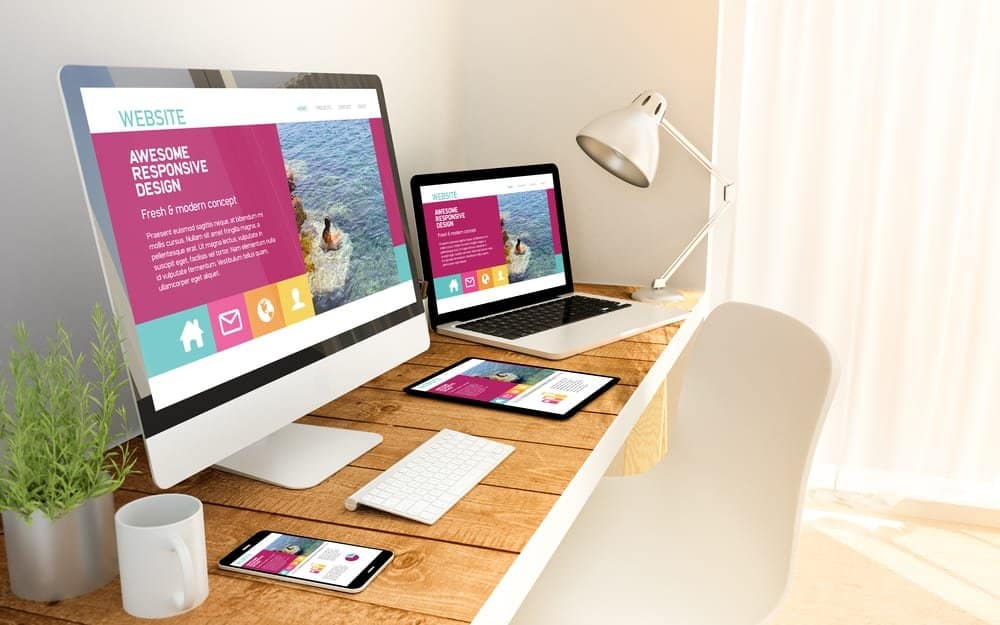
Running an online business in the UK is not as simple as launching a website and waiting for orders. With internet sales accounting for around 27% of total UK retail sales according to ONS data from 2025, the opportunity is large, but so is the competition. Whether you sell handmade jewellery from your kitchen table or run a digital consultancy from a co-working space in Manchester, there are six foundations every UK online business needs to trade legally, securely, and profitably in 2026.
What every online business needs from its website
Your website is your shop window, and it must work on a mobile phone first. Most UK customers will first encounter your site on a smartphone, so a slow or clunky mobile experience directly costs sales. Beyond design, UK law requires your site to display certain information. If you run a limited company, you must show your company name, registered number, registered office address, and place of registration. You also need a clear privacy notice explaining how you use customer data under the UK GDPR and Data Protection Act 2018.
Cookie consent is not optional. The Privacy and Electronic Communications Regulations 2003, as amended, require you to tell visitors about cookies and obtain consent before placing non-essential cookies. Accessibility matters too. The Equality Act 2010 can apply to your website, and public sector bodies must meet specific accessibility regulations. While private businesses are not all covered in the same way, an inaccessible site excludes disabled customers and exposes you to complaints.
Reliable UK hosting and active cyber security
Your website needs to be online whenever a customer visits. Look for a hosting provider that offers at least a 99.9% uptime guarantee and UK-based support hours that match your working day. If you process UK customer data, check where servers are located. Storing data within the UK or European Economic Area simplifies compliance with UK GDPR data transfer rules.
Security is not a nice-to-have. The UK government’s Cyber Security Breaches Survey 2024 found that 50% of UK businesses identified at least one cyber security breach or attack in the previous 12 months. Small businesses are not immune. At minimum, install an SSL certificate so your site loads over HTTPS, keep all software updated, use strong passwords with multi-factor authentication, and back up your site regularly. If you hold customer data or take payments, consider cyber insurance. Our guide explains what cyber insurance covers for women-led SMEs.
A marketing plan built for UK customers
A marketing plan is where hope turns into action. Start with a clear picture of your ideal UK customer: their age, location, income, and the problem you solve. Then choose channels that reach them. For some businesses that is Instagram and TikTok; for others it is LinkedIn, local press, or email.
Set a realistic budget and timeline. The British Business Bank’s Small Business Finance Markets 2024 report noted that all-female founder teams received around 2% of UK equity investment, which makes disciplined, low-cost marketing even more important for women-led businesses. Track what works. Use free tools such as Google Analytics 4 and Meta Pixel to measure traffic and conversions, then adjust your spending based on results rather than guesswork.
An e-commerce platform ready for UK tax and payments
If you sell online, your platform must handle UK tax, payments, and consumer law. From April 2026, Making Tax Digital for Income Tax Self Assessment requires self-employed people and landlords with turnover above £50,000 to keep digital records and submit quarterly updates using compatible software. The threshold drops to £30,000 from April 2027. Even if you are below the threshold now, choosing MTD-ready software avoids a painful migration later. Our Making Tax Digital checklist for self-employed women covers the details.
On payments, offer the methods UK customers expect, including debit cards, credit cards, and PayPal. Strong Customer Authentication, part of the Payment Services Regulations 2017, means customers must pass extra verification for many online transactions, so your checkout must support 3D Secure without creating unnecessary friction. You also need to comply with the Consumer Contracts (Information, Cancellation and Additional Charges) Regulations 2013, which set out cancellation rights and delivery information for online sales.
Email marketing that follows UK consent rules
Email marketing remains one of the highest-return channels for small businesses, but UK rules are strict. The Privacy and Electronic Communications Regulations 2003 require consent before sending most marketing emails to individuals. That consent must be freely given, specific, informed, and unambiguous. Pre-ticked boxes do not count.
Every marketing email must include your business name, a valid postal address, and a clear unsubscribe option. Keep a record of when and how each person consented. Most email service providers include compliance features, but the legal responsibility sits with you. Segment your list so you send relevant content, and review engagement regularly. A small, engaged list beats a large, cold one.
An SEO strategy for UK searchers
Search engine optimisation helps UK customers find you when they are ready to buy. Start with keyword research focused on British spelling and search terms. A florist in Bristol will want to rank for “wedding flowers Bristol” rather than generic phrases that attract traffic from abroad.
Claim and complete your Google Business Profile if you serve customers locally. Build pages that answer specific questions your customers ask, and make sure your site loads quickly. Technical SEO matters: fix broken links, use descriptive page titles, and add structured data where relevant. SEO is a long-term investment, but it compounds. A page that ranks well today can bring in customers for years with only occasional updates.
Putting it into practice
These six foundations are what every UK online business needs to move from idea to sustainable income. The women-led business sector already contributes an estimated £85 billion to the UK economy according to the Alison Rose Review of Female Entrepreneurship 2023, and strong digital foundations help more women capture that growth. For the latest figures on women in business, see our Women in Business: Key UK Facts page.
Your next steps are straightforward. Audit your website against the legal and mobile checks above. Review your hosting uptime guarantee and cyber security setup. Choose one marketing channel to focus on this quarter. Check whether your accounting software is MTD-ready. Clean your email list and confirm every subscriber opted in. Finally, pick one SEO improvement to implement this month. Small, consistent actions build a business that lasts.