Trade shows and exhibitions remain one of the most effective ways for UK small businesses to meet buyers, test products and build brand awareness face-to-face. Despite the dominance of digital marketing, a well-run stand still gives you direct access to a highly targeted audience that has chosen to be there.
These exhibition tips for small businesses will help you plan, present and follow up effectively. Exhibiting is not a guaranteed win. Stand space, travel, display materials, staff time and accommodation all add up, so you need a clear plan for turning that investment into measurable outcomes. The UK events industry is estimated to contribute around £70 billion to the economy and support approximately 700,000 jobs, according to the UK Events Industry Board. The key is to approach each show with clear objectives rather than simply hoping for the best.
Breaking your preparation into five stages makes the process manageable: define your objectives, budget realistically, design your stand around the visitor journey, capture leads legally, and plan your follow-up before the show opens.
Set objectives before you book
Start by asking what success will look like. Sales are the obvious end-goal, but exhibitions can serve several purposes at once: launching a new product or service, raising awareness among a specific customer group, recruiting distributors or partners, building your mailing list, or researching what competitors are doing and what buyers are asking for.
Write your objectives down and keep them specific. Vague goals such as “raise awareness” are hard to measure, whereas “collect 50 qualified leads from marketing managers in the hospitality sector” gives you a target to work towards. SMART objectives, Specific, Measurable, Achievable, Relevant and Time-bound, are a useful framework for this.
Once you know what you want to achieve, brainstorm the tactics that will support each objective. If lead generation is the priority, your stand needs a simple data-capture process and an incentive for visitors to share their details. If you are launching a product, you need demonstration space and staff who can talk confidently about features and benefits. Talking to contacts who have exhibited before, perhaps through a women in business network, is a good way to spot pitfalls and refine your plan.
Budget for the true cost of exhibiting
Stand space is only the start. A realistic budget should include shell scheme or space-only hire, electrics, Wi-Fi, furniture, graphics, transport, accommodation, staff wages, promotional materials and lead-capture tools. If you are self-employed, many of these costs count as allowable expenses against your tax bill. Our guide to allowable expenses for the self-employed explains what you can claim.
Check whether your turnover is near the VAT threshold. HMRC set the VAT registration threshold at £85,000 for the 2024/25 tax year, and it remains frozen at this level through 2026/27. If exhibiting pushes your rolling 12-month turnover above this figure, you must register for VAT. If you are already VAT registered, most exhibition costs will include VAT you can reclaim, provided you keep proper invoices.
If you are paying staff to work on the stand, remember the National Living Wage. From April 2025, workers aged 21 and over must receive at least £12.21 per hour. Lower rates apply to younger workers and apprentices. You can find the current rates on gov.uk.
Exhibiting is also a risk, so treat it like any other business investment. Our guide on how to risk-proof your small business sets out a practical framework for testing new commitments before you commit significant capital.
Design your stand around the visitor journey
Your stand should be built around your objectives, not the other way around. A stand designed for product demonstrations will look very different from one built for one-to-one consultations or brochure distribution.
Think about the visitor journey. Someone walking down an aisle will decide in seconds whether to stop, so your messaging needs to be clear from a distance. Use a short headline that explains what you do and who you help, rather than relying on your company name alone. Good lighting, uncluttered surfaces and a defined entrance or meeting area all help to draw people in.
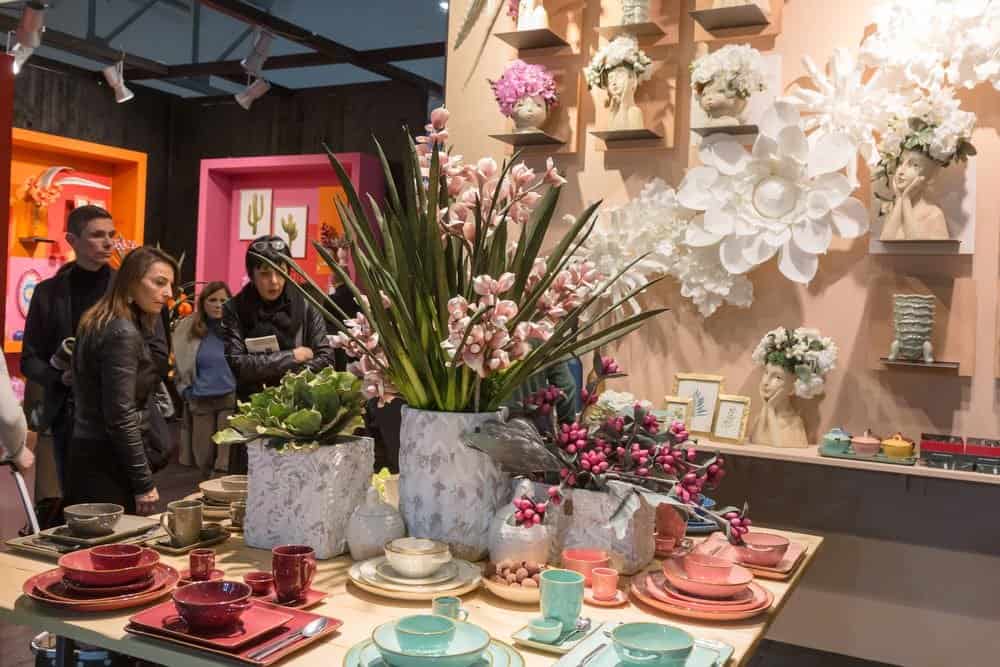
Practical examples can illustrate the principle. A photography business aiming to showcase its product range might display physical albums, canvases and framed prints on a table, with branded panels either side. Visitors can pick products up, feel the quality and start a natural conversation with the owner. A florist or gift company, meanwhile, might create an eye-catching arrangement of candles and flowers that demonstrates the range and invites people to stop and browse.
If you are new to exhibiting, start by looking at modular display systems, roller banners, pop-up stands and fabric backdrops. Many suppliers offer hire options, which can keep costs down while you test whether exhibiting works for your business. If your budget allows, a professional designer or stand builder can help you make the most of a small space and ensure your branding looks consistent across every element.
Remember accessibility and comfort. Make sure there is enough room for a wheelchair to approach, that text is legible from the aisle, and that your team has a small area to store bags, coats and water out of sight.
Capture leads within UK GDPR rules
The most important part of exhibiting happens after the show closes. Collecting business cards and then doing nothing with them is one of the fastest ways to waste your investment. Build your follow-up plan before you travel so you can act while leads are still warm.
Business cards remain a quick, low-tech way to exchange details, but they should be backed up by a reliable capture method. Digital lead-capture apps, tablet-based sign-up forms or simple spreadsheets let you record notes about each conversation immediately. If you are collecting contact details, make sure you comply with UK GDPR and the Data Protection Act 2018. The Information Commissioner’s Office can fine organisations up to £17.5 million or 4% of global annual turnover for serious breaches.
Tell people how their data will be used, obtain clear consent if you plan to add them to marketing emails, and store information securely. A tick box that is not pre-ticked is the safest way to record consent. Keep a record of when and how consent was given.
Modern alternatives to printed handouts include NFC-enabled cards, QR codes linking to a dedicated landing page, or simply inviting visitors to connect on LinkedIn there and then. Choose the method your audience is most likely to use. A banner with a single, clear call-to-action, such as “Scan for our free guide” or “Book a 15-minute call”, can be more effective than a wall of text.
Follow up within 48 hours
Sort your leads as soon as you return. Identify hot prospects who asked for a quote, warm contacts who wanted more information, and long-term connections who may be useful later. Personalise your first follow-up message by referencing your conversation; a generic mass email is easy to ignore. Aim to send your first follow-up within 48 hours while your business is still fresh in visitors’ minds.
Track your return on investment carefully. Add up the total cost of the show, including staff time, and compare it against the value of orders, qualified leads and partnerships generated. This figure will tell you whether to book again and which elements of your stand to improve.
Put these exhibition tips for small businesses into action
- Write three SMART objectives before you book any stand space.
- Build a full budget that includes hidden costs such as electrics, Wi-Fi, travel and staff wages.
- Design your stand around the visitor journey, with clear messaging from the aisle.
- Choose a lead-capture method and record GDPR-compliant consent.
- Send personalised follow-ups within 48 hours of the show closing.
Exhibiting can feel daunting the first time, but these exhibition tips for small businesses will help you get real value from the experience. By setting clear objectives, designing a stand that supports them, and following up promptly and professionally, you give your small business the best chance of turning a busy day on the show floor into lasting commercial relationships. For broader context on the environment women founders are operating in, see our Women in Business: Key UK Facts page.