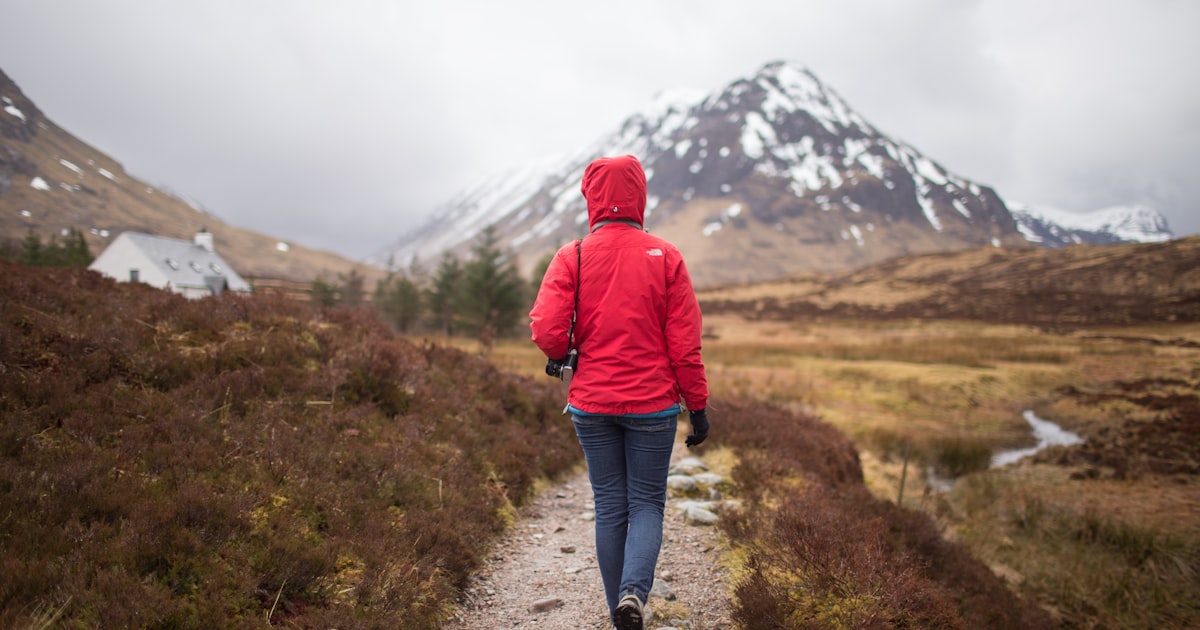
For girls and women in the United Kingdom, hiking is no longer a niche leisure pursuit tucked away on Pinterest boards or adventure blogs. For women running businesses, building careers, or negotiating the unpredictable rhythm of self-employment, it has become a form of strategic upkeep. It is cheap and accessible. Research also associates time on foot with sharper cognition, lower stress, and better decision-making (Oppezzo and Schwartz, 2014; Bratman et al., 2015; Hunter et al., 2019). If the default image of a founder still involves a laptop in a co-working space and a cold coffee, it may be time to update the picture. The most resilient women in business increasingly know how to read a map, pack a waterproof, and walk themselves out of a problem.
This is not a call to abandon the desk for the Derbyshire Dales. It is an argument for treating walking as infrastructure, not indulgence. The same women who track cash flow, monitor pipeline, and optimise tax efficiency can apply that discipline to their own wellbeing. And when they do, the returns are measurable.
The business case for girls who hike
Walking is England’s most popular physical activity. Sport England’s Active Lives Adult Survey for November 2023-24 found that more adults walk for leisure or travel than take part in any other sport or exercise. For women in particular, walking is an activity that can fit around childcare, cost concerns, limited kit, or body-image worries. That matters for founders who cannot always commit to a gym class at 6pm or a netball league on a Thursday.
The mental health argument is equally strong. Independent research links moderate outdoor activity with reduced anxiety scores, improved sleep, and lower cortisol levels (NHS Digital, 2014; Hunter et al., 2019). Walking can also improve creative problem-solving (Oppezzo and Schwartz, 2014). For women leading businesses, the benefit is not relaxation alone; it is cognitive recovery. Studies also suggest that time in green space calms the part of the brain linked to repetitive negative thinking (Bratman et al., 2015). Movement and novelty may partly remedy decision fatigue, the slow erosion of judgment that comes from constant micro-choices.
There is also a networking dimension. The stiff formality of a conference room often dissolves on a footpath. Conversation becomes more honest, hierarchies flatten, and trust builds faster when both parties are moving in the same direction. Many UK-based women’s business networks now organise walking meet-ups because the format can produce better relationships than a two-hour seated breakfast. Women hiking together are not just exercising. They conduct informal due diligence and share referrals. They also test whether a potential collaborator is as steady in mud as they are on LinkedIn.
From an operational perspective, walking is one of the few wellbeing investments with almost no barrier to entry. There is no subscription, no instructor, no waiting list. Most parts of the UK are within reach of a public footpath, a canal towpath, a National Park boundary, or a local nature reserve. The fixed costs are a pair of boots and a waterproof jacket. Compared with the price of executive coaching or a gym membership, the return is extraordinary.
The gender gap on the footpath
Despite the accessibility of walking, women can still feel under-represented in more technical outdoor activities, including mountaineering, long-distance trail running, and solo backpacking. Safety concerns, inadequate kit knowledge, and the cultural message that serious outdoor pursuit is male territory all play a part. Walking is the activity best suited to busy, professional women. Yet it is often marketed as either gentle rambling for retirees or extreme endurance for athletes. There is a vast, under-served middle: women who want a proper hike, good company, and a clear route home in time for tea.
This gap is not trivial. Women who do not feel confident in outdoor spaces miss out on leadership benefits. These include navigating uncertainty, managing risk, and completing a physical objective. They also miss a proven stress buffer at a life stage when demands are often highest. Many women are building businesses while raising children or caring for older relatives. Walking is one of the few forms of exercise that can accommodate a pram, a teenager, or an elderly dog. It is genuinely intergenerational.
The lack of visibility also distorts commerce. Outdoor retailers have historically designed products around male anatomy and male sizing. This leaves women with ill-fitting boots, harnesses cut for narrower hips, and jackets with pockets in the wrong places. That is changing, but slowly. The growth of female-led outdoor brands and women’s hiking communities is both a market correction and a cultural signal. Women who hike represent a consumer segment that is becoming impossible to ignore.
What the data tells us
The numbers around walking and women’s health are worth taking seriously. The following table summarises the key figures that shape the argument for hiking as a professional wellbeing tool.
| Measure | Figure or trend | Source and implication for women in business |
|---|---|---|
| Most popular adult activity in England | Walking for leisure and travel | Sport England Active Lives Adult Survey, November 2023-24; no skill barrier, easy to start and sustain |
| Reported anxiety prevalence | Higher among women than men across most age groups | NHS Digital Adult Psychiatric Morbidity Survey, 2014; walking offers a low-cost, evidence-based intervention |
| Time in nature and cortisol | Significant reduction after 20-30 minutes | Hunter et al., 2019; a short walk can reset stress response before a big decision |
| National Park access | Free entry to all UK National Parks | National Parks UK; high-quality terrain with no gate fee |
| Public rights of way | Over 140,000 miles in England and Wales | GOV.UK rights of way guidance; legal access to countryside is already in place |
| Founder wellbeing | Self-employed women often report high workload pressure | Small-business and freelancer research, including IPSE, 2023; walking is a boundary that protects performance |
These figures are not abstract. They explain why a solicitor in Leeds might clear a difficult brief after a morning on the Chevin. They also explain why a Bristol founder might take a prospective investor up Glastonbury Tor rather than to a coffee shop. For businesswomen, hiking converts biological and geographical facts into competitive advantage.
The real cost of getting started
One of the persistent myths about hiking is that it demands expensive equipment. That is marketing, not reality. For a standard lowland walk in the UK, the essentials are modest. You need walking shoes or boots with decent grip, a waterproof jacket, a small rucksack, water, snacks, and a map or charged phone. Layers matter more than brands. The weather in Britain can turn within an hour, so a base layer, a fleece, and a shell will outperform a single expensive coat in most conditions.
Women who are used to budgeting for business expenses can apply the same discipline here. Start with what you own. Trail-running shoes are often fine for dry, well-maintained paths. A school rucksack carries lunch and a spare jumper perfectly well. The premium kit can come later, if at all. The Ordnance Survey app and paper maps provide reliable route planning. Free resources such as the National Trust, local walking groups, and council rights-of-way teams remove the need for paid guides on easy terrain.
The bigger investment is time. For founders and senior professionals, time feels more scarce than money. Yet the same women who would not dream of skipping a client meeting often cancel their own wellbeing without a second thought. Treating a hike like a fixed appointment, booked into the calendar and defended like any other commitment, makes the real behaviour change. The preparation is not complicated. The discipline is.
How to build hiking into a founder’s diary
Integration, not addition, is the principle. Women in business do not need another item on a to-do list; they need a system that makes walking the default rather than the exception.
One approach is the walking meeting. For one-to-one catch-ups, especially with employees, mentors, or close collaborators, a 30-minute loop near the office or home replaces a seated call. The physical movement tends to shorten preamble and deepen honesty. Issues that would take three emails get resolved in half a mile. The key is to choose quiet routes without busy road crossings. You should also set expectations in advance that this is a walking conversation, not a hike.
Another approach is the boundary walk. This is a short, regular circuit that marks the end of the working day. For women who work from home, the risk of never truly leaving the office is real. A 20-minute loop after the final email creates a psychological transition. It signals to the brain that work mode is over and personal time has begun. Over weeks, this small ritual improves sleep and reduces the creeping sense that the business is always open.
Then there is the longer monthly hike. This is where a longer walk becomes a genuine reset. A four-hour walk in the Peak District, the Lake District, Snowdonia, or the Scottish Highlands creates enough distance from daily operations. From that distance, patterns invisible up close become clear. Founders often report that their best strategic insights arrive not during a planning day but halfway up a hill, when the immediate noise has fallen away. The physical exertion helps too. A moderate uphill walk demands enough attention to quieten rumination, but not so much that the mind cannot wander productively.
For women with children, the weekend family walk can double as both childcare and exercise. Many trails are pram-friendly or short enough for primary-aged children. The business benefit here is indirect but real. A founder who has genuinely switched off for three hours on a Sunday returns to Monday with more patience and better judgment. She will outperform one who has spent the weekend half-working from the kitchen table.
From fell top to boardroom: the transferrable skills
Hiking cultivates capabilities that translate directly into business leadership. Navigation, for example, is a form of strategic planning under uncertainty. Reading a map, identifying waypoints, estimating time over distance, and adjusting for weather all mirror the skills required to manage a project or a funding round. The difference is that on a hill, the feedback is immediate. If you misread the contour lines, you know about it within minutes. That tight feedback loop is excellent training for decision-making.
Risk management is another parallel. A competent walker checks the forecast, carries emergency supplies, tells someone the route, and knows when to turn back. These habits are not fear-based; they are proportionate. In business, many women are socialised to avoid risk or to over-prepare before acting. Walking offers a safer arena in which to practise calibrated risk. You learn that turning back is not failure, that conditions change, and that a good plan is a living document.
Resilience, perhaps the most overused word in modern business, is also genuinely built on foot. There is no shortcut up a steep path. You make progress one step at a time, and you earn the view at the top. For women facing the long, uneven terrain of entrepreneurship, that embodied lesson is more valuable than any motivational poster. It is also social. Women hiking in groups share encouragement, navigation, snacks, and pace-setting. The dynamic is cooperative rather than competitive, which is a useful corrective to the aggressive individualism often modelled in business culture.
Confidence in physical capability has a halo effect. A woman who trusts herself to handle a boggy field, a stile, and a sudden downpour is more likely to trust herself in a difficult negotiation. The body remembers competence, and the mind follows.
The contrarian view: is hiking just another wellness trend?
It would be dishonest to pretend that every call to nature is grounded in science. The wellness industry has a habit of repackaging ordinary activities as expensive lifestyle products. Hiking has not escaped this. Social media is full of curated images of women in matching activewear on remote ridges. These images suggest that the outdoors is mainly for the young, the slim, and the aesthetically gifted. That image is as narrow as the boardroom stereotype it claims to replace.
There is also a class dimension. Access to the countryside is not equally distributed. Public transport to National Parks is often poor, and rural accommodation can be costly. Women on low incomes, women with disabilities, and women from ethnic minority backgrounds may face additional barriers to participation. If hiking is presented as a universal solution to burnout, it risks sounding tone-deaf.
Yet the counter-argument is stronger. Walking is one of the few wellness practices that genuinely resists commodification. You cannot package a footpath. The core activity, putting one foot in front of the other outside, is free. The challenge is distribution and confidence, not cost. Local walking groups, community rambler organisations, and campaigns for better public transport to green spaces address the equity issues without diminishing the activity itself.
Moreover, the evidence for walking’s mental health benefits is not anecdotal. It is robust, replicated, and dose-responsive. A walk does not need to be beautiful, Instagrammable, or spiritual to work. A lap of a municipal park during a difficult afternoon can shift a founder’s mood enough to prevent a rash email or a poor decision. Hiking is valuable precisely because it is ordinary.
Your first proper hike: a practical framework
For women ready to move from pavement walking to a proper country hike, preparation is mostly a matter of information and respect for the weather. Choose a route that matches your current fitness, not your ambition. A five-mile loop with a modest climb is a better first hike than a ten-mile ridge traverse. Check the weather forecast the evening before and again on the morning. British weather is famously changeable, and conditions on a summit can be dramatically worse than in the valley.
Tell someone where you are going and when you expect to return. This is non-negotiable, especially for solo walkers. Carry a fully charged phone, but do not rely on it entirely. Signal can be patchy in valleys and remote areas. A paper map or a downloaded digital route provides redundancy. Pack more water than you think you need, plus a snack that will not dissolve in the rain. Nuts, sandwiches, and flapjacks are traditional for good reason.
Footwear is the one area where cutting corners can turn a pleasant day into misery. Boots or shoes with a grippy sole and ankle support reduce the risk of slips and reduce fatigue on uneven ground. They do not need to be new or expensive, but they do need to fit well and be broken in before a long walk.
Finally, start with company. Hiking is at its best when shared. A walking companion provides safety, conversation, and an external commitment that makes cancellation less likely. Many areas have women’s walking groups that welcome beginners, and the social format removes the need to plan routes alone.
Hiking, wellbeing, and the wider economy
The conversation about hiking sits within a larger shift in how UK employers and policymakers think about health. The menopause in the workplace, mental health first aid, and the four-day-week debate all reflect a recognition that sustained performance requires sustainable humans. For self-employed women, there is no HR department to mandate these protections. They must build them themselves. Walking is one of the most affordable, flexible, and effective tools available.
There are also implications for how women-led businesses present themselves. A founder who walks is not uncommitted; she is protecting her capacity to lead. The sooner that message replaces the exhausted, always-on founder archetype, the healthier UK entrepreneurship will be. The evidence on authenticity in marketing suggests that audiences increasingly prefer leaders who are candid about their limits. A hiking habit is a visible, credible way to model those limits.
For women considering entrepreneurship, the same logic applies. The stress of starting a business is often underestimated, and the first casualties are sleep, movement, and social connection. Building a walking routine early, even before revenue appears, establishes a foundation that supports decision-making under pressure. It is a form of self-employment infrastructure that costs almost nothing.
Legal and practical access in the UK
The UK has a well-developed legal framework for public access. In England and Wales, the Countryside and Rights of Way Act 2000 underpins access to open country and registered common land, while local authorities maintain the definitive map of public rights of way. Scotland has a different system based on the Land Reform (Scotland) Act 2003, which establishes a statutory right of responsible access across most land and inland water. In Northern Ireland, access is more limited and generally depends on permissive paths and landowner consent.
For women walking for business or leisure, the practical message is simple. Stay on rights of way or access land unless you have permission. Leave gates as you find them, keep dogs under control, and take litter home. The Countryside Code sets out the standard expected behaviour in England and Wales. Natural England and Natural Resources Wales promote it. In Scotland, the Scottish Outdoor Access Code applies. Respect for the land is also respect for the communities and farmers who maintain it.
Under the Equality Act 2010, service providers and employers have duties around disability discrimination and reasonable adjustments. While this primarily applies to employment and service contexts, it is part of the wider legal landscape that shapes how accessible the outdoors should be. Women with disabilities or long-term health conditions should not assume hiking is unavailable to them. Adaptive equipment, mobility-scooter-friendly paths, and guided walks are expanding, though provision remains uneven.
Why this matters now
The UK economy in 2026 is still absorbing the effects of high interest rates, cautious consumer spending, and rapid technological change. Women running businesses are navigating tighter margins, slower investment cycles, and the persistent challenge of being heard in rooms that were not designed for them. In that environment, personal resilience is not a luxury. It is an operational asset.
For women in business, hiking offers a rare combination of benefits: physical health, mental clarity, social connection, low cost, and geographic availability. It does not require perfection, athleticism, or expensive equipment. It requires only a decision to begin and a small amount of planning. For women who spend their working lives solving problems for others, it is a way to solve something for themselves.
The women who will build the next decade of UK business are not the ones who work until they break. They are the ones who know when to close the laptop, lace up their boots, and walk until the answer becomes clear. The footpath is open. The forecast is manageable. All that remains is to take the first step.
For more on building sustainable routines while running a business, see our guides to flexible childcare for the self-employed and restarting your career or business. You can also explore wider context on women in the economy at our facts page.