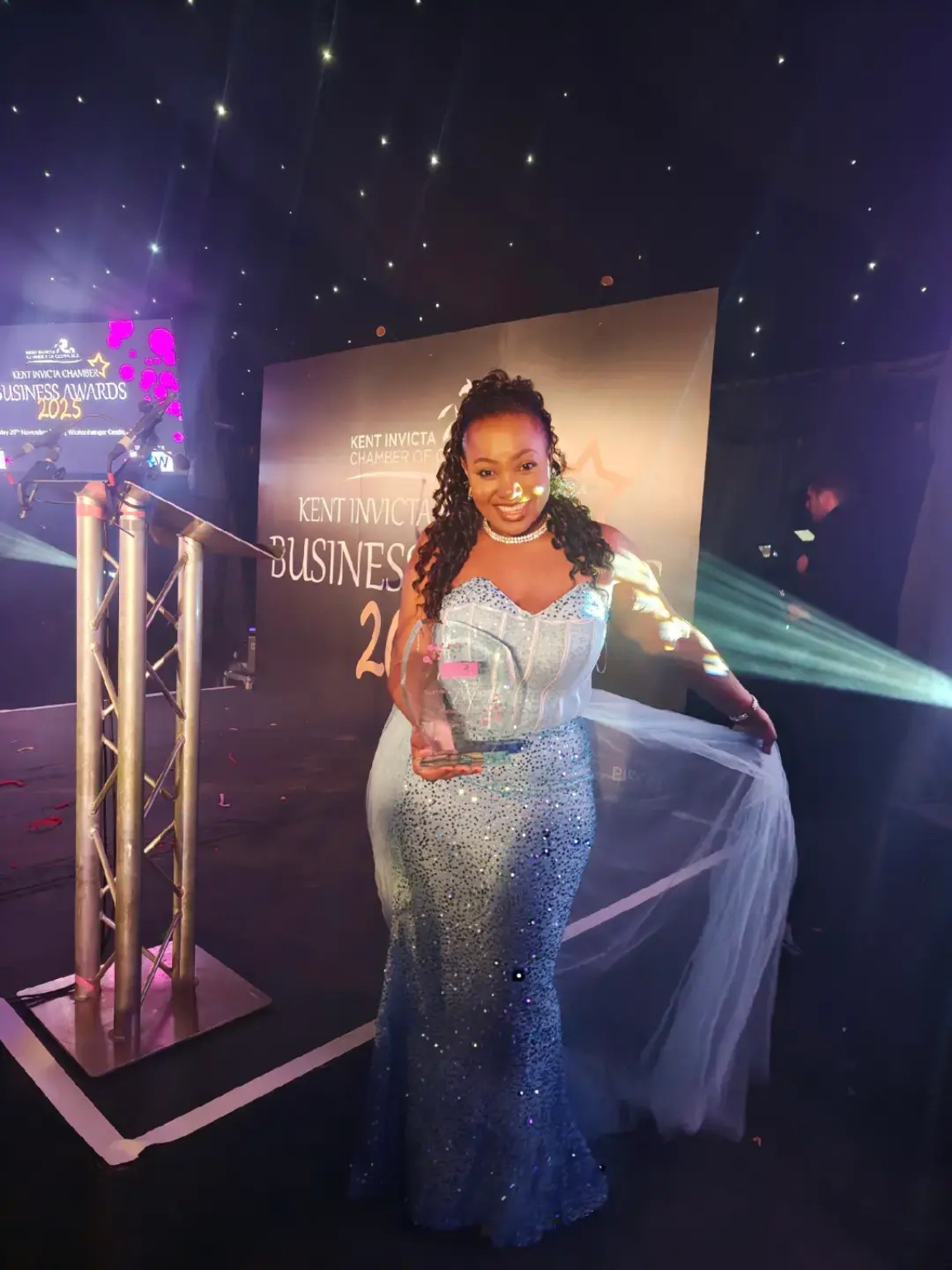
Visha Kudhail is the author of Authentic Marketing (Kogan Page, 2026) and an award-winning global marketing leader who provides startup tips for women entrepreneurs, including UK women turning business dreams into reality and women on UK boards, and who has held senior roles at Pinterest, Google and Square, shaping marketing functions from the ground up, scaling teams internationally and repositioning brands, and was named a BIMA 100 Champion for Change and won Best Leader in Marketing & Brand at the 2022 Global Women in Marketing Awards.
AI has made marketing cheaper, faster and more uniform than ever. That is precisely why authenticity has become the only lever that still works. After years inside the world’s largest tech businesses, Pinterest, Google and Square, one lesson has outlasted every other: the moment you lose a customer’s trust, you lose your place on the path to success, a principle that matters just as much for male allyship in UK business.
Trust is not a campaign. You cannot buy it in a quarter or win it back with a discount. It is built slowly, through the steady effort to be honest, relevant and responsive as your customers’ needs shift, and they always shift. When a business is authentic across everything it does, its message, its product, its marketing, its actions, it builds the one asset no competitor can copy: a genuine relationship.
Why the trust gap is widening
We have nearly talked ourselves out of remembering this. The language of business today is crowded with “grow faster,” “cheaper,” “at scale,” and every word spent chasing efficiency is a word not spent earning attention. Making money matters, of course. But the businesses that last are the ones still building the foundations beneath the profit.
Customers feel the difference. They want to understand what a company stands for, to know it is transparent, to trust that it does what it says. What they do not want is to be followed around the internet by a pair of shoes they once glanced at, or to wonder whether a business is even real because its content is visibly machine-made. This is the modern condition of the consumer: unsure what is genuine, unclear on the story, numb to the next ad in the feed.
The evidence is not ambiguous. Research consistently shows that consumers are more loyal to brands that practise transparency, and that many want the brands they buy from to share their values. Honesty, done with intention, does not merely earn goodwill. It moves people to act.
In the UK, this plays out against a regulatory backdrop that is only getting sharper. The Advertising Standards Authority and the Competition and Markets Authority are both taking a harder line on misleading claims and undisclosed AI-generated content. For founders, transparency is no longer just a brand choice, it is becoming a compliance advantage.
Why women founders are especially well placed
Women building businesses are unusually well placed to seize this, not only to stand out in a market still shaped largely by men, but to build companies that carry conviction, inside and out.
Many women-led businesses begin with a personal story or a problem the founder lived through. That origin creates a natural anchor for authentic marketing: the founder knows the customer because she was the customer. The latest UK data on women in business shows this segment continues to grow, yet much of the marketing aimed at it still feels generic or borrowed from playbook written elsewhere. The opportunity is to speak directly, from experience.
There is also a practical advantage. Smaller, founder-led businesses can align their actions and their messaging far more quickly than large corporates. When values are visible and the founder is still involved, authenticity is not a strategy deck, it is the daily reality of how the business runs.
The Authentic Marketing framework for founders
What follows is the framework I set out in my book, Authentic Marketing, made usable by any founder without the overwhelm.
Start with your brand truth
Why does your business exist, and why would anyone choose it over something cheaper? If you use AI, ask the uncomfortable version of the question: does it serve your mission, or only your margin, and is the customer still at the centre of the decision? The answers set your vision and your voice. Everything else follows.
Hold your values steady
Brands that chase cultural moments they have no real connection to are found out, quickly. Recall Pepsi handing Kendall Jenner a can of soda to defuse a protest, flattening a serious moment into an advert. Or Bud Light’s partnership with an influencer chosen, it seemed, for reach rather than fit. The backlash each time was immediate. Founders who know their values and apply them consistently avoid these traps, and give people a reason to choose them on purpose.
Put integrity above the quarter
In a sceptical market, a brand is only as strong as the distance between what it says and what it does. Trust is fragile, and it is kept by following through even when it costs. At Pinterest, we pulled weight-loss ads from the platform because they contradicted what it stood for. Revenue took the hit. But a platform people trusted and felt good using was the longer, and better, bet.
Build with your customers, not against your competitors
Markets move, through economics or the simple maturing of an audience’s taste. Those shifts are exactly when attentive businesses pull ahead: they find the unmet need and meet it. Keep the customer as your north star and the returns follow, in profit, and in the far rarer currency of being remembered.
Treat this as a filter, not a launch-day exercise
Run it every time you are about to say something, spend something, or stand for something.
Authenticity needs a partner: creativity
Authenticity will carry you a long way, but not the whole way. It needs a partner, and that partner is creativity. The Ehrenberg-Bass Institute found that 72% of B2B ads command no attention at all, because creativity was traded away for efficiency. The result is marketing that reads as wallpaper. Run the study again today, across B2C too, and I suspect the picture would be worse.
Being real is not enough if no one notices you. Being creative is not enough if no one trusts you. Combine the two and you become the business people remember, return to, and recommend. In a market noisier, faster and more sceptical than it has ever been, that combination is not a nicety. It is the advantage.