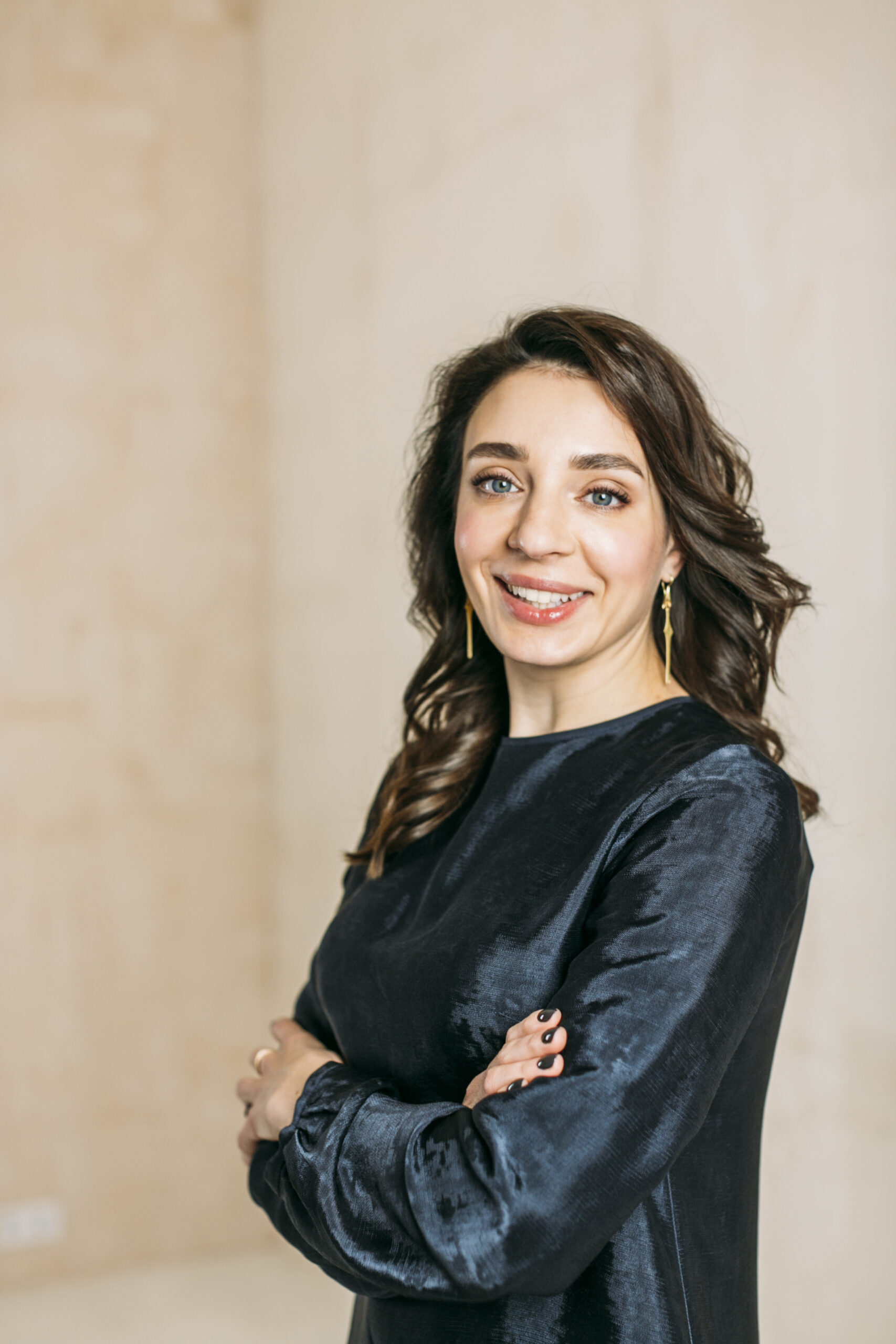
This is an archival interview with Jenny Pupius, then Chief Executive of Action for Business (Bradford) Ltd, originally given around 2007–2008 and first published on Prowess in 2013. It has been republished with updated context for readers interested in women-led social enterprise, community regeneration and social investment.
When Jenny Pupius became CEO of Action for Business (Bradford) Ltd (ABL) in 2007, the organisation was already a well-established example of how a community-led business can combine commercial income with social purpose. Based in Manningham, one of Bradford’s most deprived neighbourhoods, ABL owns and runs Carlisle Business Centre (CBC), a managed workspace that supports local enterprises, charities and community groups.
Can you explain the main activities of Action for Business?
“ABL is a social enterprise and a development trust. It is a community-led regeneration organisation based in the Manningham district of Bradford, an area that ranks highly in the government’s Index of Deprivation [now the Index of Multiple Deprivation 2019]. Our aim is, quite simply, to make this disadvantaged area a better place to live and work.
“Our core business is the ownership and management of Carlisle Business Centre in the heart of Manningham. This is a managed workspace of 36,000 sq ft consisting of almost 100 work units, currently occupied by over 50 small businesses, charities, community groups and statutory bodies employing 300 people.
“We also have extensive meeting and conference facilities. Last year CBC welcomed 40,000 visitors from across the region to events as diverse as business seminars and networking events; training programmes in first aid, IT, ESOL, drugs awareness, community safety and many other topics; women’s groups; dance classes; choir practices; playschemes and homework clubs; and family celebrations.
“ABL has also managed and delivered a number of grant-funded programmes via, for example, SRB and ERDF [the European Regional Development Fund; since Brexit, similar regional support has been delivered through the UK Shared Prosperity Fund and other local growth initiatives]. At the time of this interview we were managing the Manningham Healthy Living Initiative, a £1 million, five-year programme funded by the Big Lottery [now The National Lottery Community Fund] that aims to improve health and wellbeing through a variety of initiatives.”
When was Action for Business started?
“Following the closure of the mills in the 1970s and 1980s there was a great deal of unemployment and hardship, which aggravated racial tension—the Manningham population is around 70% Black and minority ethnic—and resulted in the well-publicised civil disturbances of 1995 and 2001. ABL was set up in 1992 by local people who recognised the need for social cohesion and economic development in Manningham.
“Enterprise was recognised as a unifying factor, so the new community organisation worked in partnership with the City of Bradford Metropolitan District Council to redevelop the derelict Carlisle Mill, which opened in 1996 as the modern Carlisle Business Centre. It was initially owned by the council and managed by ABL.
“In 2003, with support from the Adventure Capital Fund and a commercial loan from Barclays Bank, ABL was able to purchase CBC from the council, becoming a significant asset-based and income-generating social enterprise.
“If we can prove by September 2008 that the social return on investment is greater than the amount borrowed from the ACF, then that money—£300,000—gets commuted to a grant. We are well on the way to achieving this, with CBC now recognised as a local focus for social and commercial activity.
“I joined the company six months ago as CEO with a remit to achieve a stable and sound financial basis for the further expansion of ABL’s community interests and activities, and to explore both commercial and community development opportunities.”
What motivated you to work in the social enterprise sector?
“Many people consider social enterprises to be ‘non-profit making’. This is simply not so. We might have strong social objectives but we all want to make as much money as we possibly can. It’s what we do with those profits that’s different.
“I have a background in business and I am motivated by social values. Enterprise is essential for the regeneration of our cities. But to ensure long-term sustainability our communities need to get the benefits too, and this is why social enterprise is so important: profits are reinvested in the community served by the business rather than paid out as dividends.”
Is it difficult to balance your need to be a sustainable organisation with the expectations of client companies?
“I will do everything possible to support a company at our centre. Our success and their success are mutually dependent. Yet our clients have to understand that we are running a commercial business ourselves and that we cannot subsidise them. However, if a company is facing a difficult spell we may be more sympathetic than a private-sector landlord and try to reach an arrangement that can help them out, offer practical support and signpost to business advice.”
What more do you feel the government could do to support social enterprises?
“Social enterprise and community organisations are now firmly part of the government agenda. Yet recent reports have highlighted that existing mainstream business support services do not generally meet their needs. Many of us often feel that the traditional providers of business support have so little knowledge or experience of the sector that they are unable to establish any appropriate or meaningful support strategy.
“Learning from other social enterprises, peer support and mentoring is a preferred way forward for most people. Maybe the government could help support the co-ordination of this within the sector through organisations like the Development Trusts Association [now Locality], NCVO or the Social Enterprise Coalition [now Social Enterprise UK].
“Also, set-up costs are often high for social enterprises—it’s not like setting up your own business where you can work from home for a while. Access to finance can be a problem. There are some sources of help available such as the Adventure Capital Fund, or via the RDAs [Regional Development Agencies, which were closed in 2012; their functions were largely taken on by Local Enterprise Partnerships and, more recently, by local authorities and combined authorities]. However, some help with working capital would be valuable.”
Do you think there will be more social enterprises in the future?
“Yes, certainly. I think social enterprise is a natural way forward: operating a commercial business but with the values and ethos of the third sector. A combination of socialism and capitalism. A shift in values is taking place; people are recognising that society is richer and all of us individually are richer when the rewards of entrepreneurialism are shared.”
What advice would you give to other people thinking about starting a social enterprise?
“Be very clear about your objectives and why you are doing what you are doing. If you have started a social enterprise so as to make money to invest in a social objective, then make sure you don’t lose sight of that overall vision in the drive to generate income.”
What has changed since this interview?
Although the policy landscape has shifted, the issues Jenny Pupius raised remain highly relevant. The UK social enterprise sector has continued to grow: Social Enterprise UK’s most recent State of Social Enterprise survey reports that the sector contributes around £60 billion to the economy and employs roughly 5% of the UK workforce. Women are disproportionately represented among social enterprise leaders, with research suggesting that women are more likely to lead social enterprises than traditional SMEs.
Carlisle Business Centre has continued to operate as a community asset in Manningham, illustrating the long-term value of asset-based social enterprises. For women considering a social enterprise today, support is available through organisations such as Prowess, Social Enterprise UK, Locality, UnLtd and the School for Social Entrepreneurs, as well as through local growth hubs and the UK Shared Prosperity Fund.
This article is from the Prowess archive. It was originally published in 2013 and is based on an interview given circa 2007–2008.