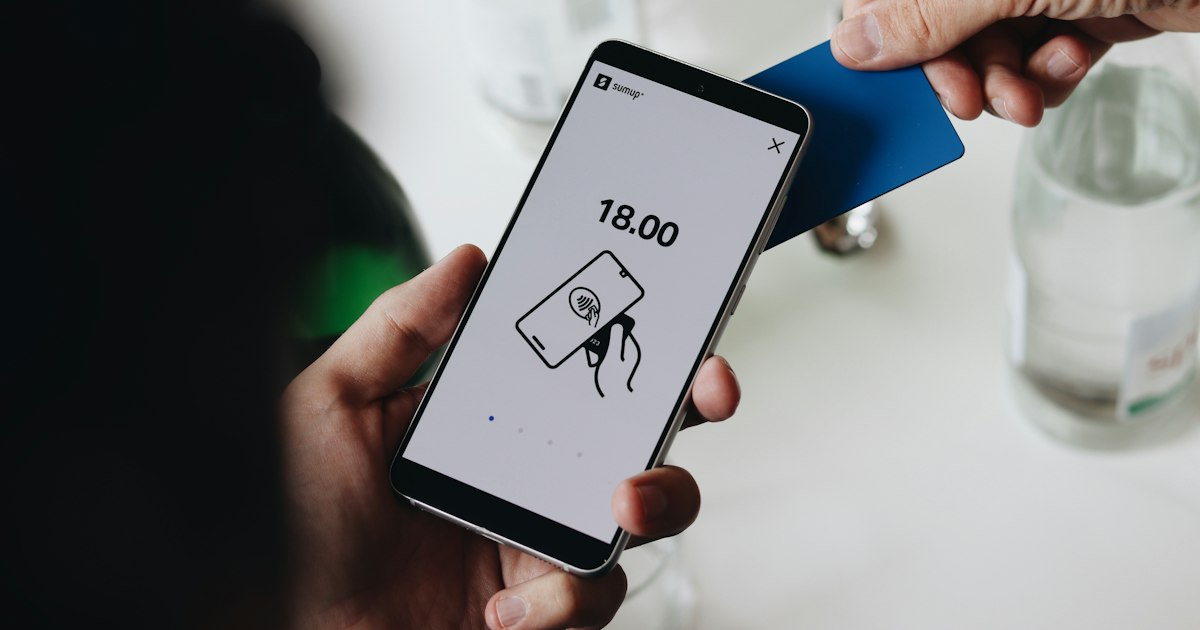
Smartphone card readers have become a practical way for UK small businesses to take debit, credit, and contactless payments without a fixed till. For women running mobile services, market stalls, pop-ups, or microbusinesses, a pocket-sized reader can replace a costly countertop terminal. But when customer card data passes through a phone or tablet, smartphone card reader security is not optional.
This guide explains how smartphone card reader security works in 2026, what UK regulations apply, and what you should check before choosing a provider.
Why smartphone card readers matter for UK women-led businesses
Card payments are now the default for UK consumers. A smartphone or tablet card reader lets a sole trader or small limited company accept chip-and-PIN, contactless, and mobile wallet payments through a device they already own. Providers such as SumUp, Zettle, and Square supply readers that pair with an app, often with no long-term contract or monthly rental fee.
For women founders operating on tight margins or working from home, this lowers the barrier to taking card payments. You can find more context on the scale of women-led enterprise in the UK on our Women in Business: Key UK Facts page.
How smartphone card reader security protects your customers
Modern readers use point-to-point encryption. The card details are encrypted inside the reader before they reach the smartphone or tablet. The phone acts only as a display and internet connection; it does not store the full card number or PIN.
Most UK providers also tokenise transactions. Instead of storing a card number on your device, the system stores a token that has no value if intercepted. This means a lost phone does not mean lost customer card data.
PCI DSS 4.0: the current UK security standard
The Payment Card Industry Data Security Standard is the global baseline for any business that accepts card payments. PCI DSS 4.0, which the PCI Security Standards Council published in March 2022, replaced the older PCI DSS 3.2.1 framework. Any smartphone card reader sold or used in the UK should meet the current PCI DSS 4.0 requirements.
Under PCI DSS 4.0, providers must:
- Encrypt cardholder data from the moment it enters the reader.
- Keep the mobile device out of scope for sensitive data storage.
- Support multi-factor authentication for administrative access.
- Provide clear guidance to merchants on how to keep the device secure.
You can check whether a provider is listed as a PCI-validated solution on the PCI Security Standards Council website.
UK regulation: FCA, PSR 2017, and GDPR
In the UK, payment services are regulated by the Financial Conduct Authority under the Payment Services Regulations 2017. A legitimate smartphone card reader provider must be authorised or registered with the FCA, or operate as an agent of an authorised firm. You can verify a firm’s status on the FCA Financial Services Register.
Customer data collected during a card transaction is also personal data under the UK General Data Protection Regulation and the Data Protection Act 2018. This means you must:
- Tell customers what data you collect and why.
- Keep transaction records only for as long as legally necessary, typically at least six years for HMRC purposes.
- Secure any customer database with strong passwords and access controls.
For more on record-keeping and allowable costs, see our guide to Allowable Expenses Self Employed UK.
Strong Customer Authentication and the £100 contactless limit
Strong Customer Authentication applies to electronic payments in the UK. For contactless transactions, this usually means a PIN or device authentication is required once cumulative spending reaches a set threshold, or after a set number of contactless taps.
The UK contactless card limit was raised to £100 in October 2021, following a change announced by HM Treasury. While this makes larger impulse purchases easier, it also increases the potential loss if a card is stolen and used fraudulently before the issuer blocks it. As the merchant, you are not liable for this fraud if you use a PCI-compliant reader and follow the provider’s terms. However, repeated chargebacks or suspicious transactions can still damage your account standing.
Practical checks before choosing a smartphone card reader
Ask the following questions before signing up:
- Is the reader PCI DSS 4.0 compliant? Look for a statement on the provider’s website or ask their support team.
- Is the provider FCA authorised or registered? Check the FCA register using the firm’s name or reference number.
- What fees apply? Compare transaction fees, refund fees, and any charges for payouts or chargebacks.
- Does the app support passcodes, biometrics, and remote logout? These features protect you if a device is lost or stolen.
- Where is customer support based? UK-based support can be valuable if a payment dispute arises.
For a broader look at business payment choices, read our article on Choosing a Business Credit Card in the UK: 8 Checks.
Common risks and how to reduce them
Even with a secure reader, user error can create vulnerabilities:
- Using a personal phone with weak security. Set a strong passcode, enable biometric unlock, and keep the operating system updated.
- Connecting to public Wi-Fi. Use mobile data or a trusted private network for transactions.
- Leaving the reader unattended. Treat it like a cash tin; store it securely when not in use.
- Ignoring app updates. Updates often include security patches.
- Sharing login credentials. Give each team member their own account with appropriate permissions.
Action steps to secure your smartphone card reader
- Check that your current or planned smartphone card reader meets PCI DSS 4.0.
- Verify the provider is on the FCA Financial Services Register.
- Review your device security settings and update the payment app.
- Document your data retention policy so it complies with UK GDPR and HMRC record-keeping rules.
- Compare transaction fees across at least three providers before committing.
Smartphone card reader security is strong when you choose a PCI-compliant provider, keep your devices updated, and follow basic data-protection rules. For UK women in business, mobile card readers remain one of the simplest ways to take card payments on flexible terms.