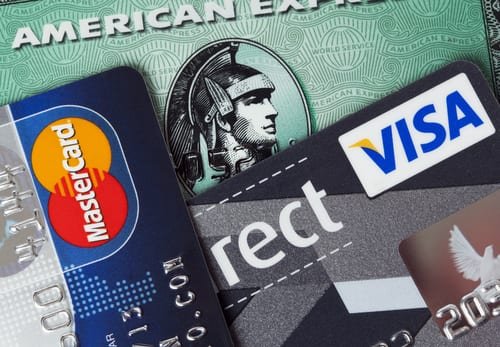
Most UK shoppers now expect to pay by debit or credit card, and increasingly by contactless tap or mobile wallet. For a woman running a small business, refusing card payments does more than limit customer choice; it actively drives sales to competitors. With convenience closely tied to repeat business, asking a customer to find a cash machine before they can buy from you is a barrier few will bother to overcome. If you are weighing up the cost of accepting card payments for UK small businesses, the bigger question is what cash-only trading is already costing you.
Why card payments for UK small businesses matter
Card payments have been the UK’s preferred way to pay for years. According to UK Finance’s Payment Markets Report 2024, debit cards alone accounted for 50% of all payments in 2023, while credit and charge cards made up a further 14%. Together, cards represented nearly two-thirds of all consumer payments.
Contactless use keeps rising. UK Finance recorded 19.5 billion contactless payments in 2023, many made via mobile wallets such as Apple Pay and Google Pay. The £100 contactless limit, in place since October 2021, means customers can tap for larger purchases, from a weekly shop to a salon treatment.
The picture is even starker in retail. The British Retail Consortium’s Payments Survey 2024 found that cards accounted for 82% of retail sales value in 2023, while cash made up just 14%. For many consumers, carrying notes and coins is now the exception. Women-led businesses are well represented in retail, hospitality, beauty and professional services, sectors where customers expect to pay by card. If your business cannot take cards, potential customers may simply buy from a competitor who can.
The real cost of saying no to cards
The financial impact is not theoretical. A 2023 survey by takepayments and YouGov estimated that around 1.67 million UK small and medium-sized enterprises still do not accept card payments, collectively missing out on roughly £8.2 billion in revenue each year. That works out at an average of about £4,900 per business. Even a handful of lost sales each week can quickly exceed the cost of a card reader.
Beyond the immediate lost sale, a cash-only policy can shrink average transaction values. Customers tend to spend more when paying by card, partly because they are not constrained by the cash in their wallet. It can also damage your reputation: a business that does not take cards can appear outdated or inconvenient, especially to younger customers and tourists. Repeat trade suffers too, because friction at the point of payment makes a return visit less likely.
For women in business running retail, hospitality, beauty, or professional services firms, that lost revenue is hard to recover. You can read more about protecting your bottom line in our guide to cutting costs for UK small businesses.
What stops small businesses from taking cards?
Historically, the barriers were real: expensive terminal rental, long contracts, dedicated phone lines and complex merchant accounts put card acceptance out of reach for many micro-businesses. Security was another concern, with worries about card fraud, data breaches and chargebacks.
Those objections are far less valid today. Modern providers offer app-based card readers with no monthly fee, no long-term contract and quick settlement. For women founders starting with limited capital, the ability to accept cards from day one without a large upfront cost removes a significant barrier to trading. Security standards such as PCI DSS compliance, encryption and tokenisation are built in, while the £100 contactless limit and Strong Customer Authentication reduce fraud risk. Chargebacks can still occur, but clear refund and dispute processes help you manage them.
Card processing fees are also an allowable business expense, which means they reduce your taxable profit. Our guide to allowable expenses for the self-employed explains what you can claim.
Modern card payment options
Today’s small businesses can choose from several card acceptance models, often mixing more than one to suit different sales channels:
- Mobile card readers: Compact devices that pair with a smartphone or tablet via Bluetooth. Ideal for market stalls, pop-ups, tradespeople and mobile services, with no fixed line needed.
- Payment links and QR codes: Let customers pay online via a secure link or by scanning a code. Useful for invoices, deposits, remote orders or table service.
- Integrated point-of-sale systems: Combine card acceptance with stock control, accounting and reporting for shops, cafés and salons.
- Online payment gateways: Essential for e-commerce, subscriptions, click-and-collect and appointment bookings.
For women running businesses around caring responsibilities or part-time hours, payment links and mobile readers mean you can take secure payments without being tied to a fixed till. Pricing is usually straightforward. Most providers charge a percentage per transaction, typically between 1% and 2%, with some adding a small fixed fee. Compare total costs against your expected turnover, and watch out for monthly minimums, settlement delays, hardware rental and exit fees.
How to start accepting card payments
- Estimate your monthly card turnover and average transaction size. This determines whether a flat-rate or interchange-plus pricing model is cheaper.
- Compare providers on fees, contract length, hardware cost, settlement speed and support. Look for Financial Conduct Authority-regulated or well-established providers. Ask other women founders in your network which providers they use; reliable customer support matters when you are resolving a payment issue between other commitments.
- Check compatibility with your existing accounting, e-commerce or POS software to avoid manual reconciliation.
- Display card logos at your till, on your website and on social media so customers know they can pay.
- Train staff on how to process refunds, handle failed payments and spot suspicious transactions.
Conclusion: make it easy to be paid
Refusing card payments for UK small businesses is an expensive choice in 2026. With card spending now the norm and affordable, secure technology widely available, most women-led businesses have more to lose by sticking with cash than by embracing cards. Review your payment options, choose a provider that matches your sales pattern, and make it easy for customers to pay you, however they prefer.