Rising energy bills are one of the biggest fixed-cost pressures on UK small businesses, and because businesses, unlike domestic customers, are not protected by Ofgem’s price cap, market movements feed straight into your bottom line, so if you are a woman running a company, switching to renewable energy for business energy efficiency is no longer just a sustainability statement that positions your business as an environmentally conscious company but also a direct way to protect margins, meet customer expectations, stay on the right side of tightening carbon rules, and take advantage of the practical options, funding routes, and tax reliefs available to UK businesses in 2026.
The Case for Renewable Energy for Business Energy Efficiency
Energy is a major operating cost for most businesses. The Energy Bills Discount Scheme closed in March 2024 (gov.uk, 2024), which means businesses now pay market rates for electricity and gas. That volatility makes self-generated renewable power attractive because it fixes a portion of your energy costs for years.
Beyond cost, regulation is tightening. The UK has a statutory target to reach net zero by 2050 under the Climate Change Act 2008, as amended in 2019 (legislation.gov.uk, 2019). That means every business will face increasing pressure to measure, report, and reduce emissions. Starting now gives you time to test technologies, capture tax relief, and build a lower-cost operating model before compliance becomes mandatory.
There is also a commercial case for women-led businesses. Research by the British Business Bank (2024) shows that women founders continue to face higher barriers to growth capital, so protecting cash flow matters even more. Cutting energy waste is one of the few cost-saving levers you control directly. For more on the wider context, see our Women in Business: Key UK Facts page.
Renewable Energy Options for UK Businesses
Most UK businesses will not build a wind farm. The realistic starting points are rooftop solar, battery storage, heat pumps, and green supply contracts. For women-led businesses, which often run leaner operations, choosing a technology that matches your actual energy profile is the fastest way to protect cash flow.
Solar Photovoltaic Panels
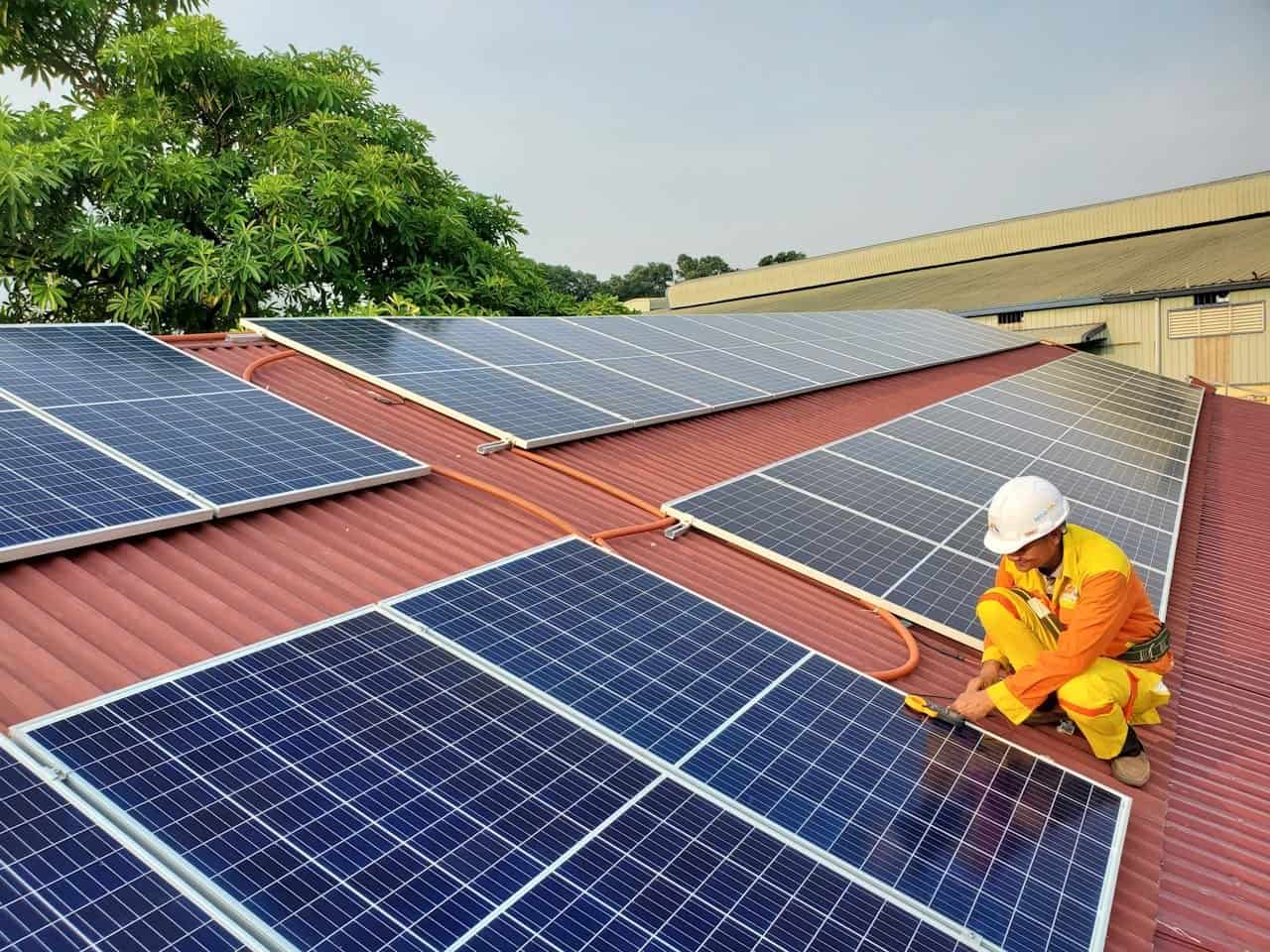
Rooftop solar is the most accessible renewable technology for small businesses. A typical MCS-certified commercial system lasts 25 to 30 years (MCS, 2024) and requires minimal maintenance. Once installed, the electricity you generate is free at the point of use, reducing your exposure to wholesale price spikes.
Any surplus electricity can be sold back to the grid through the Smart Export Guarantee. Ofgem rules require large licensed suppliers to offer export tariffs to small-scale generators (Ofgem, 2020), so you can turn unused summer generation into income.
Commercial Wind Turbines
Small and medium wind turbines suit rural or semi-rural sites with consistent wind speeds. They are less common than solar because planning permission and grid connection can be complex, but for the right location they can deliver a strong return over the long term.
Heat Pumps and Low-Carbon Heating
If your premises use gas heating, a heat pump can cut emissions and, depending on your tariff, reduce running costs. The Boiler Upgrade Scheme offers grants of up to £7,500 for air-source and ground-source heat pumps in England and Wales (gov.uk, 2022), although eligibility rules apply.
Battery Storage and Smart Controls
Battery storage lets you store solar generation for use in the evening or during peak price periods. Pairing storage with smart meters and building energy management systems helps you shift demand away from expensive peak tariffs. This is where renewable generation turns into real energy efficiency.
UK Funding, Tax Reliefs, and Schemes
Several UK schemes can reduce the upfront cost of renewable energy and energy efficiency improvements.
| Scheme or relief | What it offers | Source |
|---|---|---|
| Annual Investment Allowance | 100% first-year relief on qualifying plant and machinery up to £1 million per year | HMRC, 2024 |
| Full expensing | 100% first-year relief on qualifying plant and machinery for companies, made permanent from April 2024 | HMRC, 2024 |
| Climate Change Agreements | Up to 92% discount on Climate Change Levy for electricity and up to 89% for gas for eligible energy-intensive sectors | HMRC, 2024 |
| Smart Export Guarantee | Mandatory export tariffs from large suppliers for small-scale renewable generators | Ofgem, 2020 |
| Boiler Upgrade Scheme | Grants up to £7,500 for heat pump installation in England and Wales | gov.uk, 2022 |
Always check the latest eligibility criteria before committing. Some reliefs apply only to limited companies, while others are available to sole traders and partnerships. Women-led businesses should also explore whether green finance products designed for smaller firms can bridge the gap between tax relief and upfront cost. If you are unsure how a purchase affects your tax position, read our Allowable Expenses Self Employed UK guide or speak to an accountant.
Your Renewable Energy Action Plan
Start with data, not technology. Follow these steps to avoid buying the wrong system.
- Audit your energy use. Collect 12 months of bills and identify when you use the most electricity and gas.
- Cut waste first. Insulation, LED lighting, and heating controls are cheaper than generation and improve the return on any renewable investment.
- Match technology to your site. South-facing roofs suit solar. Exposed rural sites may suit wind. High heating loads may suit heat pumps.
- Get multiple quotes. Use MCS-certified installers for solar and heat pumps, and check warranties, maintenance costs, and predicted generation.
- Model the finances. Include purchase cost, grants, tax relief, expected savings, export income, and maintenance over the system’s lifetime.
For women founders considering how to fund the upfront cost, the British Business Bank has expanded its focus on women-led businesses. Green finance products are also available through high-street banks and specialist lenders.
Common Obstacles and Practical Solutions
The biggest barrier is usually capital cost. Address it by phasing the project, claiming available tax relief, and exploring asset finance or green loans. Leasing solar panels is another option, though you should compare total costs against ownership.
Maintenance is less of a concern than many assume. Solar panels have no moving parts and typically need only occasional cleaning and inverter replacement after several years. Heat pumps require annual servicing similar to a boiler.
If you rent your premises, talk to your landlord about split incentives. Some landlords will install solar if the tenant agrees to a longer lease or contributes to cost. Alternatively, a green supply tariff or corporate power purchase agreement can reduce your carbon footprint without on-site equipment. Women-led businesses in shared workspaces or short-term leases may find this route particularly practical.
Renewable Energy in Your Efficiency Strategy
Renewable energy for business energy efficiency is now a mainstream financial decision, not a niche environmental project. With UK energy prices volatile, net zero targets fixed in law, and tax reliefs such as full expensing and the Annual Investment Allowance in place, the business case is stronger than it has ever been.
Start with an energy audit, cut waste, then match the right technology to your site and budget. For women in business, this is a chance to reduce a fixed cost while building a more resilient, investable company. Even small changes reduce your exposure to price shocks and strengthen your brand with customers and investors who increasingly expect lower-carbon operations.
Next Steps for Your Business
- Download 12 months of energy bills and calculate your average cost per kWh.
- Book a free or subsidised energy audit through your energy supplier or the Carbon Trust.
- Check whether your business qualifies for the Annual Investment Allowance or full expensing.
- Get quotes from at least three MCS-certified installers if you are considering solar or heat pumps.
- Review your options for green supply tariffs or corporate power purchase agreements if you cannot install on-site generation.
- Use these figures to prepare a funding application or investor update if you are seeking growth capital.