Women in business attire is about more than looking professional. What you wear communicates competence, credibility, and authority before you open your mouth. Whether you are walking into an investor pitch, chairing a board meeting, running a market stall, or logging onto a video call from your home office, getting your women in business attire right shapes how others perceive you.
The challenge in 2026 is that there is no single rule book for women in business attire. Dress codes vary wildly between industries, regions, and even individual companies. The formality expected at a City law firm bears little resemblance to the culture at a creative agency in Shoreditch. And for the growing number of women who run their own businesses, there is no HR policy to follow at all. You set the standard.
This guide breaks down what women in business attire actually looks like across different professional settings in 2026, with practical advice on business attire for women whether you are building your first professional wardrobe or refreshing one that no longer reflects where your career has taken you.
Women in Business Attire: The Four Dress Code Levels
Before choosing what to wear, it helps to understand where your situation falls on the formality spectrum. Most professional environments fit into one of four tiers.
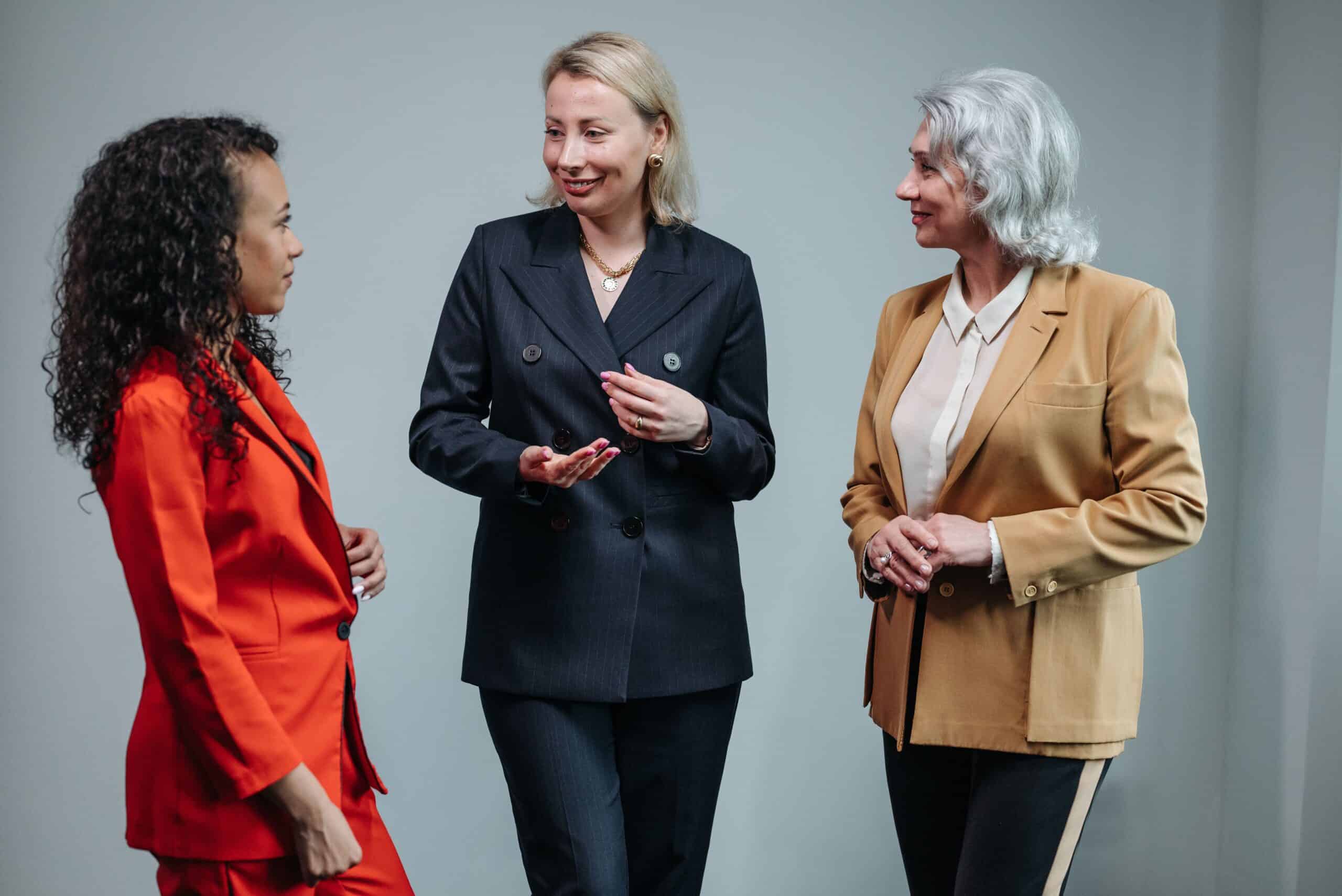
Business Formal is the highest level of women in business attire. Think tailored suits, structured blazers, classic court shoes, and minimal accessories. This is standard for finance, law, senior corporate roles, and formal events like awards ceremonies or investor presentations. The palette tends toward navy, black, charcoal, and white.
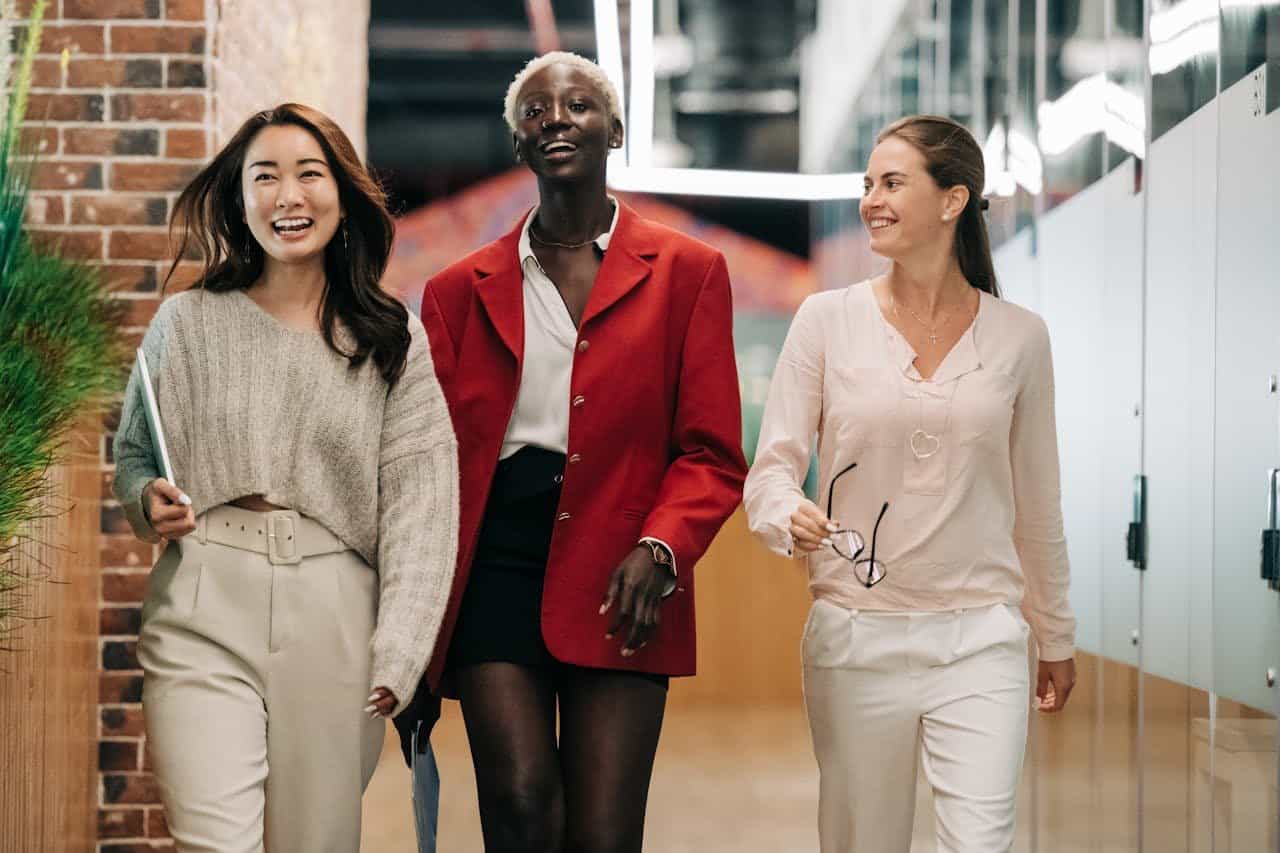
Business Professional sits one level below. It allows more flexibility in colour and silhouette while maintaining a polished, put-together appearance. Blazers paired with tailored trousers or midi skirts, silk or satin blouses, and smart leather shoes are the core pieces. This is the default for most corporate offices, client-facing roles, and professional networking events.
Business Casual is the most common dress code in UK workplaces in 2026. A TK Maxx survey of over 2,000 UK office employees found that 45% of office workers are now dressing more formally than in previous years, but business casual remains the sweet spot for most. It typically involves tailored separates, structured knitwear, smart trousers or well-cut dark jeans, loafers, and clean trainers. The key distinction from true casual is intention. Everything should look deliberate, not thrown together.
Smart Casual is the most relaxed professional tier. It works for co-working spaces, creative industries, casual Fridays, and many startup environments. Dark jeans with a structured blazer, a quality knit top with tailored trousers, or a wrap dress with flat shoes all qualify. The line between smart casual and “just casual” is quality of fabric and fit.
Women in Business Attire for Specific Scenarios
The Investor Pitch or Business Meeting
First impressions carry enormous weight when money or partnership decisions are on the table. The current consensus among pitch consultants is what some call “Founder Plus One”: dressing exactly one level more formally than your usual working attire, but never so formal that you look uncomfortable or inauthentic.
For most pitches, this means a well-fitted blazer (navy or charcoal), a simple blouse or quality knit top underneath, tailored trousers (wide-leg styles are a strong choice in 2026), and clean leather loafers or pointed-toe flats. Keep jewellery minimal and let your confidence be the statement piece.
A practical tip: test-drive your outfit before the day itself. Investor pitches can involve long waits, Q&A sessions, and post-pitch networking. If your shoes pinch or your blazer restricts your arm movement, you will be distracted at the worst possible moment.
Networking Events
Networking events sit in an awkward space between formal and social. You want to look professional enough to be taken seriously, but approachable enough that people feel comfortable starting a conversation with you.
A blazer over a well-chosen top with tailored trousers and comfortable shoes is a reliable formula. If the event is in the evening or has a social element, you can elevate the look with a silk blouse, statement earrings, or a richer colour palette. Avoid anything you would need to constantly adjust throughout the evening. You want to focus on conversations, not your outfit.
The Home Office and Video Calls
The hybrid working era has created an entirely new category of business attire: what looks professional from the waist up on camera. Solid colours perform better on video than busy patterns. Jewel tones like emerald, burgundy, and sapphire read well on screen. Pure white can sometimes wash out under harsh lighting, so cream or soft ivory tends to be a safer choice.
Structured necklines matter more on camera than they do in person. A V-neck or a collared shirt creates a cleaner frame around your face than a crew neck, which can make the visual feel flat. And while nobody is checking your footwear on Zoom, getting fully dressed (including shoes) is a well-documented psychological trick for shifting into a professional mindset.
Running Your Own Business Day-to-Day
For self-employed women and business owners who are constantly switching contexts, from client calls to school runs to co-working sessions, the capsule wardrobe approach is the most practical strategy.
A capsule wardrobe for women in business is a small collection of versatile, well-chosen pieces that mix and match to cover every scenario you regularly face. The goal is to eliminate morning decision fatigue while always looking intentional.
Building a Women’s Business Attire Capsule Wardrobe
You do not need a large wardrobe to look professional every day. A well-edited collection of 15 to 20 pieces can generate dozens of outfits that cover everything from formal meetings to relaxed co-working days.
The Foundation Pieces
Start with these essentials that form the base of most outfits.
Two pairs of tailored trousers (one in black or navy, one in a lighter neutral like stone or grey). Wide-leg styles are a strong trend in 2026 and suit most body types. Two or three white or neutral blouses or shirts (one structured, one relaxed, one silk or satin for dressier occasions). Two quality knit tops in neutral tones. These work alone in business casual settings or layered under blazers for more formal situations. One pair of well-cut dark jeans for smart casual days.
The Power Layers
Layers transform a simple base into a business-ready outfit.
One structured blazer in navy or black. This single piece elevates any combination beneath it. One unstructured or linen blazer in a lighter tone for warmer months and less formal settings. One lightweight trench coat or smart overcoat for meetings outside the office.
The Finishing Pieces
Shoes and accessories complete the professional picture.
One pair of leather loafers or pointed-toe flats. Loafers are the dominant office shoe trend in 2026, practical enough for a full day on your feet while looking polished. One pair of clean, minimalist trainers (white leather styles work best in smart casual settings). One structured handbag or tote in a neutral colour. A simple watch and one or two pairs of understated earrings.
With these pieces in rotation, you can dress for a client presentation on Monday, a co-working session on Wednesday, and a networking event on Thursday without repeating an outfit or feeling under-dressed for any of them.
Women in Business Attire: Colours That Work
Colour communicates more than most people realise. Research in professional settings consistently shows that dark neutrals (navy, charcoal, black) project authority and competence, while softer neutrals (camel, grey, cream) project approachability and warmth.
In 2026, the trend in women’s professional fashion is moving toward what the industry calls “quiet luxury”: muted, earthy tones like sage, terracotta, sand, and soft taupe alongside the classic navy and black. Bold colours absolutely have their place, particularly at events or on camera, but a core wardrobe built around neutrals gives you the most flexibility with the fewest pieces.
One approach that works well for women in business is to keep your base pieces neutral and add personality through one accent item per outfit: a coloured blazer, a statement scarf, a textured knit, or interesting earrings. This keeps you looking professional without feeling like you are wearing a uniform.
Women in Business Attire Mistakes to Avoid
Dressing for the job you had, not the one you have. If your role or business has grown, your wardrobe should reflect that. The outfit that worked when you were freelancing from a coffee shop may not serve you in a boardroom.
Over-investing in trends. The wide-leg trouser is having a moment, and it is likely to last, but building an entire wardrobe around any single trend is risky. Invest in classic cuts for your foundation pieces and experiment with trends through lower-cost accent items.
Ignoring fit. A £50 blazer that is tailored to your body will always look more professional than a £500 blazer that does not sit right. Fit is the single biggest factor in whether an outfit reads as polished or sloppy. If you find pieces you love that are not quite right off the rack, a local alteration service can transform them for £10 to £30 per garment.
Sacrificing comfort for appearance. If you are uncomfortable, it shows. You fidget, you adjust, you lose focus. Every piece in your working wardrobe should pass the “can I wear this for 10 hours and forget I am wearing it” test.
The Bigger Picture on Women in Business Attire
The conversation around women in business attire has shifted significantly in recent years. The expectation that professional women must wear heels, skirts, or makeup to be taken seriously is largely outdated in most UK workplaces. The Equality Act 2010 makes it clear that dress codes must be applied equitably: requirements for women and men do not need to be identical, but they must be of an equivalent standard. Requiring women to wear heels while men wear flat shoes, for example, is likely to be considered discriminatory.
What matters in 2026 is not following a prescribed formula but dressing with intention. Your clothes should communicate that you take your work seriously, that you pay attention to details, and that you are comfortable in your own authority. How you achieve that is increasingly up to you.
The women who dress best for business are not the ones who spend the most money. They are the ones who understand their context, know what works for their body and lifestyle, and invest in women in business attire that lets them focus on what actually matters: doing the work. Good women in business attire is not about following rules. It is about dressing with intention.
Looking for more practical business advice? Browse our guides on starting a business, managing money, and building your professional network.