In 2017, temp worker Nicola Thorp was sent home from a PwC reception role for refusing to wear high heels. Her petition, reported by the UK Parliament Petitions Committee, attracted more than 150,000 signatures and triggered a 2018 parliamentary report on sexist workplace dress codes. The report, by the Petitions Committee and Women and Equalities Committee, called for stricter penalties, but the government maintained that existing protections under the Equality Act 2010 were sufficient.
The dress code for self-employed women is a business decision, not a rule handed down by HR. It affects how clients, investors and collaborators perceive you. According to the Alison Rose Review of Female Entrepreneurship (2019), women-led businesses contribute £85 billion annually to the UK economy. Looking the part can help you claim your share of that market.
With more women than ever running their own businesses, the question of what to wear to work has real commercial weight. The right outfit can boost your confidence before a pitch, signal credibility to a new client and help you move comfortably between home working and face-to-face meetings.
This guide sets out the legal framework, the tax rules on work clothing and four practical approaches to dressing for business as a self-employed woman in the UK.
Know your rights under UK dress code law
The Equality Act 2010 makes it unlawful for an employer to impose a dress code that discriminates on the basis of sex, religion, disability or other protected characteristics. ACAS guidance states that any dress code should be reasonable, clearly communicated and applied consistently.
The 2018 parliamentary report recommended that the government should ban sexist dress codes and introduce financial penalties, but ministers rejected new legislation. That means the Equality Act 2010 remains the main protection for employees today.
If you employ staff, you should write your dress code down and review it for discrimination. For example, requiring women to wear high heels, make-up or skirts while men wear flat shoes and trousers could be challenged as direct or indirect sex discrimination. Requiring branded uniforms is generally acceptable; requiring specific body types or gendered appearance is not.
Even if you work alone, this matters. Clients and venues may have their own codes. Knowing the law helps you push back if a co-working space, event organiser or client tries to impose requirements that undermine your professionalism or comfort.
What clothing expenses HMRC will accept
One advantage of being self-employed is that some work-related clothing costs are allowable expenses. HMRC rules are strict, however. Everyday clothing, even if bought only for work, is not allowable. You can only claim for:
- Uniforms or branded clothing that identifies you as part of a business
- Protective clothing needed for your work, such as steel-capped boots or high-visibility jackets
- Costumes for performers
A tailored blazer you wear to client meetings is not allowable, even if you would not wear it at the weekend. A polo shirt embroidered with your business logo is. Keep receipts and record these separately from general wardrobe spending. If you are a sole trader or limited company director, record allowable clothing in your accounts with a note explaining the business purpose. If HMRC asks questions, you will need to show why the item was necessary and not part of your everyday wardrobe.
For a fuller breakdown, see our guides to allowable expenses for the self-employed and Self Employed Tax UK: A Complete Guide for 2026/27.
Four dress code strategies for self-employed women
1. Power dressing for pitches and formal meetings
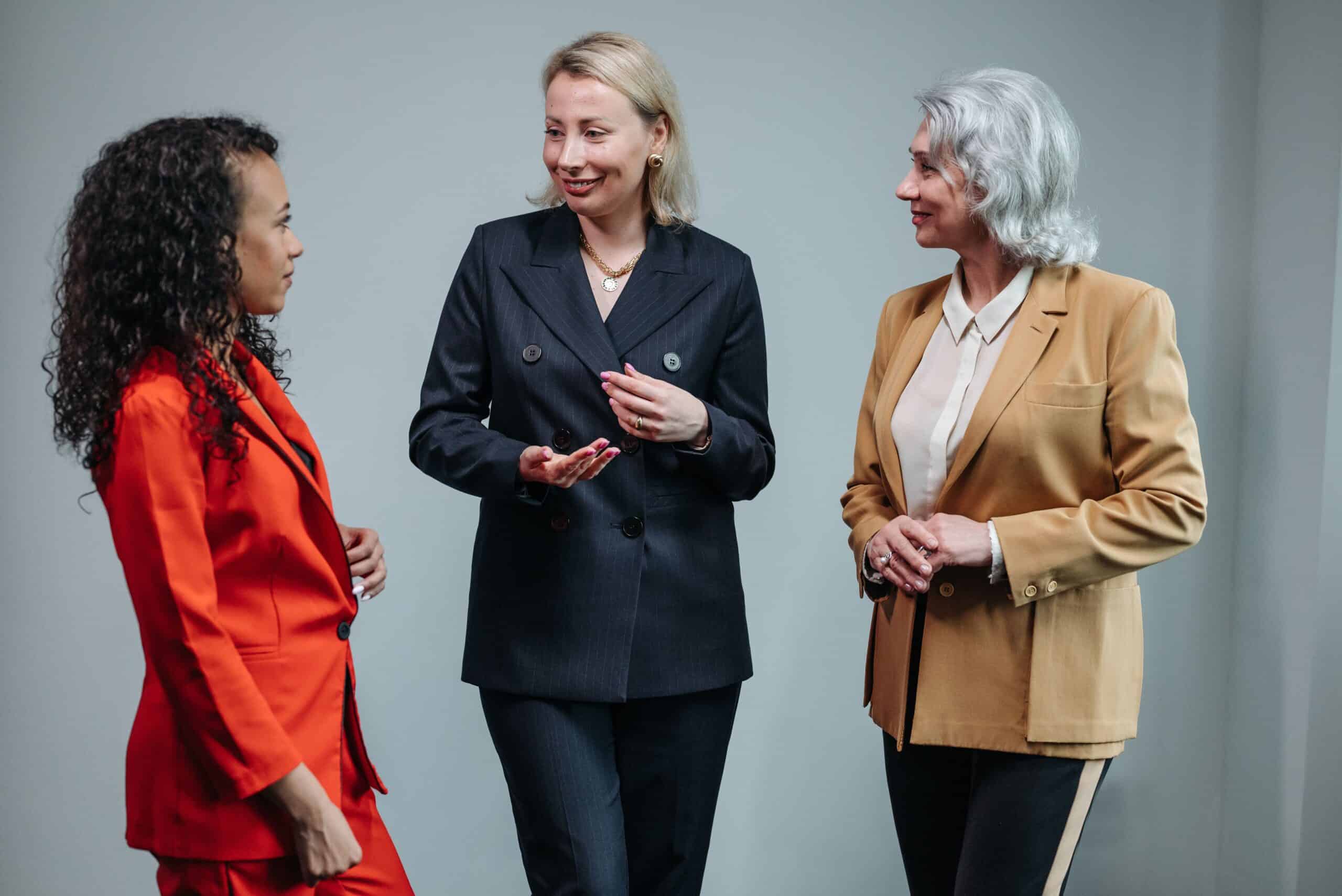
Power dressing no longer means 1980s shoulder pads. A well-cut suit, tailored dress or coordinated separates in navy, charcoal, black or burgundy signals authority without mimicking male dress codes. Choose fabrics that travel well if you move between meetings, and opt for shoes you can walk in comfortably.
The goal is to look intentional. Clients and investors form first impressions within seconds, and clothing is one of the fastest signals of competence. Dress one notch above the expected standard for the room.
2. Business casual for co-working and video calls
Remote and hybrid working mean many self-employed women split time between home, co-working spaces and coffee-shop meetings. Business casual bridges these settings. Think dark jeans or tailored trousers with a blazer, a plain knit or a structured shirt.
For video calls, solid colours and simple necklines work better than busy patterns. Good lighting and a tidy background matter as much as your top half. Avoid the trap of dressing only from the waist up; you never know when a client will ask you to stand or when a fire alarm will force you outside.
3. Evening networking and awards events
Networking dinners, awards ceremonies and industry drinks require a different balance. You want to look polished and memorable, but still professional. A midi dress, tailored jumpsuit or elegant separates in a single colour usually strike the right note.
Consider the venue and the sector. A creative industries awards show allows more individuality than a formal banking dinner. The aim is to be remembered for your business, not your outfit.
4. Setting a dress code if you employ staff
If your business has grown to the point of hiring employees or contractors, you get to set the tone. According to the Alison Rose Review of Female Entrepreneurship (2019), only one in three UK entrepreneurs is a woman. As one of them, you can model inclusive standards from the start.
A written dress code protects you legally and gives your team clarity. ACAS recommends consulting staff and explaining the business reason behind any requirements. Keep the code practical. Staff who are comfortable perform better and represent your brand more confidently. Specify any branded items, health and safety requirements and client-facing standards, but avoid gendered rules.
Action steps
- Review your current work wardrobe and identify which pieces genuinely project the professional image you want.
- Check your clothing expenses against HMRC rules and move any allowable items into your business records.
- If you employ staff, write a short dress code policy and check it against ACAS guidance and the Equality Act 2010.
- Dress for the setting one level above the expected standard for pitches, meetings and networking events.
Getting the dress code for self-employed women right is not about following outdated rules. It is about controlling the impression you make and feeling confident enough to focus on your business. For more context on the economic contribution of women-led businesses, see Women in Business: Key UK Facts.