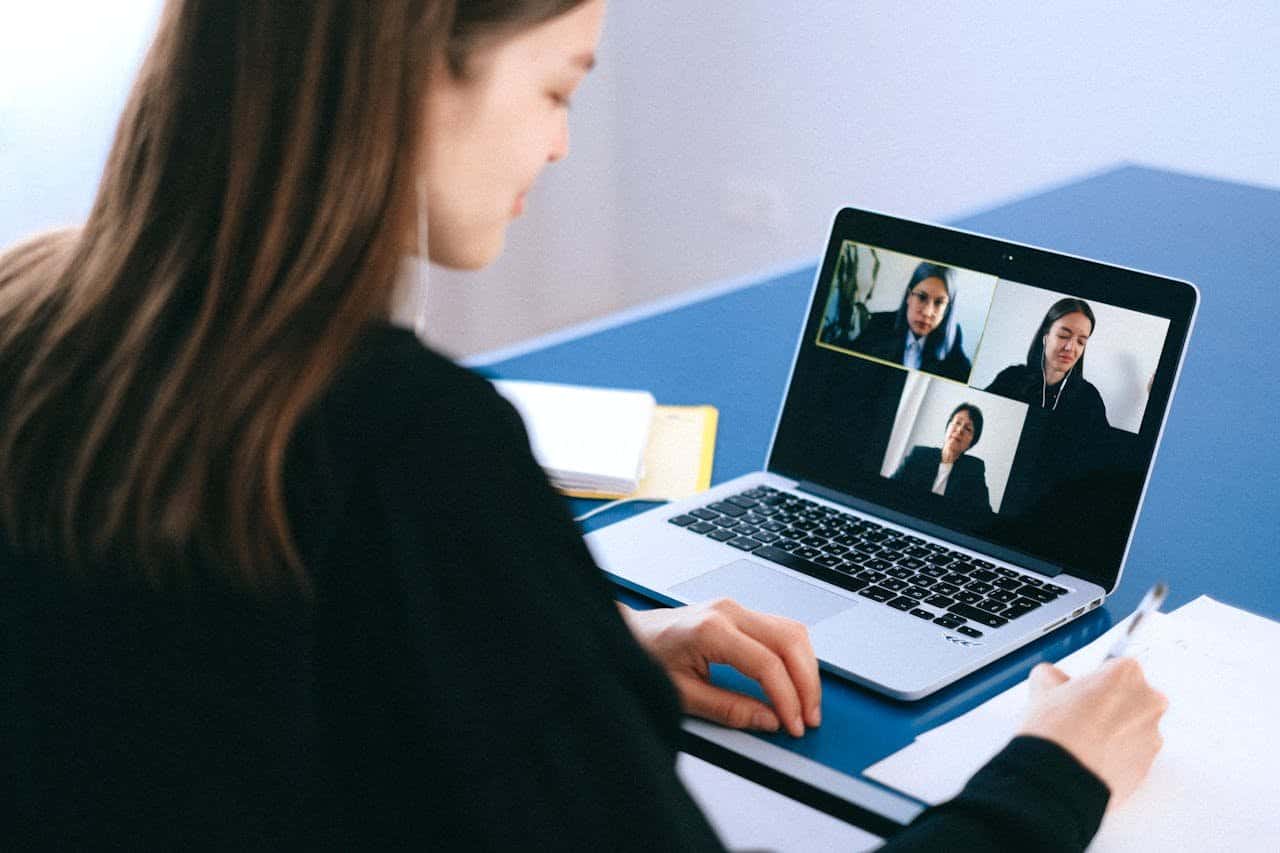
Virtual interviews are now a standard part of recruitment in the UK. Solid virtual interview tips can help you stand out whether you are returning after a career break, switching sectors, or hiring for your own business. ONS data from 2023 shows that 44% of UK workers had worked from home at some point, while 16% worked exclusively from home. CIPD research from 2024 found that 83% of UK organisations now offer hybrid working, so employers routinely use video calls for first-round and final interviews. The Employment Relations (Flexible Working) Act 2023, which took effect on 6 April 2024, also means many candidates now discuss flexible arrangements from day one.
For women in business, this shift matters. The Alison Rose Review of Female Entrepreneurship (2023) found that women-led businesses contribute £85 billion to the UK economy, yet all-women founding teams receive less than 1% of UK venture capital. Whether you are applying for a role in a women-led business, returning to employment after self-employment, or moving into a senior position, a polished virtual interview helps you present your experience clearly from the start.
Here are eight practical ways to prepare for a virtual interview and give a professional impression from the moment you log on.
1. Choose a neutral, well-lit space
Select a quiet area with a plain background and good natural or artificial light. A blank wall, neat bookshelf, or closed door works well. Check your on-screen appearance before the call starts and remove anything distracting from the frame. If you are interviewing from a shared home, let others know the time and ask for no interruptions. With hybrid working now common in UK organisations, interviewers understand home environments, but a tidy, neutral space still signals professionalism.
2. Dress as you would for an in-person interview
Your top half matters, but dress fully in professional attire. You may need to stand up to adjust equipment or fetch a document, and full professional dress changes how you carry yourself. Choose solid colours over busy patterns, which can distract on camera. This is especially useful if you are returning after a break and want to feel grounded in a professional mindset. For advice on dressing for different professional scenarios, see our guide on women in business attire.
3. Test your technology in advance
At least 24 hours before the interview, check your camera, microphone, speakers, and internet connection. Open the video platform, whether it is Microsoft Teams, Zoom, or Google Meet, and confirm you know how to join, share your screen, and mute yourself. Ask a friend for a five-minute test call so you can fix echo, lighting, or camera angle problems early. If the employer uses a platform you have not seen before, download it ahead of time rather than relying on a browser version. This is particularly important if you have been out of the workforce for a while and are less familiar with the latest tools.
4. Prepare notes you can glance at
One advantage of a virtual interview is that you can keep brief notes on your screen. Open a document with key points, questions for the interviewer, and examples of your achievements. Keep the window small and place it near the camera so your eyes do not drift too far from the lens. Do not read directly from the notes; use them as prompts only. You might also include the job description and a list of your transferable skills if you are changing sector or translating self-employed experience into corporate language.
5. Practise your body language on camera
Sit up straight, keep your shoulders relaxed, and place the camera at eye level. Look into the lens when you speak rather than at the interviewer’s image, as this creates the impression of eye contact. Smile naturally, nod to show you are listening, and avoid fidgeting. A stable, professional posture signals confidence even through a screen. Practise with a short recording so you can spot habits such as looking down or swaying, which is especially useful if you are rebuilding confidence after a career break.
6. Have examples of your work ready to share
If the role involves projects, reports, or a portfolio, save the files in an easy-to-find folder and practise sharing your screen. This keeps you in control of the conversation and lets you talk through your work directly. Close any unrelated tabs, notifications, or confidential documents before the call begins. If you have built a business, client website, or campaign, have the relevant links or screenshots ready to show as evidence.
7. Know your flexible working rights
Since 6 April 2024, employees in England, Scotland, and Wales have had the right to request flexible working from the first day of employment. Under the Employment Relations (Flexible Working) Act 2023, you can make two statutory requests in any 12-month period, and employers must deal with each request within two months. ACAS provides a statutory Code of Practice on handling these requests. If work-life balance matters to you, prepare one or two flexible working questions that show you understand the framework. You can read more in our guide to flexible working rights in 2026 and on gov.uk.
8. Be yourself and ask thoughtful questions
Employers hire people, not just CVs. Build brief rapport at the start, answer questions with specific examples, and prepare two or three questions about the team, priorities, or culture. If you are a woman returning after maternity leave or a career break, our career returner guide has advice on framing your experience positively.
Final checks before you join the call
- Charge your laptop or plug it in.
- Close unnecessary programmes and browser tabs.
- Switch your phone to silent and turn off notifications.
- Keep a glass of water nearby.
- Log in five minutes early.
Put these virtual interview tips into practice
These virtual interview tips will help you prepare with confidence. Test your tech, tidy your background, practise your on-camera presence, and research the employer’s flexible working policy. With the right setup, you can focus on showing why you are the right person for the role.