Self-made women entrepreneurs are one of the fastest-growing groups of business owners in the UK. According to the 2024 Rose Review of Female Entrepreneurship, there are now more than 1.6 million women-led businesses across the country, contributing an estimated £105 billion a year to the economy. Yet women founders still receive less than 2 pence of every pound of UK venture capital, according to Beauhurst’s 2024 UK Equity Tracker. That gap makes bootstrapped success stories especially relevant for women starting out today.
Many of the UK’s most successful women founders began with little money, no contacts, or difficult personal circumstances. They turned setbacks into the foundation for businesses that now employ thousands and export around the world. Their stories offer more than inspiration; they show what persistence, creative problem-solving, and careful control of intellectual property can achieve. Read on for three profiles and the practical lessons you can apply to your own venture.
Hilary Devey: Selling the house to build a freight empire
Hilary Devey grew up in Bolton and watched her father’s business fail. After the bankruptcy, bailiffs removed the family’s furniture. She left school at 16, worked in sales and logistics, and spent years learning how freight moved around the UK. Her lightbulb moment came when she saw hauliers running lorries that were half empty. She designed a shared pallet network that would cut costs, reduce emissions, and speed up deliveries.
The banks refused to lend, so Devey sold her house to fund the launch of Pall-Ex in 1996. In the first year she could pay her staff but had no money left for Christmas dinner for herself and her son. Pall-Ex went on to become one of Europe’s leading palletised distribution networks, handling millions of pallets a year across the UK and continental Europe.
Devey shared her story in her autobiography, Bold as Brass, and became a familiar face on the BBC programme Dragons’ Den. She died in 2022, but her legacy continues to inspire women entering logistics, transport, and entrepreneurship. Her example proves that deep industry knowledge can be more valuable than start-up capital.
JK Rowling: From benefits to a billion-pound literary empire
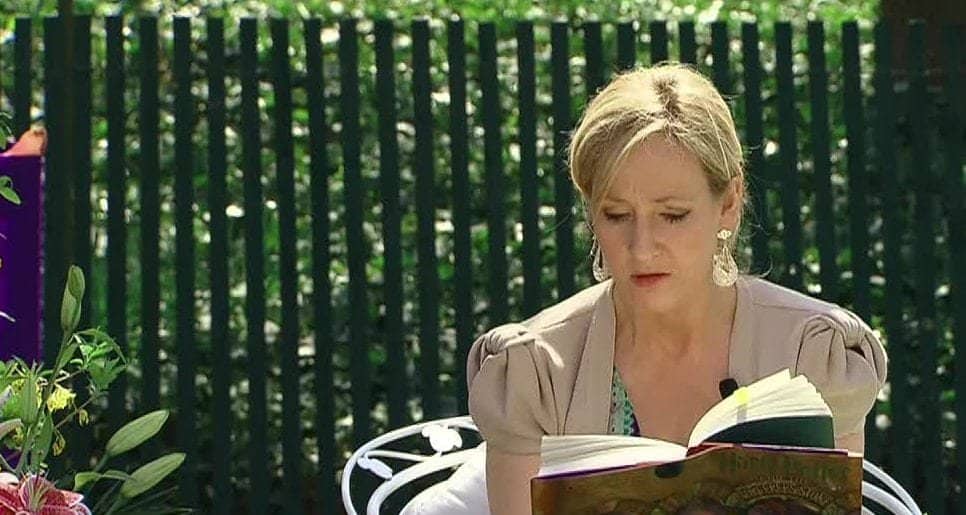
JK Rowling was an unemployed single parent living in Edinburgh when she began writing the first Harry Potter novel in local cafes, her daughter asleep in her pushchair. Twelve publishers rejected the manuscript before Bloomsbury took it on. The series has now sold more than 600 million copies worldwide, as reported by Bloomsbury in 2024, while the Wizarding World films have grossed more than $7.7 billion at the box office, according to Box Office Mojo data from 2024.
Rowling’s business instinct was as sharp as her storytelling. Unlike many authors, she kept script approval and creative control over the film adaptations, retaining ownership of her intellectual property as the brand expanded into theme parks, theatre, games, and streaming. Her estimated fortune now exceeds £850 million, placing her among the UK’s wealthiest self-made women, according to the Sunday Times Rich List 2024.
“Failure meant a stripping away of the inessential. I stopped pretending to myself that I was anything other than what I was, and began to direct all my energy to finishing the only work that mattered to me… rock bottom became a solid foundation on which I rebuilt my life.”
Sara Davies: A student overdraft to a crafting empire
Sara Davies founded Crafter’s Companion from her student bedroom at the University of York in 2005. She was 21, had a £5,000 student overdraft, and spotted a gap in the market for a tool that helped crafters make custom envelopes. She designed the product herself, found a manufacturer, and started selling at craft fairs and through a small website.
The business grew rapidly. By her mid-twenties Davies had turned the overdraft into a multi-million-pound company. Crafter’s Companion now sells crafting products internationally and employs hundreds of people at its UK headquarters and distribution centre. In 2019 she became the youngest ever investor on the BBC programme Dragons’ Den, using the platform to back other UK founders.
Her story shows that you do not need a Silicon Valley pitch deck to build a valuable business. A clear customer problem, a product you can demonstrate, and relentless energy can be enough.
Lessons from self-made women entrepreneurs
Each of these women started from a position of disadvantage. Devey had no bank backing, Rowling was on benefits, and Davies was in debt as a student. Yet all three built businesses by following similar principles:
- They owned their ideas. Rowling kept creative control. Davies designed her first product. Devey patented her network model. Intellectual property mattered from day one.
- They started before they felt ready. None had perfect funding or a flawless plan. They tested, adapted, and kept going.
- They used setbacks as data. Rejection, bankruptcy, and empty bank accounts were not endpoints; they were information about what to change next.
Turning inspiration into action
If these stories have sparked an idea, the next step is to build a practical foundation. Start by checking the current funding landscape. The Women in Business: Key UK Facts page gives the latest figures on women-led firms, pay gaps, and self-employment. If you are bootstrapping, our guide on how female founders boost revenue without external funding sets out revenue-first strategies that do not require VC backing.
For women ready to seek finance, the Start Up Loans Female Founders guide explains the government-backed scheme and how to apply.
Your next move
Building a business from little or nothing is hard, but it is not unusual. The UK’s community of self-made women entrepreneurs is now larger than ever, and the tools to start lean, from e-commerce platforms to digital accounting, are more accessible than they were even five years ago. Pick one action this week: validate one product idea, speak to one potential customer, or research one funding route. The next success story could be yours.