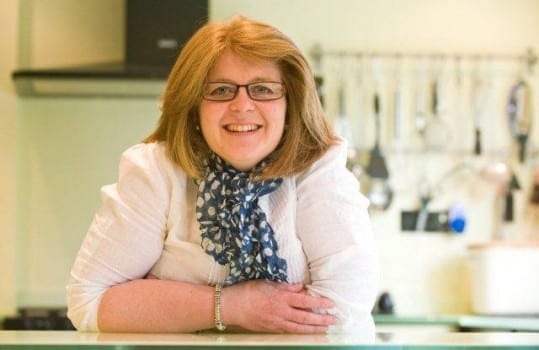
Real Women in Business: Q&A — From baby loss to building a female-led healthcare business, Sarah Daniels left her job as a local authority health and safety inspector in 1999 and founded The RedCat Partnership, a Norwich-based consultancy that helps UK businesses manage health, safety, food hygiene and environmental compliance. than 25 years on, the business is still going strong. In this Q&A Sarah explains why relationships, not glossy brochures, are the secret to running a successful consulting business.
The UK consulting sector has changed dramatically since 1999. The Management Consultancies Association reports that the UK consulting industry generated around £18 billion in fee income in 2023. Women-led businesses now account for more than 1.6 million UK SMEs, according to the 2024 Alison Rose Review of Female Entrepreneurship progress report. The Health and Safety Executive estimates that 1.8 million working people suffered from work-related ill health in 2022/23, and that work-related ill health and injury cost the UK economy around £21.6 billion in the same period. That means demand for pragmatic, qualified compliance advice remains strong. For the latest figures, see our Women in Business: Key UK Facts page.
1. Why did you start your business? The moment I decided to set up on my own came while I was walking on Waxham Beach. There was me, the sand and the power of the ocean. At the time I was working for a local authority as a health and safety inspector. I was not happy, a number of issues had arisen at work and I did not feel valued. I knew there was more in me. From that date I planned my escape. I went to see a local accountant, joined a women’s enterprise programme and everything was set for 6 April 1999.
2. What is the business? The RedCat Partnership is a team of ex-enforcement officers. We help other local businesses with regulatory risk assessments and compliance issues. We like to say we are gamekeepers turned poachers. We are chartered practitioners and appear on the Occupational Safety and Health Consultants Register (OSHCR). We offer a bespoke service in health and safety, food safety and environmental management. We also run open and in-house training courses accredited by bodies such as the Chartered Institute of Environmental Health (CIEH) and Highfield Qualifications, plus tailored courses in risk management, asbestos, legionella or whatever the client requires.
The business started with just me and has grown steadily into a small team. We are based in Eaton, Norwich, and operate from an office at the back of the house.
3. Tell us about yourself. I grew up on my parents’ farm in North Norfolk. I did my first degree in environmental health and subsequent postgraduate courses in health and safety, food safety and integrated environmental management. I am married to Richard, who also works for RedCat, so we have to work hard at making everything in our lives work. We have one daughter, Jasmin, and two cats.
When I was at high school I was lucky to be involved in the Young Enterprise scheme. I was managing director and it gave me my first taste of success. I still remember having to give a presentation at the awards ceremony and beaming with pride. I worked on the family farm whenever an extra pair of hands was needed. Although the hours were long, the rewards were there and that sense that you make your own destiny was formed. After university I waitressed as well as working in enforcement, which taught me the power of customer service. I am pragmatic, down to earth and incredibly action-centred.
4. What are the high points? The high points are clients doing well. In food safety that means an inspector giving a client premises the top Food Hygiene Rating Scheme score of 5. Or if we have written a safety policy or risk management system for a client, then helped them implement it, and both the client and the staff really get it and develop a sense of pride in compliance.
We have also won national training awards from the Chartered Institute of Environmental Health, based on our results. Recognition like that, presented at high-profile ceremonies, reminds you that the hard work is worth it.
5. What were the low points? The most common low point is bad payers. We have only had one company go bust on us. It was very early on and we weathered the storm, but it was painful seeing the director walking around in a brand-new car just after going bankrupt. I am now much more savvy with debt management and incredibly tenacious when it comes to chasing invoices.
Another significant low point is some of our competitors who are not as well qualified and seem to produce dire work that backs up the myth that health and safety is all about stopping things happening or involves reams of paper.
6. If you needed funding, where did you get it? I really did not need a huge amount of start-up funding. I used a small loan through a local enterprise support programme to purchase a computer; that and some business cards and I was off. We have never had costly premises or brochures, preferring to go and talk to customers.
Today the funding landscape is far broader. New founders can look at Start Up Loans, the British Business Bank, local growth hubs and regional grant schemes. The British Business Bank reports that Start Up Loans has lent more than £1 billion since 2012, with a significant proportion going to women founders. The key is to borrow only what you need and keep overheads low.
7. Tell us about a marketing tactiPowering ahead in content marketing: Kathryn Strachan shares a marketing tactic that works really well. real turn-off, so we do a lot of face-to-face marketing and networking so people trust us. Companies will not sign up to a consultancy service from an advert; it is a very personal relationship. Relationships and trust are key to running a successful consulting business. For networking ideas, see our guide to Women in Business Networks UK.
Social media has been great for us. We use LinkedIn so people can check our qualifications and background, and X (formerly Twitter) and Facebook to let people know what we are up to. It has enabled me to give health and safety a bit more personality. A regular email update also keeps us front of mind with past clients.
8. Your favourite tech tool and why? I have two things I would not want to be without: a lightweight laptop and a smartphone. They keep me mobile and let me handle email, video calls, cloud accounting and photos on the move. I do not have to carry another object with me.
9. Where do you get support from? Obviously working with my husband is an interesting relationship and we are a great support for each other. I also have a great relationship with my dad. And I have a great set of close female friends who are like my unofficial board of directors: friends I trust to talk about anything and who are at the end of the phone if I am having a tough time.
10. Who has inspired you? This has to be my dad, a huge inspiration for me. His work ethic is amazing and he always has a smile on his face.
11. What are your future plans? My goal is to carry on delivering a bespoke service to clients with a huge amount of passion and drive. I really enjoy my job. I do not want the team to grow too large because I want to keep the service we offer very personal.
Regulatory compliance is changing and my goal is to stay ahead. When I retire I think I would like to run a high-end tea shop.
12. Your best piece of advice? My mantra is ‘treat everyone how you would wish to be treated’, so you cannot go wrong then. I would also say network and ensure that you have a real passion for your product or service.
Key takeaways for running a successful consulting business
Sarah’s experience shows that running a successful consulting business in the UK today rests on a few practical foundations. First, credibility matters. Appearing on registers such as OSHCR and holding recognised qualifications from bodies such as CIEH gives clients confidence that you understand the Health and Safety at Work etc Act 1974 and other relevant frameworks.
Second, cash flow discipline protects you from bad payers. Set clear payment terms, chase invoices promptly and keep overheads low. Third, relationships drive revenue. Most consultancy work comes through trust built at networking events, on LinkedIn and through referrals, not from expensive brochures.
Finally, start small. Sarah launched with a computer, business cards and a small loan. The British Business Bank, local growth hubs and programmes such as Start Up Loans now offer more routes to early finance, but the principle remains the same: only borrow what you need and focus on delivering value.
Action steps
- Check whether your qualifications place you on a recognised register such as OSHCR.
- Map your local networking options, including women in business networks.
- Review your payment terms and invoice chasing process.
- Explore low-cost funding routes such as Start Up Loans for female founders.
- Keep your service personal as you grow; reputation follows relationships.
Thanks to Sarah for completing the Real Women in Business Q&A. If you have taken the leap, maybe you have a story to share too.