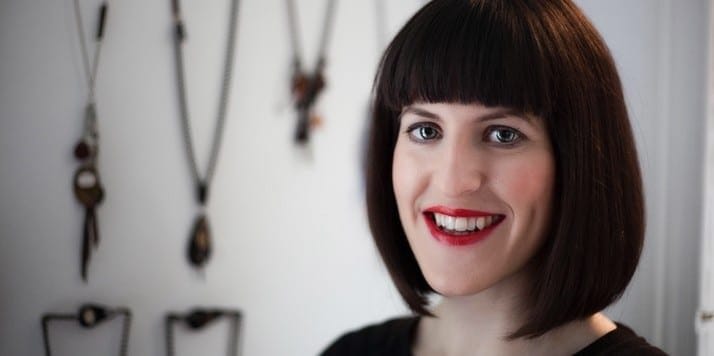
Saeeda Ahmed is the founder of Trescom Research and Consultancy Limited, a community regeneration social enterprise that has spent more than two decades helping people overcome barriers to economic, social and civic participation. In this refreshed profile, originally published in 2013, she shares what it takes for women social entrepreneurs to build a sustainable, purpose-led business in the UK today.
What Trescom does and who it serves
Trescom’s ethos is simple: enable people who face barriers to participation to take part in economic, social and civic life. The organisation does this through training for individuals, capacity building for organisations and communities, and consultancy and research projects that explore the causes and solutions to exclusion.
Why social enterprise was the right model
Ahmed did not want to earn money for money’s sake. She wanted to be part of something that tackled disadvantage. The voluntary sector did not feel like the right fit because the pace of change was too slow, and the traditional private sector model did not reflect her values. Social enterprise seemed like the natural option.
She was a novice when she started and learnt a lot on the job. Before founding Trescom she worked for another social enterprise, and at that time many practical applications of social values in business had to be explained to her. For instance, when kitting out the office she thought she would simply go to a large retailer and buy cheap furniture. A colleague pointed out the importance of working with local furniture suppliers, second-hand shops and community businesses to support the local economy. As a recent accountancy graduate, this was an entirely new concept.
The current support landscape for women social entrepreneurs
When Ahmed was setting up Trescom in August 2001, mainstream business support did not understand the social enterprise model. Trescom did not fit the prescribed profit maximisation approach, yet it was not looking to be grant-dependent either. It wanted to be genuinely sustainable, and that nuance was often missed.
The picture has shifted since Business Link closed in 2012 (GOV.UK). Support now flows through local Growth Hubs, sector-specific networks and social enterprise specialists such as Social Enterprise UK, the School for Social Entrepreneurs and UnLtd. However, provision remains uneven: some regions have well-resourced, established support, while others are sporadic and thinly spread. This means women social entrepreneurs can still face acute business support needs and real isolation.
Ahmed has seen women set up social enterprises because they are driven by a desire to achieve social good, but who have not received the support they need to put a viable business model in place. Some social enterprise support takes a soft approach: it asks about your social objectives and almost assumes sustainability will slot into place. It can be too focused on collaboration and not enough on the hard business facts that will enable you to achieve those social objectives.
What really helped Ahmed was undertaking a Master’s degree at the University of Cambridge in Community Enterprise, becoming a fellow with the School for Social Entrepreneurs, and being appointed as one of 20 Social Enterprise Ambassadors. These opportunities gave her access to networks, knowledge and information, and a unique platform to make a difference.
Highlights and challenges of running a social enterprise
The dynamic nature of running your own company is a highlight. If you decide you want to do something in the morning, you can start doing it by the afternoon. At the end of the day you feel you have made a difference to real people with real needs.
Over the years, Trescom has supported thousands of people from disadvantaged backgrounds through skills training and qualifications. These are people who have slipped through the mainstream net and are now moving towards their personal goals.
Starting up is difficult, as it is with any new enterprise. You have not yet established the credibility you need, and you must be prepared for this not to come overnight. Some business support providers still do not fully understand the social enterprise model or are not open about the sector’s challenges, so they cannot give prospective social entrepreneurs the full picture.
The UK social enterprise sector today
The UK social enterprise sector is substantial and well established. Social Enterprise UK, the national membership body, publishes regular State of Social Enterprise reports that track the sector’s economic contribution, employment and geographic spread. Its research consistently shows that social enterprises are more likely than traditional SMEs to be led by women and to be based in the most deprived communities, making the model particularly relevant for women in business.
Despite this, women-led social enterprises still often struggle to access the right finance, networks and advice. The Alison Rose Review of Female Entrepreneurship (HM Treasury, 2019) found that around one in three UK entrepreneurs was a woman and identified access to funding, networks and mentoring as persistent barriers. For women exploring funding routes, the British Business Bank’s Start Up Loans Female Founders programme is one option; see also our Business Grants For Women in UK guide.
What government could do differently
Ahmed believes a national network for social entrepreneurs is needed, alongside consistent support programmes that guarantee at least a minimum level of help in every region. Local Growth Hubs, co-funded by the Department for Business and Trade, now coordinate publicly funded business support across England, but access is still patchy.
She thinks government should consider targeted financial incentives for people who start social enterprises, particularly during the early periods when they may be dedicating time to the enterprise but not earning sufficient income. Research she undertook suggested some women were earning less than the minimum wage in their social enterprise. If they are willing to earn less for social good, government should try to reward them in some way so they do not lose out.
Government and business support agencies should not prescribe what they think people need. They should listen to people who have tried to start social enterprises, including those who have not succeeded. The people who have tried and failed often have the most useful insights into what support would have made a difference.
Practical advice for building a social enterprise
Ahmed’s core message is clear: do not be driven purely by your desire to do good; be driven by the desire to run a good business that does good. Look at your social objectives and work out how they can become a sustainable business model. If the business is not sustainable, the social impact will not last.
For women social entrepreneurs in the UK today, this means getting to grips with the basics: choosing the right legal structure, understanding your funding options, and building a board or advisory network that can challenge you on finance as well as mission. Structures include community interest companies, companies limited by guarantee, and cooperatives. The right choice affects how you can raise investment, distribute profits, and report impact.
Action steps for new social entrepreneurs
- Map your local support: contact your Local Growth Hub and Social Enterprise UK to find networks near you.
- Stress-test your business model: identify your revenue streams, costs, and cash flow before you launch.
- Seek mentors who understand finance: find advisors who will challenge you on sustainability, not just celebrate your mission.
- Explore funding early: research grants, social investment, and Start Up Loans before you need the money.
- Measure your impact: build simple systems to track social outcomes from day one; this strengthens funding applications and customer trust.
For more context on the UK women in business landscape, see our Women in Business: Key UK Facts page.