A healthy productive office is not a nice-to-have extra for UK women in business. It is a direct contributor to retention, output, and profit. According to HSE data from 2023/24, an estimated 776,000 workers in Great Britain were suffering from work-related stress, depression or anxiety, and 16.4 million working days were lost as a result. For a small business, that level of absence can derail client commitments and cash flow. The good news is that small, consistent changes to how you work can protect both wellbeing and performance.
Whether you run a studio, a consultancy, or a hybrid team, these five evidence-based tips will help you build a healthier, happier, and more productive workplace.
Make time to be creative
Back-to-back task execution drains motivation and increases error rates. Building in short, protected windows for creative thinking gives your brain space to solve problems and spot opportunities. The CIPD’s 2024 Health and Wellbeing at Work report found that heavy workloads remain one of the top causes of stress-related absence, so deliberately stepping away from reactive work is a practical antidote.
You do not need a corporate innovation lab. Try blocking 15 minutes at the start or end of each day for unstructured thinking. Use the time to review a process that frustrates customers, sketch a new service, or read around your industry. If you employ staff, invite them to do the same and share one idea a week. Small creative rituals improve engagement and often produce the improvements that cut costs later.
For more on protecting mental energy, see our guide on free workplace mental health tips for UK women in business.
Focus on keeping customers happy
Unhappy customers create firefighting, and firefighting creates stress. Repeated complaints about the same issue are a signal that a process, product description, or delivery standard needs fixing. The Health and Safety Executive makes clear that employers must assess the risk of stress-related ill health arising from work demands, and unmanageable customer pressure is one of those demands.
Send short satisfaction surveys after key touchpoints and track the themes. If delivery delays are a recurring complaint, fix the logistics before they escalate into refund demands and out-of-hours panic. If instructions are unclear, rewrite them. Fewer crises mean fewer emergency meetings, calmer staff, and a more predictable working week.
Working from home? Keep a consistent schedule
Flexible working is now a day-one right for employees in Great Britain under the Employment Relations (Flexible Working) Act 2023, which took effect in April 2024. ACAS guidance from 2024 encourages employers to handle requests reasonably and to discuss how flexibility can support both the individual and the business.
If you work from home, structure still matters. Start and finish at set times, protect a lunch break, and keep work devices out of living spaces after hours. ONS data from 2024 showed that hybrid and home working remain common in professional services, but the boundary between work and home can blur quickly. A consistent schedule helps you meet deadlines without work taking over your evenings.
For practical advice on balancing home and work, read how to maintain work-life balance working from home.
Set up a healthy productive office with light and ergonomics
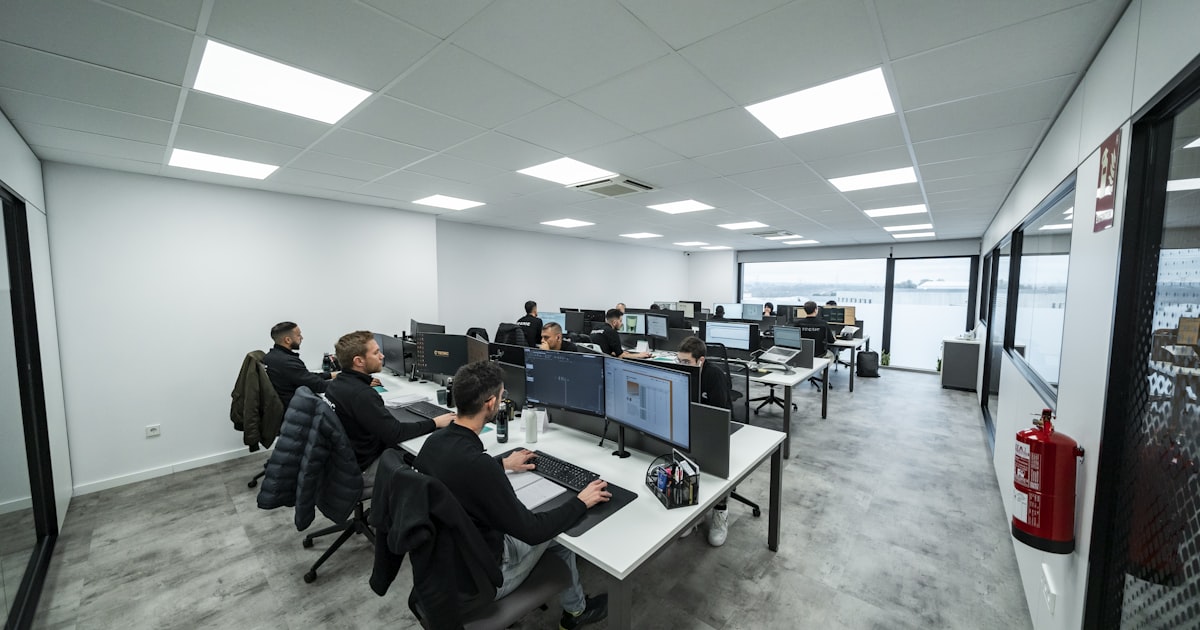
Natural light, good posture, and an uncluttered desk all affect how you feel and how much you get done. HSE guidance on display screen equipment recommends regular breaks, adjustable chairs, and screens positioned at a comfortable height. Poor ergonomics contribute to musculoskeletal problems, which are one of the leading causes of long-term sickness absence in the UK.
Position your desk near a window where possible, use artificial light to supplement rather than replace daylight, and adjust your screen to avoid glare. Take breaks outside when you can. A tidy workspace also helps: research consistently links visual clutter with reduced focus and higher stress. If you are unsure whether your setup is helping or harming, our home office ergonomics guide walks through the essentials.
Use a proven office productivity system
Productivity systems are not about squeezing more hours out of the day. They are about making clear decisions so you stop wasting mental energy on what to do next. Methods such as Getting Things Done or the Pomodoro Technique help you capture tasks, prioritise quickly, and build in regular breaks. Used well, they create boundaries between focused work and rest.
For women founders juggling client delivery, admin, and business development, a timer-based method can be especially useful. Our article on how a Pomodoro timer helps UK women founders focus explains how to use short bursts of work to reduce overwhelm.
Teams benefit too. A shared system for tasks and deadlines reduces the need for constant check-ins and prevents the same work being done twice. When everyone knows what they are responsible for, morale improves and output becomes more reliable.
Action steps for this week
- Block 15 minutes of creative thinking time in your calendar each working day.
- Review the last three customer complaints or refund requests and fix the root cause of the most common one.
- Set fixed start and finish times if you work from home, and communicate them to clients and colleagues.
- Check your desk setup against HSE display screen equipment guidance and adjust your chair, screen, and lighting.
- Choose one productivity system, try it for two weeks, and review what changes.
Conclusion
A healthy productive office is built from small, deliberate habits rather than expensive perks. By protecting time for creative thinking, reducing customer friction, setting boundaries around remote work, improving your physical workspace, and using a clear productivity system, you create the conditions for people to do their best work. For UK women in business, that translates into lower absence, stronger client relationships, and a business that is easier to run.