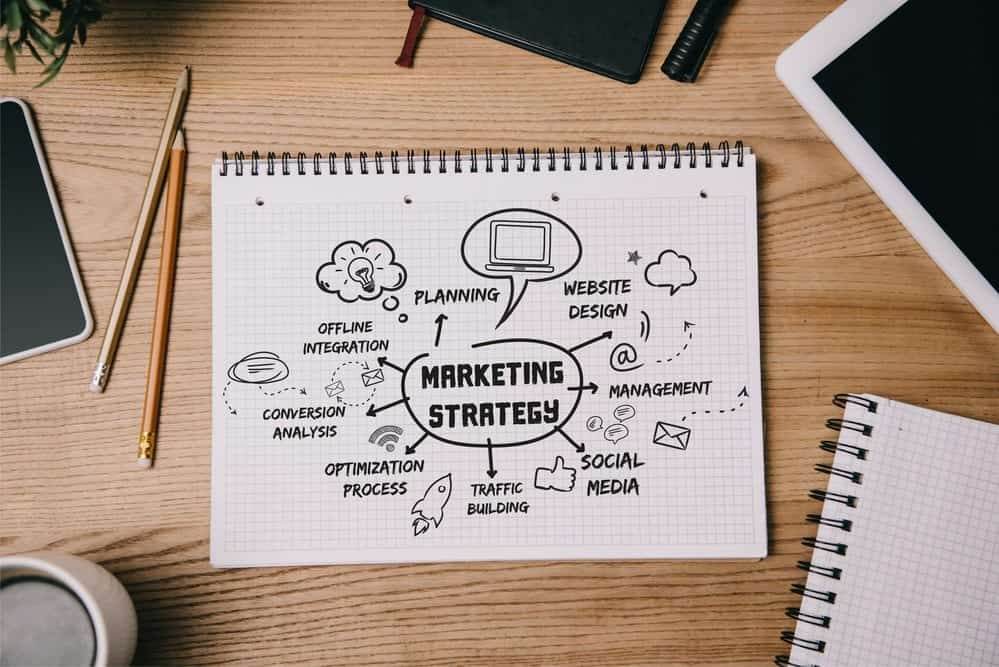
Start creating your marketing strategy in 2026
Creating your marketing strategy is one of the highest-return activities you can do as a founder. It is the operating system that decides which customers you reach, what you say to them, and how you measure whether your budget is working. For women running UK businesses, getting this right is particularly important. The 2019 Alison Rose Review of Female Entrepreneurship found that advancing women’s entrepreneurship could add up to £250 billion to the UK economy. A clear marketing strategy is one of the levers that helps turn that potential into revenue.
Since this guide was first published in 2020, the UK regulatory and digital landscape has shifted. HMRC’s Making Tax Digital for Income Tax Self Assessment now applies to self-employed people and landlords with turnover above £50,000 from April 2026, with a £30,000 threshold from April 2027. Companies House now requires directors and people with significant control to complete identity verification. The main rate of corporation tax is 25 per cent for profits over £250,000 from April 2023, with a small profits rate of 19 per cent for profits up to £50,000. These changes affect your costs, your pricing, and the cash you have available to spend on marketing.
This guide sets out a practical framework for creating a marketing strategy that works in the current UK market. It covers target customers, competitive positioning, channel choice, and how to build a plan you can review every quarter.
Set objectives and a realistic budget
Before you choose a channel or write a campaign, decide what the marketing must achieve. Objectives should be specific, measurable, and tied to business outcomes, not vanity metrics. Examples include: generate 50 qualified leads per month, increase average order value by 15 per cent, or win 10 new B2B retainers by 31 December 2026.
Your budget should flow from those objectives and from your current cost base. If your turnover is approaching the £90,000 VAT registration threshold that has applied since April 2024, you must register with HMRC. Corporation tax is 25 per cent for profits over £250,000 and 19 per cent for profits up to £50,000, with marginal relief in between. These figures shape how much you can realistically allocate to customer acquisition.
Your marketing budget should reflect your margins, growth stage, and the lifetime value of a customer, not just the cost of the first sale. Early-stage businesses usually need to invest more heavily to build awareness.
Define your UK target market
Marketing fails when it tries to speak to everyone. Start by identifying the specific group of customers most likely to buy from you, then segment further by need, behaviour, or geography.
Useful segmentation criteria for UK businesses include:
- Demographics: age, gender, income level, occupation, education
- Geography: region, city, rural or urban, proximity to your premises
- Behaviour: purchase frequency, brand loyalty, price sensitivity
- Needs: problems your product solves, desired outcomes, quality versus convenience priorities
If you sell to other businesses, your segmentation will differ. B2B customers usually have longer sales cycles, larger budgets, and multiple decision-makers. B2C customers typically make faster decisions but in smaller values. You can serve both, but your messaging, channels, and pricing must reflect each group’s buying process.
Primary research is valuable here. Run short surveys, interview existing customers, or analyse your sales data. Secondary sources such as ONS regional profiles, industry reports from your trade association, and the Women in Business: Key UK Facts page can help you size and understand your market.
Analyse your position with SWOT and PEST
A SWOT analysis forces you to be honest about where your business stands. List your strengths, weaknesses, opportunities, and threats, then rank them by impact on revenue.
Strengths might include specialist expertise, strong customer relationships, or a distinctive product feature.
Weaknesses might include limited cashflow, no established reputation, or reliance on a single supplier.
Opportunities might include new customer segments, digital tools that reduce costs, or partnerships with complementary businesses.
Threats might include new competitors, changing customer habits, or regulatory changes such as the 2026 expansion of Making Tax Digital.
A PEST analysis adds the external context:
- Political and legal: the £90,000 VAT registration threshold, Making Tax Digital deadlines, Companies House identity verification, and gender pay gap reporting for employers with 250 or more employees under the Equality Act 2010 (Gender Pay Gap Information) Regulations 2017, enforced by the Equality and Human Rights Commission.
- Economic: interest rates, inflation, consumer confidence, and the cost of living affecting discretionary spend.
- Social: ageing population, demand for flexible working, growing preference for sustainable and local brands.
- Technological: AI tools for content and customer service, changes to social media algorithms, and the importance of mobile-first websites.
Choose your marketing channels
Most UK small businesses now use a mix of owned, earned, and paid channels. The right mix depends on where your target customers spend time and what you can sustain consistently.
Owned channels include your website, email list, and blog. These give you control and compound over time. Earned channels include press coverage, reviews, referrals, and organic social reach. Paid channels include search advertising, social media ads, and sponsorships.
For 2026, consider these practical priorities:
- Search and local SEO: search remains a high-intent channel for many small businesses. Claim and optimise your Google Business Profile, use location pages if you serve specific areas, and encourage customer reviews.
- Email marketing: this gives you direct access to people who have already shown interest, and it is usually inexpensive to run. Segment your list by customer type and purchase history.
- Social media: choose one or two platforms where your audience is active rather than trying to be everywhere. For product-based businesses, Instagram and Pinterest often work well. For B2B, LinkedIn is usually more effective.
- Content and thought leadership: articles, guides, and case studies build trust and improve search visibility.
- Partnerships and networking: collaborations with complementary businesses and attendance at sector events can generate qualified referrals.
Authenticity matters more than polish. Our article on why authenticity became the only marketing lever that still works explains how founders can build trust without corporate budgets.
Position your product or service
Positioning is how you want customers to think about your offer relative to competitors. It should answer three questions: who is it for, what problem does it solve, and why should they choose you?
Differentiation can come from product features, service quality, price, convenience, sustainability, or your founder story. For women-led businesses, your founder story and values can be a genuine differentiator, especially when customers want to buy from people they trust. Avoid competing on price alone; it is rarely sustainable for small businesses. Instead, identify the customers who generate the majority of your profit and build your positioning around what they value most.
Customer research is essential. Ask existing customers why they chose you, what almost stopped them buying, and what they would miss most if you disappeared. Use their language in your marketing copy.
Build a 12-month marketing plan
Your marketing plan translates strategy into action. It should include:
- Objectives: what you want to achieve in the next quarter and year.
- Target audiences: your priority segments and the messages for each.
- Channels and tactics: the specific activities you will run.
- Timeline: start and end dates, key milestones, and seasonal peaks.
- Budget: projected spend per channel and expected return.
- Responsibilities: who does what, especially if you work with freelancers or agencies.
- Measurement: the metrics you will track and how often you will review them.
If you are a sole trader, check our Making Tax Digital Sole Trader: 2026 Checklist for Women to make sure your record-keeping supports both HMRC compliance and marketing budget tracking.
Measure, review, and adapt
Marketing strategy is iterative. Because women founders often manage tight cashflow, reviewing spend against revenue quickly protects your business. Set a review rhythm: weekly for active campaigns, monthly for channel performance, and quarterly for the overall strategy.
Track metrics that connect to revenue, not just activity. Useful measures include:
- cost per lead and cost per acquisition
- conversion rate by channel
- customer lifetime value
- return on ad spend
- email open and click-through rates
- website traffic and search rankings
Ask new customers how they heard about you. Run short post-campaign surveys. If a channel is underperforming, reduce spend and reallocate. If a message resonates, scale it.
Avoid these common pitfalls
Women founders are often time-poor and budget-conscious, so these mistakes are especially costly.
- Targeting too broad an audience and diluting your message.
- Skipping customer research and relying on assumptions.
- Spreading budget across too many channels.
- Ignoring existing customers while chasing new ones.
- Measuring vanity metrics instead of revenue impact.
- Failing to review and update the plan as market conditions change.
Take these action steps
These steps are designed for women running small UK businesses with limited time and no large marketing department.
- Write down three specific marketing objectives for the next 12 months.
- Map your current customers by segment, value, and channel.
- Complete a SWOT and PEST analysis using current UK data.
- Choose two to three priority marketing channels based on audience behaviour.
- Draft a 12-month plan with budget, timeline, and metrics.
- Schedule a quarterly strategy review in your calendar.
Creating your marketing strategy is not about producing a perfect document. It is about making deliberate choices, backed by evidence, that help you reach the right customers and use your budget wisely. In a market where regulation, technology, and customer expectations are changing rapidly, a living strategy is one of the most valuable assets a UK woman-led business can have.