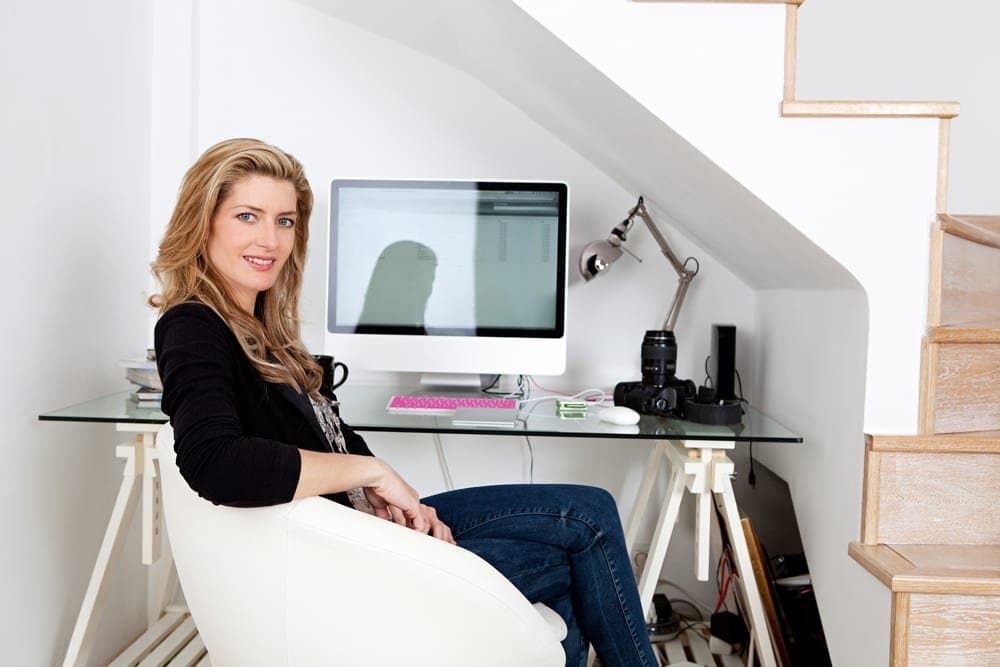
Remote and hybrid working are now permanent features of UK working life. For women-led and home-based businesses, the flexibility can be a genuine advantage, but only if it is managed deliberately. Whether you are building a startup from your kitchen table, managing a dispersed team, or trying to get more done away from a traditional office, the same principles apply: clear expectations, reliable tools, strong boundaries and up-to-date compliance. Here is how to achieve remote working success for your business.
The foundations of remote working success
Remote working is no longer a temporary fix. According to the latest Office for National Statistics (ONS) data from 2024, hybrid working has become the most common form of remote working among UK adults, though the proportion working from home each week has settled below the pandemic peak. For small businesses, this shift offers real opportunities: lower overheads, access to a wider talent pool, and the ability to retain skilled staff who need flexibility. The challenge is to make remote working work for you, rather than letting it erode productivity or team cohesion.
Set clear expectations
When no one is sharing a physical workspace, ambiguity quickly becomes the enemy. Be explicit about what you expect from yourself and from anyone you employ. That means agreeing core hours, response times, deadlines, and the quality standards that define a job well done.
Focus on outcomes rather than activity. Measuring success by results, such as completed projects, satisfied clients and met targets, is usually more motivating and fairer than logging every minute online. Where you do need to track time or tasks, use neutral project-management tools such as Trello, Asana, or Microsoft Planner. The goal is visibility, not surveillance.
Get administrative support without a full-time hire
Administration is essential, but it is rarely the best use of a founder’s time. If emails, diary management, invoicing, or social media are pulling you away from revenue-generating work, consider hiring a virtual assistant (VA).
A VA can handle a wide range of tasks, from answering calls and booking appointments to customer-relationship management and content scheduling. Most charge by the hour or on a retainer, so you only pay for the support you need. This makes them especially useful for remote businesses that do not yet require a full-time employee. For more on structuring your back office, read our Business Admin: A Complete Guide for UK Business Owners.
Communicate with purpose and clarity
Remote teams can easily drift into a constant stream of messages and meetings. Be intentional about how you communicate. Use videoconferencing for complex discussions, team updates, or anything that benefits from tone and body language. Reserve instant messaging for quick questions, and email for formal records or anything that needs a paper trail.
Protect focused work time, too. Not every issue needs an immediate call. Agreeing meeting-free hours or quiet periods can help everyone concentrate on deep work without feeling isolated.
Invest in the right technology and ergonomics
Reliable technology is the backbone of remote working. At a minimum, ensure you have fast and stable broadband, a cloud-based file-storage system, and up-to-date security software. If your business depends on voice calls, a VoIP phone system can give you a professional number that follows you anywhere.
Do not overlook ergonomics. A proper chair, external monitor, and keyboard can prevent the aches and injuries that build up over months at a kitchen table. Compared with the cost of commuting or maintaining office premises, these investments are usually modest. For practical setup advice, see our guide to Home Office Ergonomics UK: Boost Productivity in 2026.
Protect wellbeing and boundaries
One of the biggest risks of remote working is the blurring of work and home life. Encourage regular breaks, a defined finish time, and a dedicated workspace where possible. If your business is just you, schedule online networking or join a co-working session to replace the social contact you would normally get in an office.
Small rituals help maintain separation. Getting dressed for work, even casually, signals to your brain that the day has begun. The Chartered Institute of Personnel and Development notes that maintaining a basic professional routine supports both productivity and mental health when the boundaries between work and home are unclear. For more on protecting your time, read How to Maintain Work-Life Balance Working From Home.
Stay on the right side of employment law
If you employ staff remotely, your responsibilities do not disappear. Under the Health and Safety at Work etc. Act 1974, you still have health and safety duties, including a reasonable assessment of home workstations. You must also keep personal data secure under the UK General Data Protection Regulation and the Data Protection Act 2018.
Since April 2024, employees in Great Britain have had a day-one right to request flexible working under the Employment Relations (Flexible Working) Act 2023. You must handle requests fairly and consistently, and you can only refuse them for one of the statutory reasons set out in the legislation. Be clear about what equipment and expenses you will cover, how you will monitor performance, and how staff can raise concerns. Good documentation, in the form of a remote-working or hybrid-working policy, will protect both you and your team. For a fuller overview, see Flexible Working Rights UK 2026: What Women Need to Know.
Claim the right home-working expenses
Tax treatment depends on whether you are self-employed or an employee of your own limited company. HMRC ended the flat-rate working-from-home tax relief for employees in April 2022, so you can no longer claim a fixed weekly amount simply because you work from home. If you are self-employed, you can claim an allowable portion of household costs, such as heating, lighting, council tax, and broadband, based on the proportion of your home used for business and the time it is used.
If you run a limited company, you can set up a formal agreement with the company to claim a proportion of home costs, or use HMRC’s simplified expenses rates if you work from home for at least 25 hours a month. For the details, read our guide to Home Working Expenses Self Employed Can Claim Through HMRC.
Practical action steps to take now
- Write a one-page remote-working policy covering hours, communication, equipment, expenses, and performance.
- Audit your home office setup for ergonomics, security, and reliable broadband.
- Choose one project-management tool and one communication rhythm, then stick to them.
- Review your employment contracts and flexible-working request process against the April 2024 rules.
- Check your HMRC expense claims are based on current rules, not the pre-2022 flat rate.
Remote working can reduce costs, improve work-life balance, and help you build a business that fits around your life. Remote working success comes from treating it as a deliberate way of working, not an afterthought: set clear expectations, choose tools that support real work, protect your wellbeing, and keep your policies in line with current UK law.